

Working at a university such as Oxford, and in a research library such as the Bodleian, it is hard to escape the stereotype of the boffin and the know-it-all. “Have you read all the books in the library?” I am often asked. This stereotype is something of an occupational hazard, but throughout my career it has been made worse by association with the kind of scholar who insists on wearing his (or occasionally her) learning heavily, imposing it on the innocent through overbearing correction – in other words, the pedant. Arnoud SQ Visser’s engaging study looks at the long history of this irritating individual, in the course of which he charts the broader history of anti-intellectualism, a story of mistrust and demonisation of expertise that is highly relevant today.
Early in 2017, a new phrase was introduced in response to the evidence that more people had attended Barack Obama’s inauguration than had attended Donald Trump’s in January of that year. Kellyanne Conway, then senior counsellor to the president, claimed that there were “alternative facts” that explained the discrepancy. In subsequent years there have been numerous attacks on facts and on those who identify and use them. The second Trump presidency has seen a widespread assault on universities, the removal of swathes of information (such as environmental data) from the websites of federal agencies, and the discrediting of the use of vaccines and of scientists engaged in vaccine research. The reader of On Pedantry will discover that this hostility is nothing new.
The term “pedant” first appears in Renaissance Italy, with pedante coming from the phenomenon of private tutors who were hired by the wealthy to teach their children. Such teachers were of a lower social status than their charges, so the word gained a negative connotation, especially when combined with the ostentatious display of knowledge with which these teachers were often associated – the new pedants soon found themselves satirised in sonnets and plays.
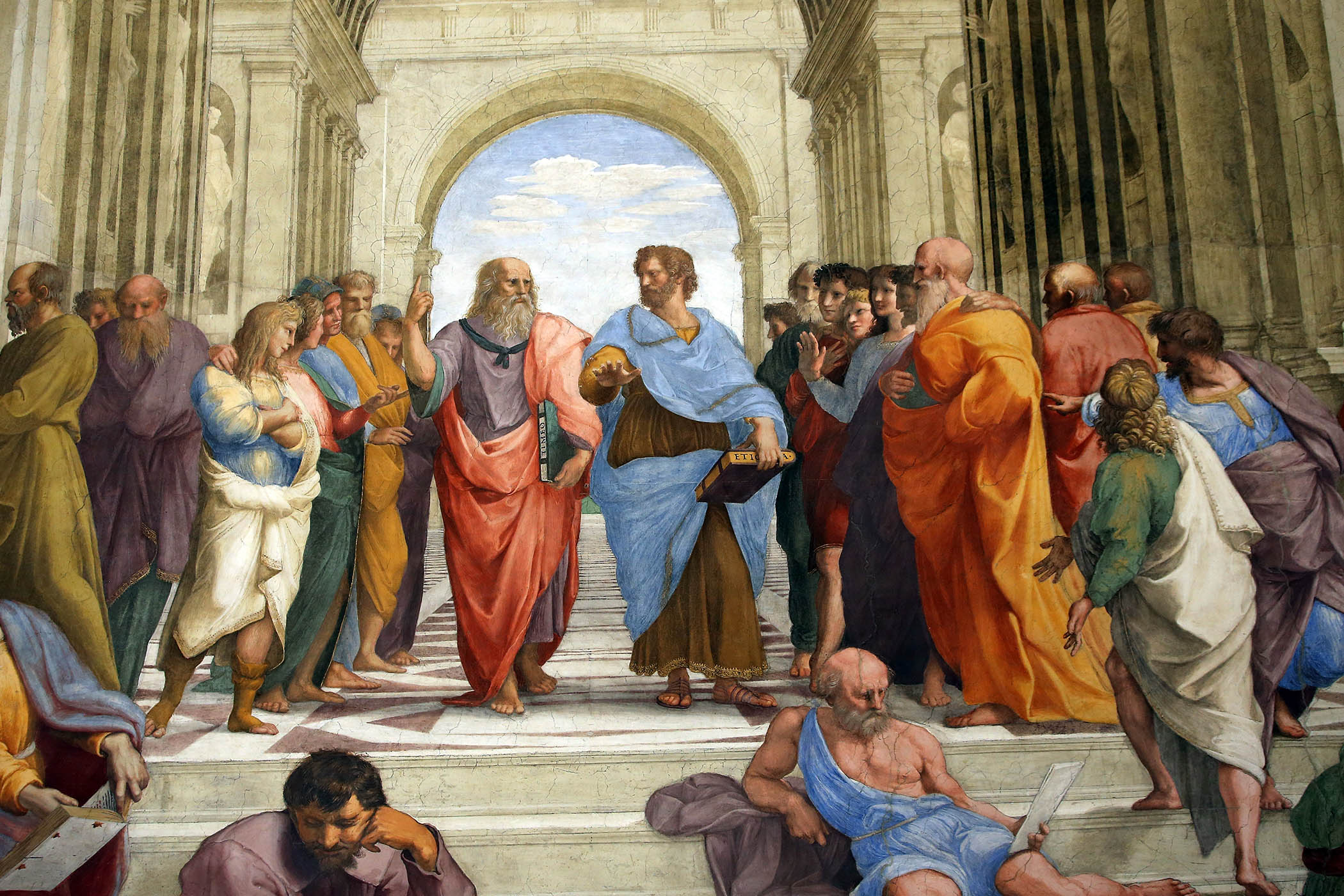
Visser locates the original pedants in ancient Greece, among the Sophists, their name derived from the ancient Greek term for knowledge – sophia (from which we get our own term “philosophy”). The Sophists emerged as a group of experts in the Athens of the fifth century BCE, with figures such as Protagoras and Prodicus becoming intellectual celebrities thanks to their new approach to learning: they emphasised argumentation and speech, practices that became closely linked to the emergence of democracy. The Sophists gained a reputation, however, for competitive debate that was more about winning an argument than discovering the truth.
Hadrian’s beard became much imitated as a marker of intellect – but also lampooned as a sign of pretentiousness
Hadrian’s beard became much imitated as a marker of intellect – but also lampooned as a sign of pretentiousness
Plato deplored the pedantic nature of Sophists in several of his dialogues and in his Republic, where they would rather “have a quarrel than a conversation”. The playwright Aristophanes went further, lampooning them in The Clouds, perhaps the first satire on intellectuals. In ancient Rome, Visser shows us not only the mistrust of the intellectual, but also where the Emperor Hadrian, keen to demonstrate his own intellectual capacity and his admiration for Greek philosophy, forged the link between learning and social elite status. Hadrian’s beard became much imitated – as a marker of intellectual capacity – but also lampooned as a sign of pretentiousness.
Visser charts the rise of the scholar – in the middle ages and the Renaissance – whose world centred on the Latin language, its literature and grammar. The learning of teachers and scholars was both celebrated and denigrated. John of Salisbury in the 12th century loathed “academics … poring over every syllable … expressing doubts about everything”. During the Renaissance the intellectual was ridiculed by Sebastian Brant in his often reprinted Ship of Fools, which included an early visual lampooning of the bespectacled scholar with dishevelled hair and a mad expression. Negative depictions of the intellectual appeared widely in literature from Montaigne to Molière and Shakespeare (especially in the person of Holofernes in Love’s Labour’s Lost). During the Enlightenment, pedantry was dismissed as a “vice of the mind”, with writers such as Denis Diderot, in the prospectus to his famous Encyclopédie, writing that “he who claims to know everything only shows himself ignorant of the limits of his human mind”.
One of the most illuminating sections of On Pedantry covers the mistrust of scholars in America, beginning with Thomas Paine, whose bestselling Common Sense provided a major influence on the American revolution. Paine identified refined language and classical erudition with a colonialist aristocratic mentality. When Visser comments that “in a political culture of democratic machismo, politicians denounced colleagues who made an inordinate display of their education as elitist, overly sensitive, and effeminate”, I had to double-check that he was referring to the 18th and not the 21st century. This American distrust of the expert even created a political party, the “Know Nothings”, in the early 19th century.
I was surprised not to find a discussion of the impact of new knowledge technologies in this book, especially generative AI. Chatbots such as Gemini, Claude and ChatGPT have the potential to become highly irritating pedants, with their outputs providing answers to any question that is typed into them. The style of these chatbots has, however, been engineered to avoid the grating nature of the pedant – indeed, they have been criticised for being overly sycophantic to their users. What is more worrying (as we are increasingly aware in the Bodleian) is the tendency for these AI tools to hallucinate citations to literature. As we outsource our learning and the gathering of knowledge to machines, will there come a time when no one can tell whether we are being mansplained to by AI or given entirely false answers? Perhaps the human pedant has a socially valuable future after all.
Related articles:
On Pedantry: A Cultural History of the Know-it-All by Arnoud SQ Visser is published by Princeton University Press (£25). Order a copy from The Observer Shop for £22.50. Delivery charges may apply
Editor’s note: our recommendations are chosen independently by our journalists. The Observer may earn a small commission if a reader clicks a link and purchases a recommended product. This revenue helps support Observer journalism
Newsletters
Choose the newsletters you want to receive
View more
For information about how The Observer protects your data, read our Privacy Policy
Portrait featuring Plato and Aristotle, from Raphael’s 1509-11 fresco The School of Athens at the Vatican, by Franco Origlia/Getty