
If a cardigan had a personality, it would probably be a lot like Colin (Harry Melling). A dweeby thirtysomething traffic warden who still lives with his parents in the suburbs, Colin is pliant, unassertive and painfully awkward. He is the kind of person who wears an invisible “kick me” sign as he shuffles, apologetically, on the sidelines of his life. It’s not that it’s a miserable existence – his home is cosy, his parents (Lesley Sharp and Douglas Hodge) are unconditionally supportive and accepting of his sexuality; his mum would love nothing more than to see him happily settled with a nice boy. But Colin’s timidity trips him up. The world outside his Bromley bedroom is a big and scary place.
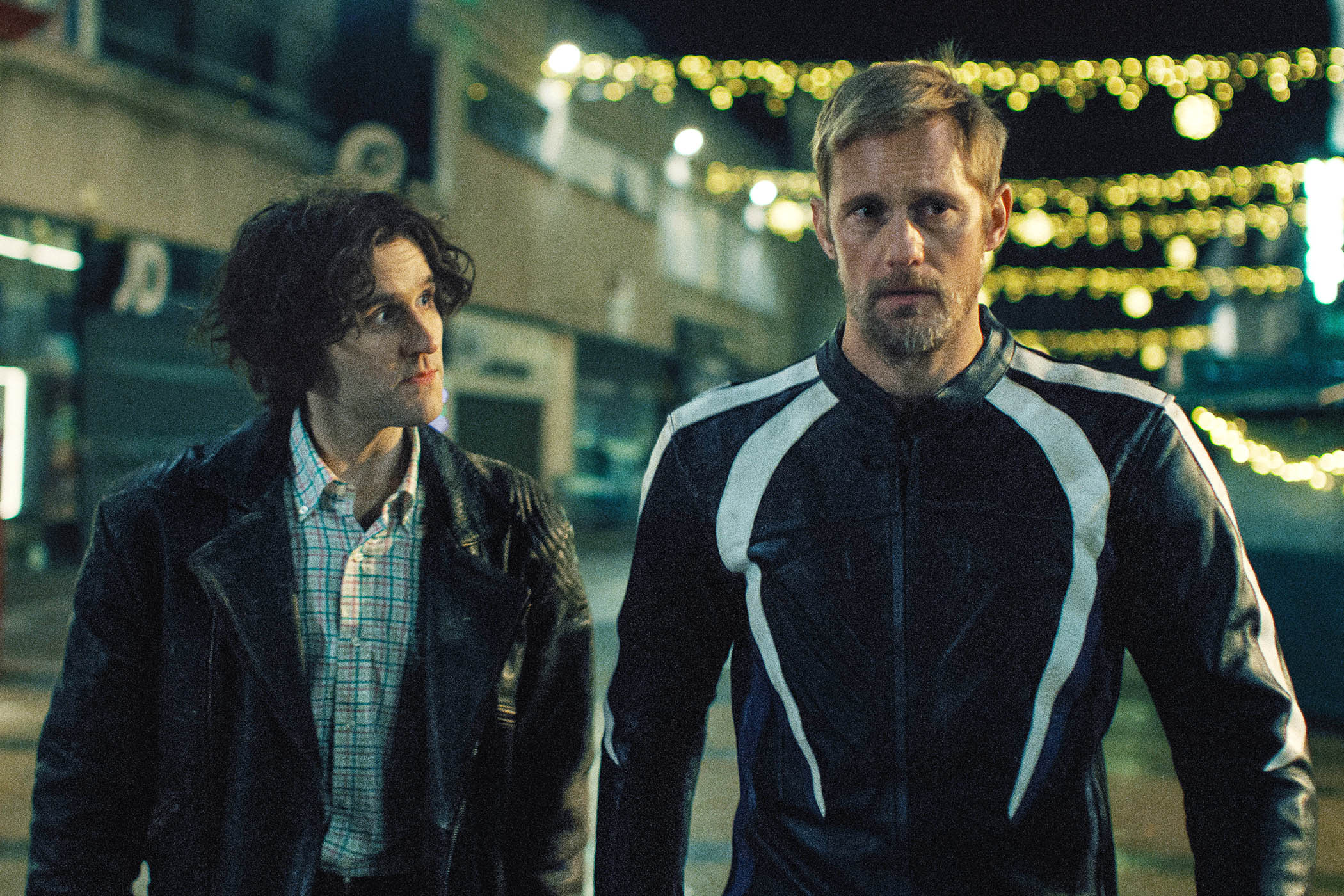
It’s during a damp squib of a blind date orchestrated by his mother that Colin first glimpses Ray (Alexander Skarsgård). He’s magnificent: 6ft4 of surly, leather-clad perfection, the undisputed alpha of his gang of bikers, incongruously sipping a beer in a provincial pub. It’s a deceptively complex piece of acting from Melling (consistently the most impressive of the former child actors in the Harry Potter films, in which he played Dudley Dursley), simultaneously broadly comic and painfully exposed. Colin can barely bring himself to look at Ray – it would be like staring directly at the sun – and Ray can barely be bothered to glance at Colin. But he identifies something in the cowering figure at the bar, as Colin eagerly pays for Ray’s imperious crisp order (ready salted, prawn cocktail, salt and vinegar): Colin has a talent for devotion.
Colin is required to do the shopping and submit to vigorous and uncomfortable bouts of wrestling while wearing a customised arseless leotard
Colin is required to do the shopping and submit to vigorous and uncomfortable bouts of wrestling while wearing a customised arseless leotard
It’s a talent he soon has the opportunity to demonstrate, on his knees by the bins round the back of Primark in the town centre on Christmas Day. Wearing his dad’s leather jacket and a crooked, goofy grin, Colin is initiated into the world of gay BDSM biker culture.
The feature debut from British director Harry Lighton, Pillion is eye-wateringly graphic, unflinchingly honest and very funny. Described by the film-makers as a “dom-com”, the picture, which is loosely adapted from the 2020 novel Box Hill by Adam Mars-Jones, finds moments of wry humour in the juxtaposition of the transgressive and the mundane; in the contrast between Ray’s growled orders and Colin’s fluttering, nervous babble; the throbbing snarl of bike engines and the fastidious harmonies of Colin’s barbershop quartet. For all the bumps in the road on Colin’s pillion ride to sexual awakening, Lighton’s approach to the community in which his character finds himself is unsensational and non-judgmental. A supporting cast made up of real members of the kink community and the Gay Bikers Motorcycle Club brings an authentic, lived-in quality to the fetish harnesses and dog collars.
Installed as Ray’s submissive in his aggressively bland flat in Chislehurst, Colin faces a steep learning curve. One of the great joys of this film is watching Melling’s endearingly wonky and wonderfully expressive features as he processes Ray’s demands. These are numerous and exacting. He must cook and clean for Ray. He is required to do the shopping and submit to vigorous and uncomfortable bouts of wrestling while wearing a customised arseless leotard. If he has performed his duties satisfactorily and he doesn’t snore, he is permitted to sleep, curled up like a scrawny puppy, on the rug at the foot of Ray’s bed.
Colin is a character who is entirely without guile and Melling shows us every small triumph, every moment of exquisite torture. Taciturn Ray, on the other hand, is an enigma. It’s a challenging role for Skarsgård, who is given so little character detail to work with that you start to wonder if there’s anything of substance under all the leather and swagger. Skarsgård is permitted just one opportunity to give us a glimpse into Ray’s soul, in a wordless single shot towards the end of the film. He makes the most of it: the unshakeable confidence crumbles, we see a moment of churning uncertainty and the briefest flicker of emotional vulnerability.
The relationship between Colin and Ray is not overburdened with tenderness: “That’s not what this is,” snaps Ray, when Colin oversteps one of his many emotional boundaries. But the film itself is unexpectedly sweet, balancing Ray’s firm hand with a gentler, more sympathetic touch. I loved the dorky warmth of the scenes between Colin and his dad, and Lighton’s generous approach gives his central character the scope to grow and learn. Colin may find himself bruised and a little bit broken by his time with Ray, but he emerges at the end of the picture stronger, more confident of his own needs and boundaries, and ready to devote himself once more.
Photograph by Picturehouse Entertainment
Newsletters
Choose the newsletters you want to receive
View more
For information about how The Observer protects your data, read our Privacy Policy
Related articles: