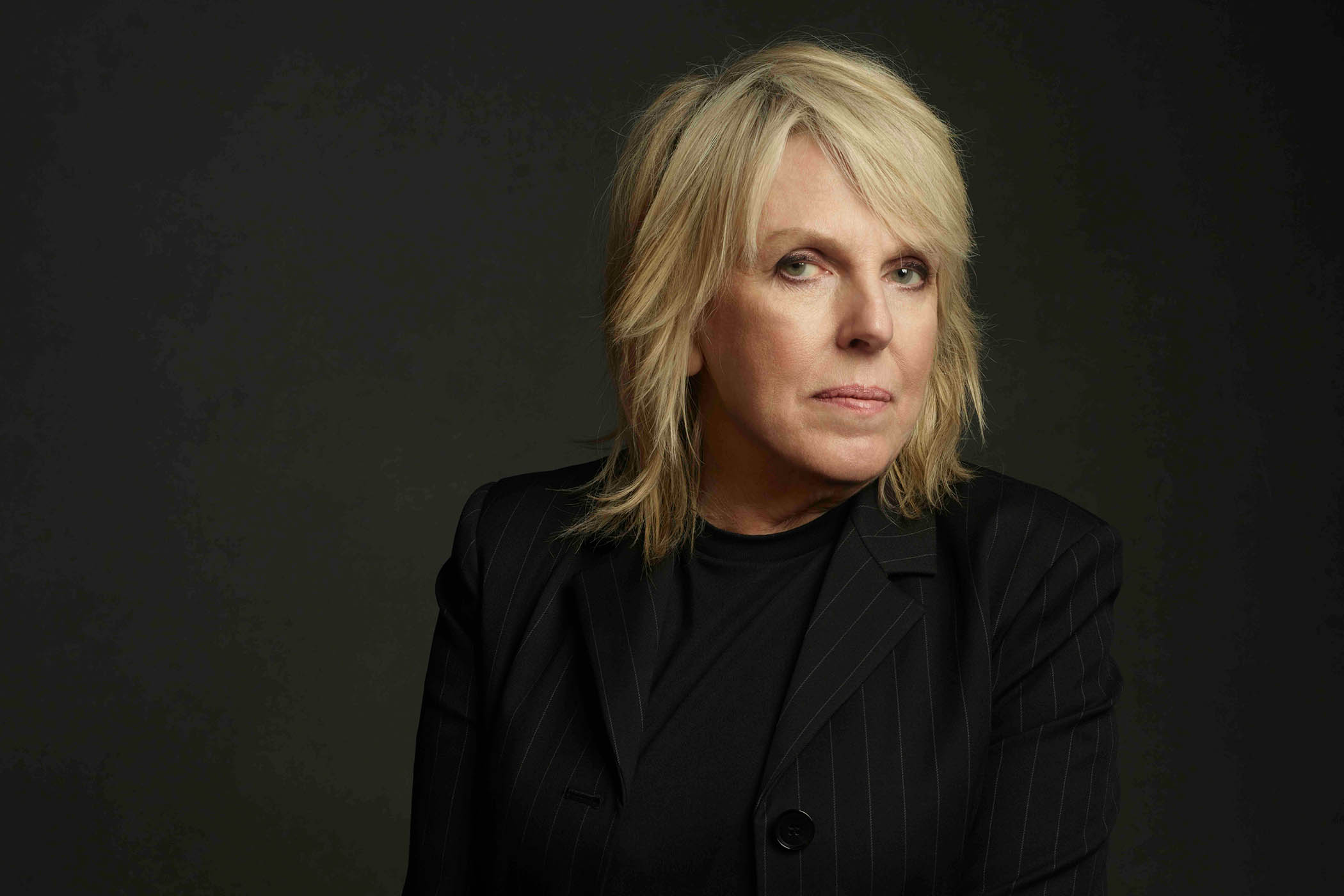


Born in Lake Charles, Louisiana, in 1953 to American poet Miller Williams and pianist Lucille Fern Day, Lucinda Williams is a multiple Grammy-winning singer-songwriter. Mixing sharp lyrics about sex and politics with country, rock and blues, her 16 albums include her eponymous LP for British label Rough Trade in 1988, and her 1998 major-label debut, Car Wheels on a Gravel Road, which sold nearly a million copies in the US. She is still recording and playing live after recovering from a stroke in 2020. Her new album, World’s Gone Wrong, tackles Trump’s America and she is touring the UK this month and next. She lives in Nashville, Tennessee, with her husband, co-writer and manager, Tom Overby.
World’s Gone Wrong is a raging indictment of Trump’s America. When did you start putting it together?
If you mean when did I start getting pissed off, a long time ago! But this album, a year or two ago, when I realised that several songs I was writing were dealing with the day-to-day chaos and insanity that we’re going through in the US. It was so juicy that it was too tempting not to write about it.
Was that process cathartic?
It helped get the horror movie out of my head. I find that if I’m angry, it’s good to write about stuff through the eyes of regular, everyday people. Sometimes it’s hard to see a way out, but there still is a way out. There are all these grassroots groups coming up trying to organise people, and these demonstrations and marches that they call No Kings, named because Trump called himself “the king” – the kind of statement that’s the definition of insanity.
You moved to Nashville in 2020, and Tennessee is a Republican state. How is it living there today?
There are a lot of pro-Trump people here, and I didn’t like living here at first. Then I discovered the city’s very supportive musical community. I’m in East Nashville, the hipster neighbourhood, which is a pretty cool place to live. But when we moved here in 2020, Covid-19 hit, a tornado blew through town and took the roof off our front porch, and I had my stroke. That was quite the year.
How are you doing now?
Related articles:
I feel pretty good. Physically, I’m still struggling with certain things – I can walk, but not very well, and I can’t play guitar right now because it’s too painful in my hands, but I can sing. Some people say my voice is better now than it was before the stroke. I think it might be.
You cover Bob Marley’s So Much Trouble in the World on your album with singer and civil rights activist Mavis Staples, who’s still working at 86. How did you meet her?
Doing some shows together. She was so warm, friendly, sweet and good, and always found the time to sit down and chat, like she was family. I was so aware of her connection to her past while we were working on the song.
She’s also good friends with one of your heroes, Bob Dylan.
That’s always been amazing to me. Inevitably, she’ll bring up Bob Dylan’s name and say: “Well, I just saw Bob the other day, he’s doing such and such.” One day, we were talking, and someone in the press had called me the female Bob Dylan, which had somehow got back to Bob; Mavis couldn’t wait to tell me. Fast-forward to the [2025] Outlaw Music festival, where Bob and I were both playing, and I was able to speak with him for a few minutes. I said, very sheepishly, “You remember that thing about the female Bob Dylan?”, and he stopped, smiled so big, and said, “Is that you?”, before adding, “Well, who else would it be?” That was the highlight of my year.
Your poet father, who read at Bill Clinton’s second inauguration, raised you after your parents’ divorce. What are your fondest memories of him?
Him in his office, typing on his typewriter. I used to love the sound – it made me feel secure. When I was about six or seven years old, I also met [author and essayist] Flannery O’Connor, who was an aunt to my father. We would drive to visit her at her big Antebellum-era house.
What was she like?
She raised peacocks! She was also very disciplined and would write between 10am and 3pm every day. I remember we arrived during her working hours, and her housekeeper came out and said: “Miss Flannery is working right now, but I’ll let you know when she’s ready to receive guests.” So we waited in the porch – it was very old Southern. At 3pm, her blinds opened, and my dad went inside to talk with her, and left me outside chasing the peacocks around.
You have French, German, English and Welsh heritage. Which of those do you connect with?
The Welsh in my surname and my memory of every Christmas Eve, sitting with eggnog, listening to Dylan Thomas’s recording of A Child’s Christmas in Wales with my father. English folk and blues connect with me so much too.
Your breakthrough came on the English label Rough Trade, which you signed to in 1987, when it was home to the Smiths. What happened?
It sounds like a Cinderella story, but it’s true – I was living in a tiny apartment in Silver Lake in Los Angeles, where my phone rang, and Robin Hurley from Rough Trade had somehow got hold of my demo. He said: “We love your voice; we love your songs. Would you like to make a record?” That was all that mattered to them, and their open-mindedness opened a huge door for me.
You’ll be celebrating your birthday on tour in Dublin, a day before you reach the UK. What are your plans?
I’m going to shout my age to everyone, as I worked really hard to get here. I’ll be 73, and I’ve earned it!
World’s Gone Wrong is out now on Highway 20, and Williams’s UK tour begins in Belfast on 27 January
Photograph by Mark Seliger