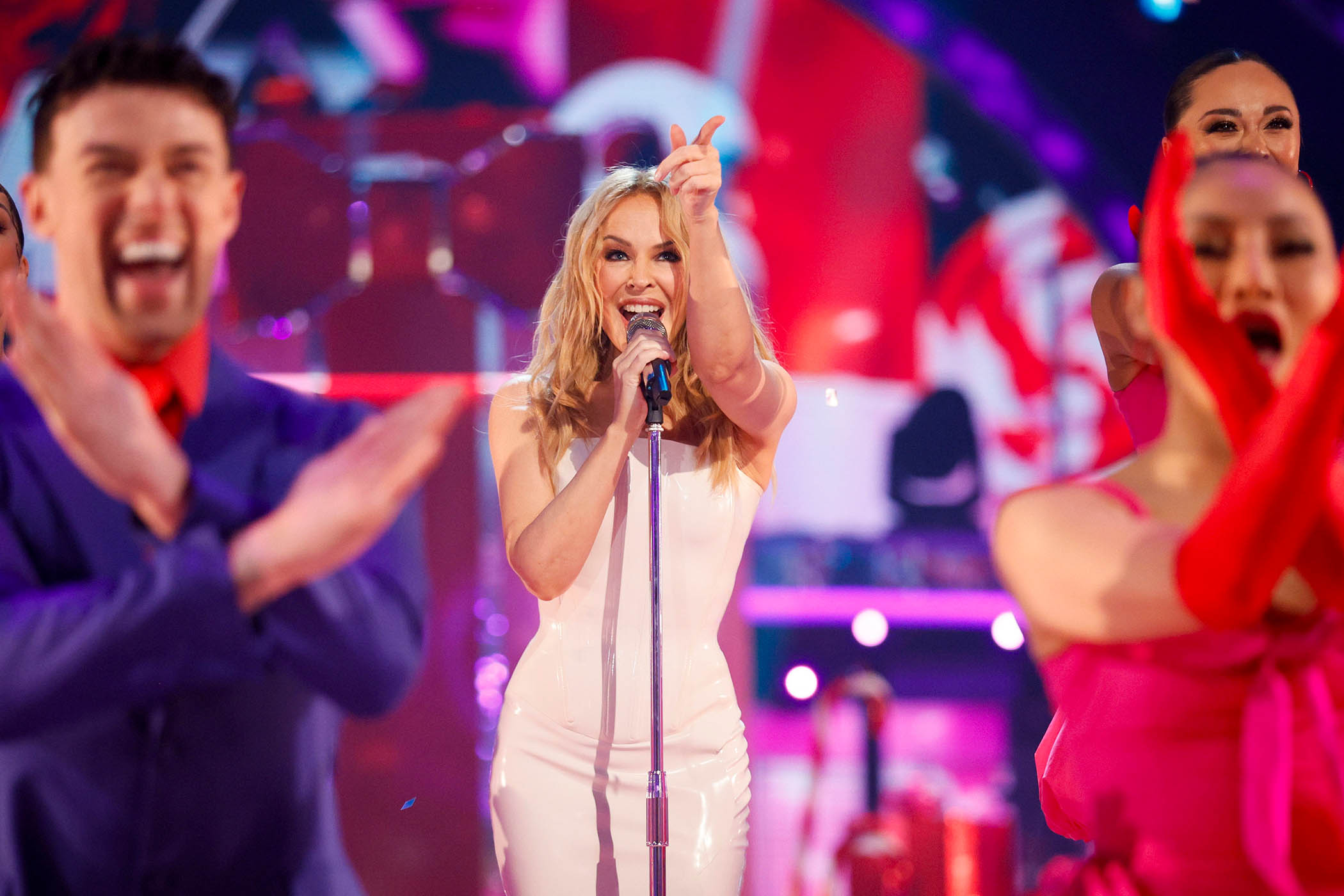




In 1988, when Kylie Minogue and Jason Donovan’s Especially For You narrowly lost out on the UK Christmas No 1 to Cliff Richard’s Mistletoe and Wine, the world wide web had yet to be invented and Amazon was still six years away.
Nearly four decades later, thanks to tech, nostalgia and a little bit of YMCA-style magic, Kylie (minus Jason) has reached the top of the tree.
With XMAS, the Australian pop star becomes the first female solo artist to win the festive race in 12 years. She is the first solo artist full stop to have a Christmas No 1 about the holiday since 1990. And she beat Wham!’s Last Christmas, which was close to winning the race for the third year in a row.
Kylie, 57, has cross-generational appeal and a charm that has endeared her to the UK. But she also owes a lot to a tech behemoth. XMAS was recorded for and released exclusively on Amazon Music, meaning the streaming platform had an interest in spreading it far and wide. The track is played automatically when users ask Alexa, Amazon’s voice assistant, to play Christmas music.
XMAS is Amazon’s fourth attempt to win the Christmas race. In 2024, It Can’t Be Christmas by Tom Grennan came in at No 3. You’re Christmas To Me by Sam Ryder was second the previous year. In 2019 it was Ellie Goulding’s turn. All were Amazon exclusives. But only Kylie appears to have hit on the right formula.
Related articles:
‘Consider the opening lines: “I’m dreaming of a white Christmas/ Just like the ones I used to know.” That’s the key: warmth and nostalgia’
James Masterton, chart expert
“It’s about combining the familiarity with something new,” says Paul Firth, a director at Amazon Music. XMAS may be a recent release, but Kylie has been a staple in Britain for decades. And nostalgia still plays a vital role in the success of festive tracks.
“Consider the opening lines of White Christmas,” says the chart expert James Masterton. “‘I’m dreaming of a white Christmas/ Just like the ones I used to know.’ That’s the key: warmth and nostalgia. ”
In fact, the average release year of the current top 20 is 1996 – and 14 of them are Christmas songs. In 2000, every track in the top 20 had come out that year. Only one was explicitly Christmas-themed.
Festive listening is now driven by algorithms, says Ross Hampl at Partisan Records. “Most of it comes from ‘Christmas hits’ type playlists or Christmas music voice requests.”
Mariah Carey, Wham!, and the Pogues and Kirsty MacColl would not be regular fixtures in the festive charts were it not for streaming platforms and the inclusion of digital plays into how the charts are compiled. It means artists with a previous Christmas hit will find the season extremely lucrative, as these songs can churn out millions of streams a year after being added to a streaming platform’s Christmas playlist.
Autoplays on Amazon Music will have boosted Kylie’s streaming fortunes. But the platform is at pains to point out the role of old tech, namely CD singles and vinyls, in her victory. “It’s really been the sales of those that propelled her to No 1 this year,” says Firth.
The platform’s repeated efforts to reach the top spot reflect the wider cultural capital that the festive battle still holds in the UK. “It’s tradition, isn’t it?” says Martin Talbot, CEO of the Official Charts Company. “Britain loves tradition.” Whenever the race risks getting staid, whether through X Factor winners, LadBaby or Wham!, it “reinvents itself and starts to turn around again”.
There are various claims for when the festive charts “began”. Some say it was 1973, a time of economic unrest, when the mood was lifted by Slade’s Merry Xmas Everybody. Others believe it was 1984, when betting markets got in on the act and Band Aid triumphed while Margaret Thatcher was reducing the welfare state. Whatever the origin story, the No 1 often reflects the mood of the nation.
So what does Kylie’s victory tell us? XMAS is the purest of Christmas songs, with lyrics full of bells, fireplaces and presents under the tree. It could have been written at any point in the past 40 years. It was, as it happens, initially conceived a decade ago. The mood, it seems, is this: forget it’s 2025 and have a dance.
Photograph by Guy Levy/BBC/PA Wire