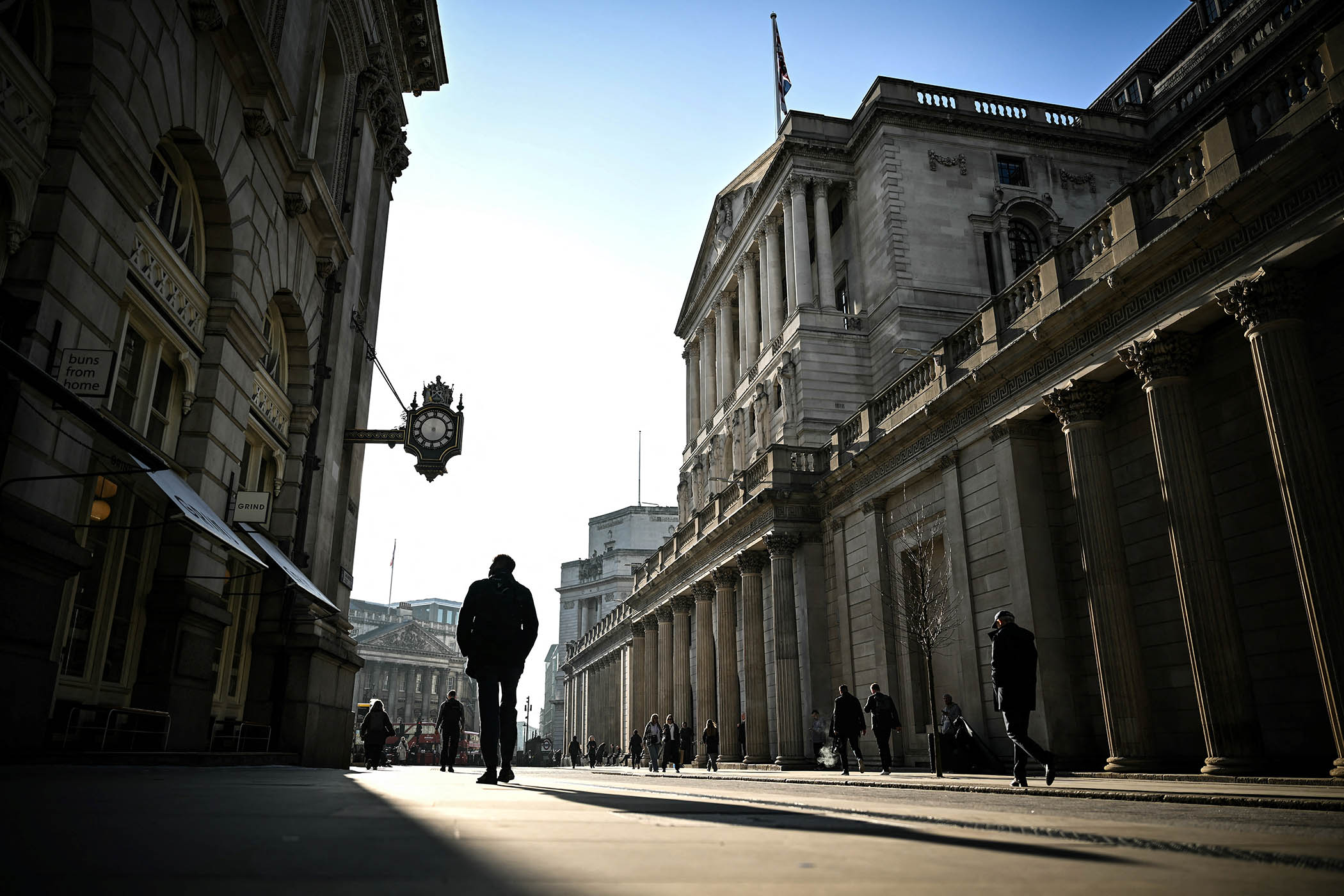



The Bank of England is set to leave its benchmark interest rate frozen at 3.75% at its meeting on Thursday following modestly better economic news, experts believe.
Of 56 economists surveyed on 21-26 January by Reuters, all but two expect the Bank’s Monetary Policy Committee (MPC) to leave its core rate unchanged when it meets on 5 February. The other two predict a cut to 3.5%.
A slender majority now expect the nine-member MPC to trim rates in March by a quarter point to 3.5%.
Most now expect UK interest rates to sink to a low of 3.25% in the latter half of this year. UK inflation remains the highest in the G7 but is expected to fall in the first quarter of 2026, to 3% from a high of 3.8% last year.
The Bank’s policy meeting comes after UK retail sales rose unexpectedly by 0.4% in December and UK firms reported the strongest private sector business growth since April 2024.
Deutsche Bank’s chief UK economist, Sanjay Raja, said: “We stick to our long-standing call of two more rate cuts in 2026: one in March, and one in June, taking the bank rate to 3.25%. Risks are skewed to a slower but deeper easing cycle.”
The FTSE 100 also hit a record high last week, fuelled by a rally in metal prices and mining shares. The UK’s flagship share index rose as high as 12,259 points on Thursday, two points above a record two weeks earlier.
In the markets, among the biggest FTSE risers were mining groups Antofagasta, which climbed 11%, and Rio Tinto and Glencore, which are in merger talks. London-listed miners have had a solid start to the year, propelled by the rocketing price of precious metals. On Thursday, gold neared $5,600 for the first time – although it later fell back. Still, by Thursday gold had risen over 30% since the start of the year. Silver was up over 60%.
Related articles:
Kallum Pickering, chief economist at Panmure Liberum, said investors favoured precious metals during periods of economic uncertainty.
“The ultimate safe asset is gold,” he said. “We have a radical unpredictability coming from the US administration under Donald Trump, and this is encouraging global investors to take risk out of the US, including the dollar.” Pickering added that this is driving investors towards European markets. “The US is much more oriented towards tech, whereas we’re more heavy industry focused in Europe.”
Newsletters
Choose the newsletters you want to receive
View more
For information about how The Observer protects your data, read our Privacy Policy
Photograph by Ben Stansall/AFP via Getty Images