


The other day I was in a restaurant having lunch, when the owner, a tall, loquacious man in white trainers came over to the table to briefly chat. After he left and we returned to our pasta, I said, lightly to my partner, “I liked him.” Mark replied by lifting his eyebrows. Of course you did, he said. What did he mean by that, I asked, my voice rising only slightly, and he put down his fork, and kindly explained that one thing about me is that I am impressed, or beguiled, by charm. “You say ‘charm’ like it’s a bad thing,” I replied, and he said, well, sort of, yes. At which point I put down my fork, too, because, after more than 20 years and two children together, it’s always interesting to discover new core differences that could threaten to upend an entire relationship.
Mark’s argument was that charm should not be trusted. That charm is often a technique used to manipulate and disarm, mainly by wealthy people who learned it young. That it’s a political skill and one to be wary of. Huh, I said. Because I see charm as a sign that the person using it wants to make me comfortable, that they are attempting to connect. We went round like this for a little while, him chuckling at my naivety, me pitying him for his cynicism, all the way back to the tube.
Both can be true, of course, but it makes for a less interesting lunch. Both can be true – charm can be authentic and grounded in empathy, and it can be superficial, in service of ulterior motives. I thought of this conversation yesterday when professional friends, recently spat out by the jobs drought in the UK television industry, were discussing trying to get some shop work. In our teens and 20s, my generation were either waitresses and bartenders, or they were shopgirls. I worked in shops, where yes, you learn to amplify any natural charm you might possess in order to make customers feel comfortable. Or, through Mark’s narrowed eyes I guess, manipulate them into buying something they don’t need. (When we first met, incidentally, he was working in a classy little menswear shop where he’d frequently fall asleep in the window, and nobody seemed to mind.)
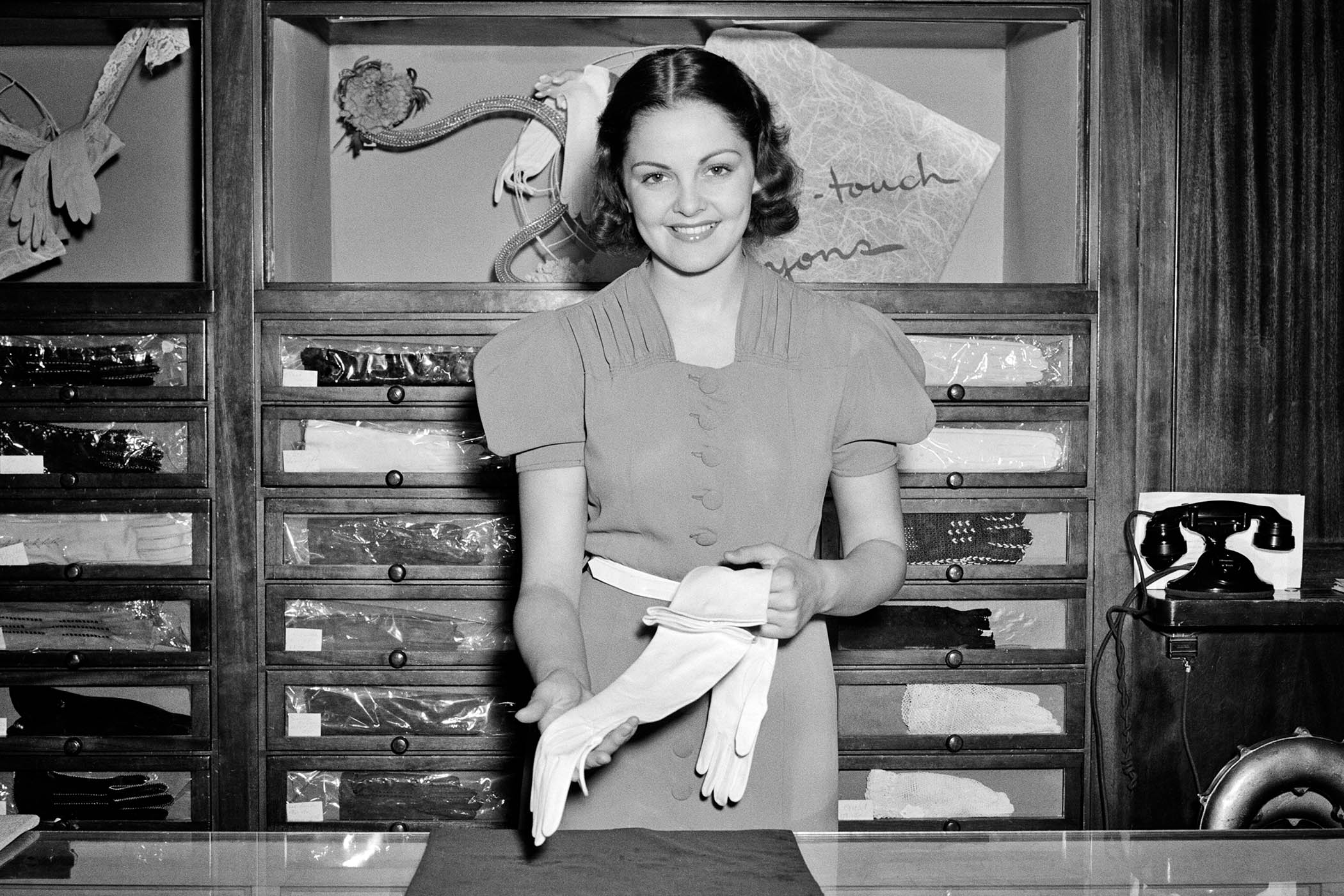
‘Being a shopgirl is where I learned how every meeting, however brief, had the potential to be a kind of seduction’
‘Being a shopgirl is where I learned how every meeting, however brief, had the potential to be a kind of seduction’
In my shops, I enjoyed the relative power I seemed to have compared to waitress friends, curtseying daily to red-faced letches. The waitress/customer relationship was a trickier performance than mine, it appeared – you had to give more of yourself, both because your job was to ensure they had a good time (meaning you must feign enthusiasm even when hungover) and of course, because you were working for tips. The role of a shopgirl, however, at least at the places I worked, selling expensive knickers or silver ice buckets, was less skilled. My friends in a vintage shop were employed because they looked cool, though part of looking cool was acting cool, meaning they appeared uninterested in the work and disdainful to the customers trying to simply buy a beret. Their bosses encouraged this – there was a displaced charm in their nonchalance that in the long run inspired, perhaps, an increased purchasing of sunglasses.
At 19, I got a job at a fashionable lingerie shop, because the manager had scrawled “Good hair!” on my CV. And while my feet were mauled by mandatory heels, the performance of being a perfect hostess was painless, as I liked the customers. The women anyway. The men were curious, a mix of old-fashioned perverts (great) and awkward husbands (annoying). If I’d been more cynical with my attitude to charm, perhaps I could have enjoyed them more, or at least sold more bras.
It all felt a bit like a game, being a shopgirl, rearranging the flowers, putting on your mixtape, dinging the till with a certain drama. At its worst, being a shopgirl was boring, sore and humiliating, but at its best, educational and theatrical with moments of genuine thrill. I think it was on the shopfloor that I grew up, and I think it was there, too, that I learned to appreciate charm, and how every single meeting, however brief, had the potential to be a kind of seduction. So I called Mark to tell him I was right, actually, that a charming person can simultaneously manipulate and delight, but if the delight lingers after you’ve forgiven the manipulation, then its value far surpasses the deception. And he listened thoughtfully and complimented me so sweetly that when I hung up, grinning, I realised he’d won, because damn, I’d been beguiled again.
Image by H. Armstrong Roberts/ClassicStock/Getty Images
Newsletters
Choose the newsletters you want to receive
View more
For information about how The Observer protects your data, read our Privacy Policy
Related articles: