

It’s January, and everything is different now. Look around you. Where once the shelves were stocked with tins of chocolates that you swear were bigger 10 years ago and the kind of egg-based booze that really curdles when you involuntarily vomit it back up at the end of the night, now it’s all changed. Suddenly we’re all about whole foods, wellness, clean living. Namaste.
Reconstituting itself for a consumer class that is increasingly on so much Ozempic that – even at the height of new year motivation – the gyms arequiet, food is different now. It is dense but spiritually empty. M&S made history last month when it claimed the dubious honour of becoming the first supermarket chain to debut a line of food advertised specifically for those on weight-loss jabs. Dubbed “nutrient dense”, the line of ready meals is low calorie, high protein, stuffed with fibre – all the good stuff. In real life they mostly look like bowls of slop. Pretty slop, but slop nonetheless.
Obviously, there is a way to avoid this madness, if you want to eschew a month of self-flagellation and continue eating unclean. If the days are long, your office tedious and the temperatures sub-zero, and you have, for some reason, decided not to drink alcohol until February, you are perhaps seeking a sweet treat. The good news is you can still find those. The bad news is that they have to contain pistachio.
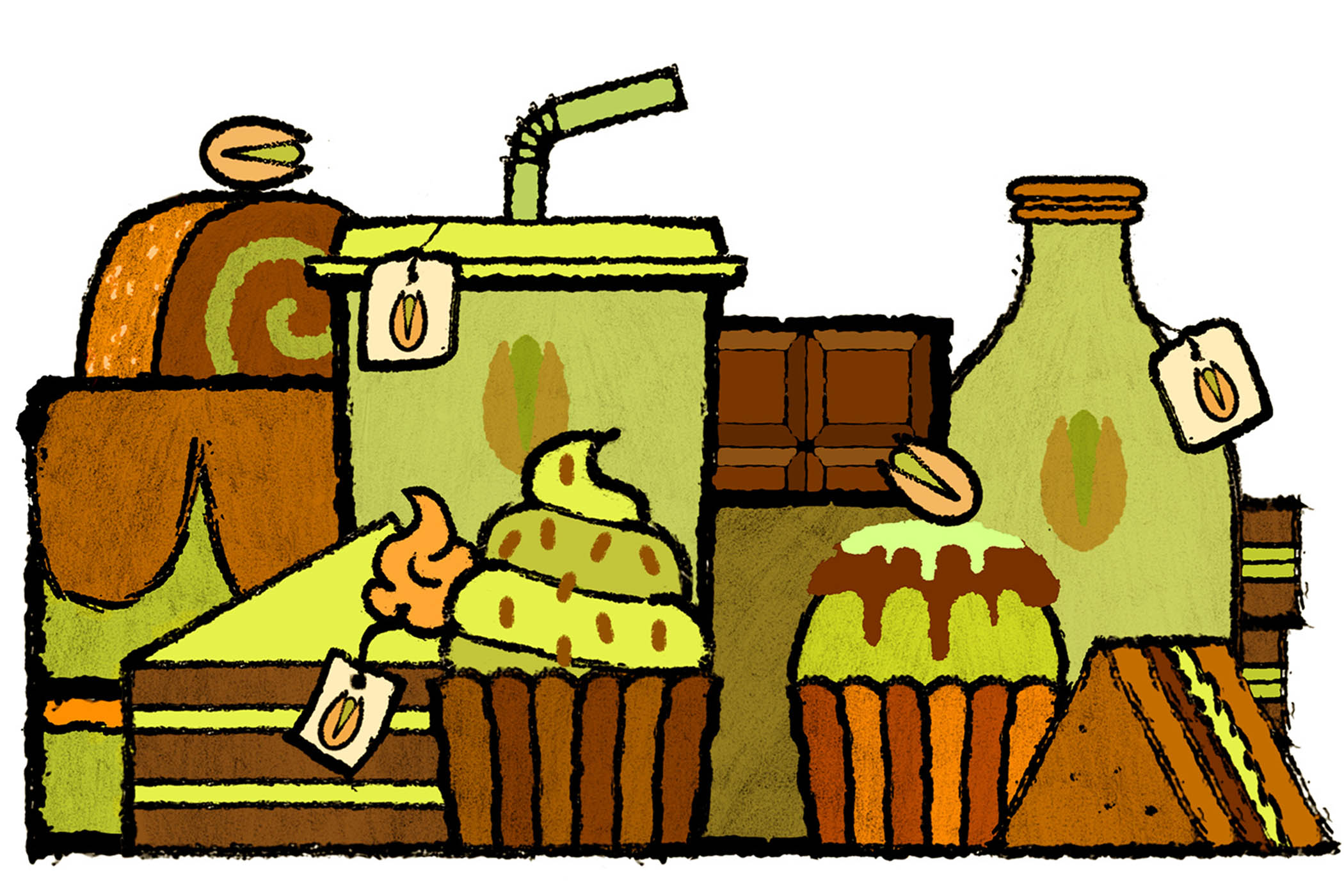
Everything is pistachio now. There are pistachio croissants and pistachio cookies. Pistachio chocolate bars, pistachio spread. Pistachio matcha powder, dates, milk, Lindor, shampoo and conditioner. Mugler has released a pistachio-scented perfume for men. It costs £75. There’s a glut of pistachio ice-cream. There has always been pistachio ice-cream, in fairness, but there is more of it now.
Dubai chocolate is like Dubai itself. It suggests a pastiche of luxury, but in reality it’s tacky, overpriced and bad for the planet
Dubai chocolate is like Dubai itself. It suggests a pastiche of luxury, but in reality it’s tacky, overpriced and bad for the planet
I can admit I am not immune to the pistachio industrial complex. I am but one woman and my spirit is willing, but my flesh is weak. So yes, I have tried the M&S pistachio cookie (a Crumbl bakery dupe), which tastes like preserved lemons and dust. I have been lured in by the pistachio croissant at the French bakery in Finsbury Park, which had a mouthfeel I can only imagine compares to chewing cement. I have tried and failed to curate an aesthetically pleasing Instagram story of my pistachio iced latte from the coffee chain Blank Street, before remembering that doing such a thing in my 30s is pathetic. I have not tried the pistachio tiramisu from Waitrose, because it is £6.50. But I was tempted.
It doesn’t have to be this way. In fact, it wasn’t always this way. Pistachiomania first picked up around 2024, but it’s set to reach its apex this year. Searches for “pistachio” on Waitrose are up 788% year on year. On Ocado it’s 203%, according to the BBC. If you’re looking for someone to blame for the microtrend fatigue, you can blame TikTok. If you’re ever looking for someone to blame for any and all kinds of trend fatigue, you can always blame TikTok.
Back in late 2023, the influencer Maria Vehera posted a strange, alluring ASMR-style video of what we now know to be a bar of Dubai chocolate, and the internet reacted as babies do when keys are dangled in front of their face. The clip has been viewed 120m times, sparking the Dubai chocolate trend. At the time, as the name suggests, it was only available in the UAE. Soon enough, though, copycats of the elusive snack (it’s essentially a chocolate bar filled with pistachio paste and shredded, crispy pastry dough, and covered in a Wonka-style gold wrapper) were everywhere. Scarcity encouraged overconsumption. Like Labubus, gold Claddagh hoops and bag charms, Dubai chocolate became a trend that was simultaneously devoid of meaning but important enough to induce rationing and price gouging.
Newsletters
Choose the newsletters you want to receive
View more
For information about how The Observer protects your data, read our Privacy Policy
Dubai chocolate is like Dubai itself. It suggests a pastiche of luxury and exclusivity, but in reality it’s tacky, overpriced and bad for the planet. It might look good on Instagram, but it’s ugly on the inside. And I’m not joking about it being bad for the planet. In regions of Argentina, most notably San Juan, an exponential demand for pistachios – the farmland for which has grown from around 1,000 hectares in 2013 to 8,500 hectares today – is leading to increased drought in an already water-starved area. I’m not saying your hunger for green Instagram-friendly goop is starving farmers in Argentina, but I’m also not not saying that.
Related articles:
In America, farmers have increased production of pistachios, exporting up to 70% of the yield. It’s a fad, but fads have market effects, particularly for those producing it, especially if the trend cycle moves on. And most of the pistachio craze is simply that: effective marketing. It’s brands and companies cashing in on the social media boom-and-bust model of consumption, even if it doesn’t result in anything high quality or worthwhile. Realistically, the percentage of pistachio in the overpriced treats currently breaking up a high street filled with wellness products is so low it’s often in the single digits.
Eventually, we’ll become so overwhelmingly fatigued with even that tiny amount, and pistachio will end up on the scrapheap along with salted caramel, pumpkin spice, or that millennial-era obsession with bacon.
Was Dubai chocolate the worst thing from 2025? No, obviously not. I am being facetious. But it was definitely up there. Pistachiomania may seem harmless, but it is a symptom of our age of rabid overconsumption in which a single ingredient can become a status symbol. It’s enough to make you welcome nutrient-dense Ozempic ready meals with open arms.
Illustration by David Foldvari