
When shopkeepers in Tehran’s main market went on strike last weekend, Arezou sensed an opportunity. For weeks, the 21-year-old university student and her classmates had been protesting against a continuing water crisis that has left taps in the capital running dry. As shops in the grand bazaar closed in protest over a dramatic collapse in the value of Iran’s currency, the students mobilised again.
“We knew this was the perfect chance for us to bring global attention to our demands to end this dictatorship,” she said.
Within hours of the students marching on to the campus, dozens of security forces – some wearing uniforms, others in plain clothes – rushed at them with batons. Many of Arezou’s friends were struck on the head, though none was seriously injured. Still, she said, they will not give up. “If we want the regime to go, we can’t back down now. There’s too much at stake.”
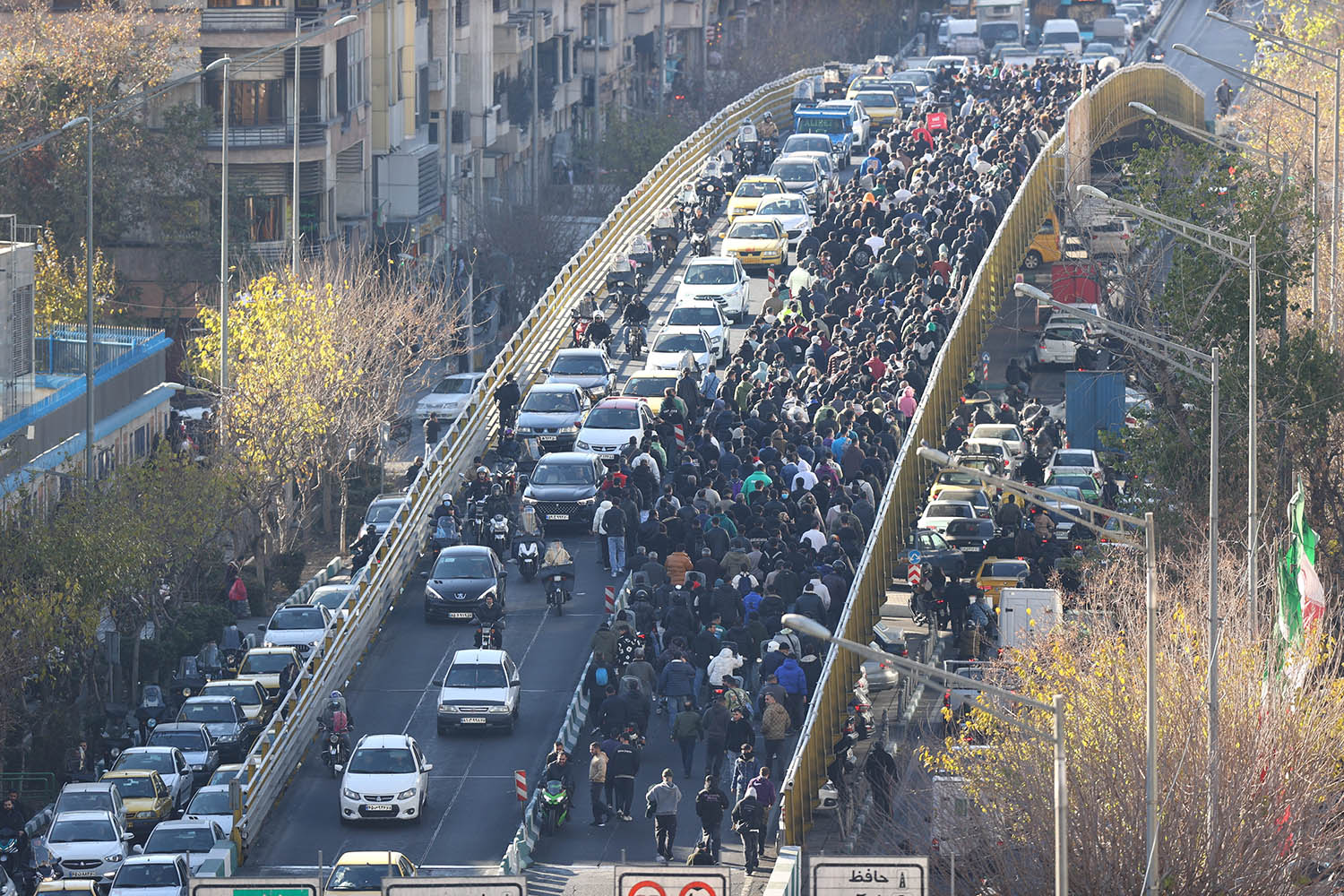
A week on, the unrest has spread from Tehran’s commercial districts to more than 30 cities and morphed into a broader call for political change. It is the biggest wave of protests Iran’s government has faced since 2022.
Along with her friends, Arezou was among the first to descend on Tehran’s Valiasr Square on 18 September 2022, just two days after a young Kurdish Iranian woman, Mahsa Amini, died in custody after she was detained by Iran’s notorious morality police for allegedly wearing her headscarf improperly.
Her death sparked a nationwide uprising under the banner “Woman, life, freedom”. Security forces killed hundreds of people, including 60 children.
Three years on, that slogan is reverberating through the streets of Iran again, mixed with chants of “Death to the dictator.” The protests pose a fresh threat to a regime that is facing mounting challenges, both at home and abroad. Israel targeted Iran’s nuclear facilities last year, igniting a 12-day war that shook the foundations of the Islamic Republic.
Across the region, Iran’s allies have been dealt severe blows by Israel and the US, compounding a continuing crisis of legitimacy for the country’s theocratic leadership. At home, inflation has soared as western countries tightened sanctions.
Related articles:
As protests spread last week, Iran’s reformist president, Masoud Pezeshkian, instructed the government to listen to protesters’ “legitimate demands”. A new central bank governor was appointed, pledging to restore economic stability.
On the streets, however, security forces have responded with increasing force. At least eight people were killed and more than 100 detained in the first week of unrest, according to exiled human rights groups.
Newsletters
Choose the newsletters you want to receive
View more
For information about how The Observer protects your data, read our Privacy Policy
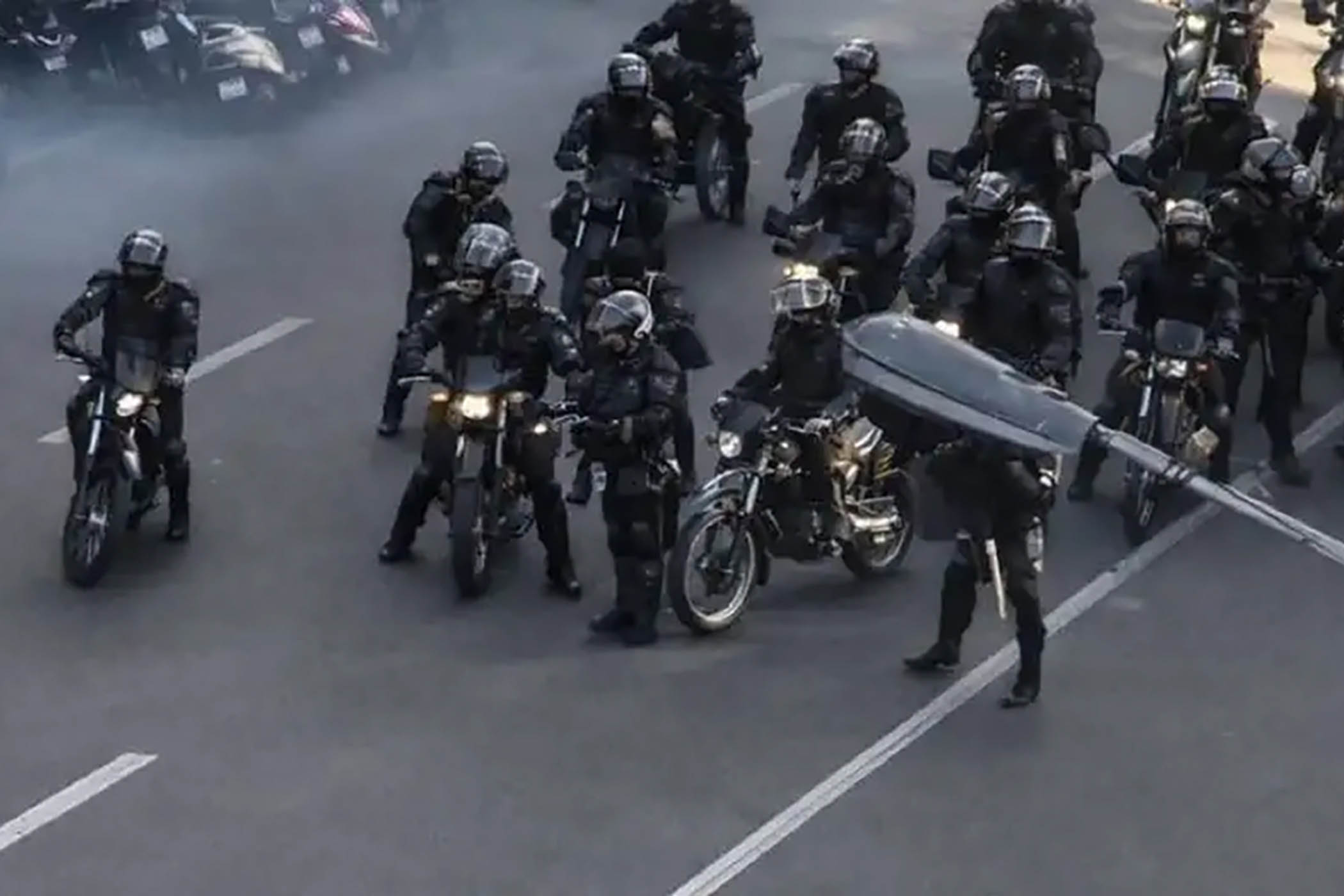
Witnesses described streets filled with teargas, smoke and the sound of gunfire as security forces used live ammunition, pellets and batons against unarmed crowds. In footage shared by human rights groups, bloodied and dead protesters with gunshot and pellet wounds lay on the ground in cities including Lordegan, Azna and Qom.
Donald Trump last week warned he was prepared to “come to the rescue” of protesters. , in his first comments on the unrest, Iran’s supreme leader, Ali Khamenei, insisted that the “rioters must be put in their place”.
“A bunch of people incited or hired by the enemy are getting behind the tradesmen and shopkeepers and chanting slogans against Islam, Iran and the Islamic Republic,” he told an audience in Tehran.
The protesters have a wide range of demands for political, economic and social change. The bazaar traders typically belong to more conservative and traditional parts of society than protesters from the “Woman, life, freedom” movement, who called for an end to the regime’s oppression of women. But they share growing anger over the deterioration of living standards.
“This is a regime and a system that has never been more challenged – perhaps more vulnerable – but from their perspective, the fact that they survived strikes by the US and Israel has, for a period of time, also emboldened them or unified the system a bit,” said Sanam Vakil, director of the Middle East and North Africa programme at Chatham House.
“It doesn’t mean that things can’t fracture or unravel now, but they are very much focused on managing internal issues, projecting calm and preventing protests from getting out of hand.”
On the sixth day of demonstrations, on Friday, 26-year-old restaurant owner Abbas headed to the centre of Qom with his cousins and friends. “The streets were filled with smoke,” he said. Within moments of reaching the main street, security forces opened fire.
“There was no warning. I don’t know how many were killed tonight but our streets are once again filled with our blood,” he said.
After prayers on Friday, protesters took to the streets of Zahedan in the Sistan and Baluchistan province. Baloch activist Farzin Kadkhodaei told The Observer that plainclothes security forces violently arrested at least three citizens during the protests near a mosque.
Human rights groups are raising the alarm over those detained during the protests. Executions have increased sharply in Iran this year to the highest level in more than three decades, according to the Norway-based non-governmental organisation (NGO) Iran Human Rights.
Since 2022, the authorities have increasingly used the death penalty as a tool to instil fear, break social resistance and deter further protests, said Mahmood Amiry-Moghaddam, the NGO’s director. “But the ongoing demonstrations show that this policy of rule by the gallows has failed.”
In Mashhad, a city in north-east Iran, 56-year-old Shaghayegh joined other mothers in her neighbourhood on a peaceful march on Thursday. Dozens of masked police personnel on motorbikes appeared and sped toward them, forcing them to disperse.
“The state media here is calling us ‘violent mobs’ and making comments like we are wearing masks and burning police stations and offices like mobs do,” she said.
“Our boys [protesters] are wearing masks so they are not identified and killed. These regime thugs are wearing masks to kill us and get away with it. You see the difference?”
Despite the crackdown, Shaghayegh said the protests had renewed her hopes for change.
“As a mother, I can’t look at my children struggling to get jobs and to feed their families in this economy,” she said. “I am optimistic that the kids now will not stop until they bring this regime down.”