

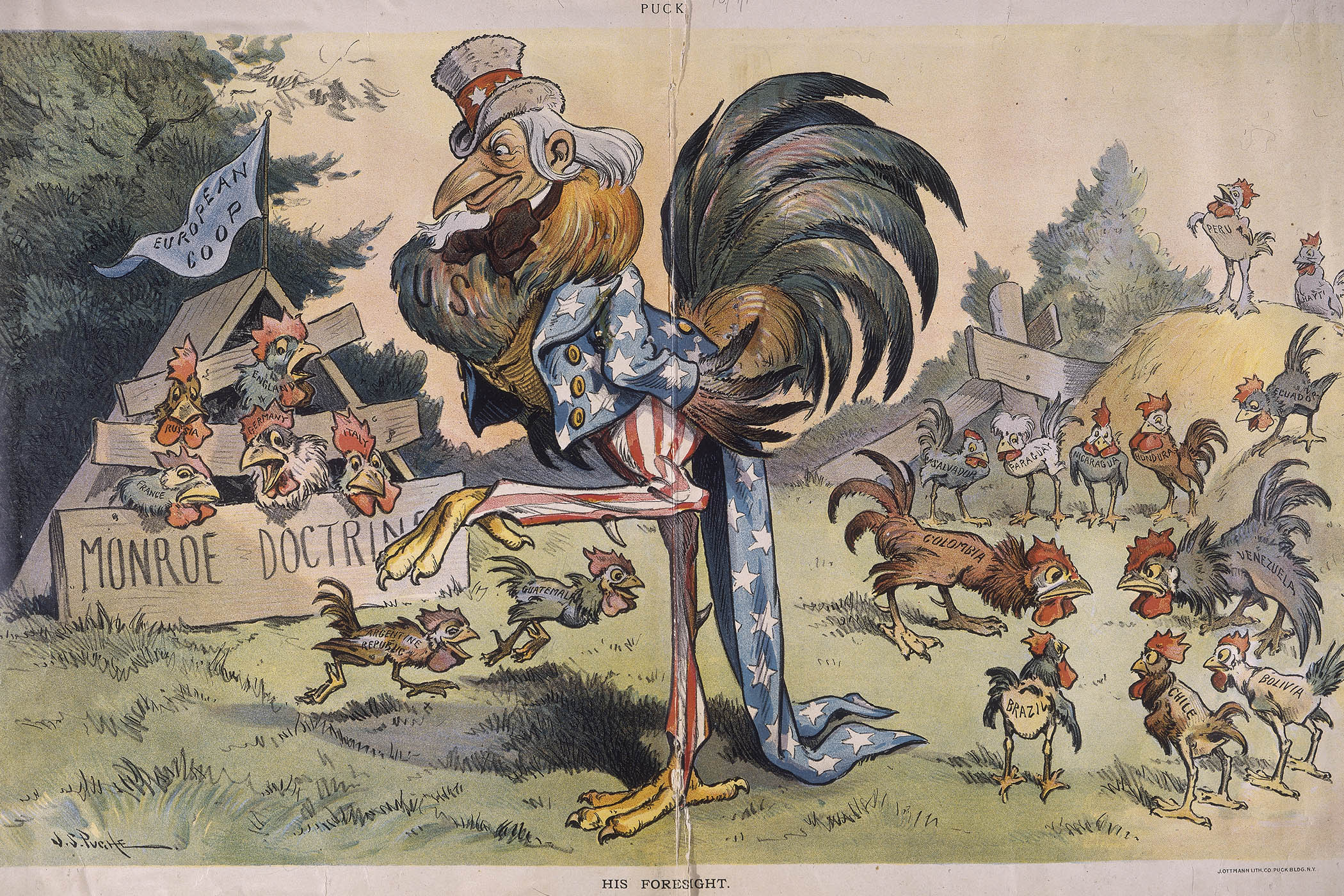
Tomorrow may determine the future of one of the world’s greatest cultural institutions. It marks the deadline set by the Trump administration for the Smithsonian to hand over to the government a vast trove of information about its museums’ plans and working practices. The questions are whether it can and will accede to this demand – and what the White House will do if it falls short.
President Trump has had the Smithsonian in his cross-hairs since the start of his second term. Last March he published an executive order “Restoring Truth and Sanity to American History” which alleged that the institution had been seriously undermined by “the influence of a divisive, race-centred ideology.” The policy from then on would be to “restore the Smithsonian Institution to its rightful place as a symbol of inspiration and American greatness… honouring the richness of American history and innovation, and instilling pride in the hearts of all Americans.”
The aim was nothing less than to cut out “improper, divisive, or anti-American ideology” from all aspects of the institution’s work.
An attack on the Smithsonian amounts to an attempt to shift the whole direction of American culture
An attack on the Smithsonian amounts to an attempt to shift the whole direction of American culture
An attack on the Smithsonian amounts to an attempt to shift the whole direction of American culture. It’s the world’s largest museum, education and research complex, including 21 museums – 11 of which are located along the National Mall in Washington DC – as well as the National Zoo. Among others, it takes in the American History Museum, the African American History and Culture Museum, the Air and Space Museum, the Portrait Gallery and the American Art Museum.
More than half its funding comes from the Federal Government. But until now it has always been regarded as an independent entity, with a considerable degree of autonomy. Its governing body, the Board of Regents, includes six congressional representatives but also nine Regents from the general public, each serving a maximum of two six-year terms.
As a first step, eight of the museums – including the American and African American History Museums – have been told to hand over copies of all the wall texts from their galleries, along with inventories of their permanent holdings and details of their budgets, education programmes and exhibition plans. There is special interest in programming to mark the 250th anniversary of the American republic this year.
The purpose of these demands is clear. In the words of White House officials, “We wish to be assured that none of the leadership of the Smithsonian museums is confused about the fact that the United States has been among the greatest forces for good in the history of the world.”
The leader of the Smithsonian, its secretary, is Lonnie Bunch III, one of the most admired museum directors in the world. He shot to international fame as the founding director of the wonderful Museum of African American History and Culture, which opened in 2016. He was appointed to the role of Secretary in 2019 – the first African American to hold that job in the Smithsonian’s history – and has had a distinguished six years in the job.
Related articles:
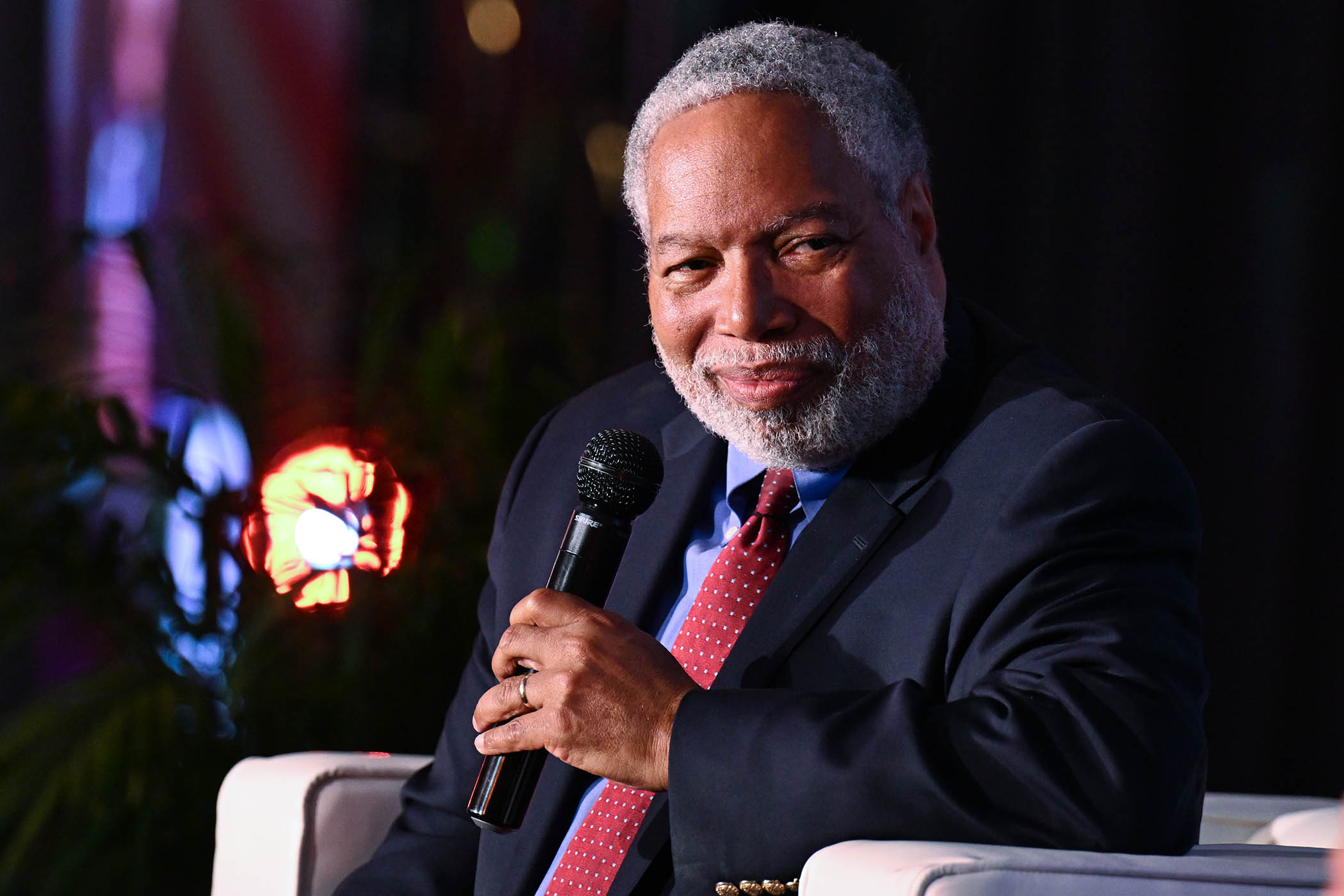
Lonnie Bunch III, 14th secretary of the Smithsonian Institution
This is the man that the White House communications director described last year as a “rabid partisan who manufactures lies out of thin air” and who was a “total” failure. The President’s views are just as clear. In a social media post last year, he wrote:
“The Smithsonian is OUT OF CONTROL, where everything discussed is how horrible our Country is, how bad Slavery was, and how unaccomplished the downtrodden have been – Nothing about Success, nothing about Brightness, nothing about the Future”.
Newsletters
Choose the newsletters you want to receive
View more
For information about how The Observer protects your data, read our Privacy Policy
Bunch’s response to this barrage of insults has been characteristically dignified. He set up an internal review to seek out examples of bias in the museums and galleries, and a team to review handing material over to the White House. He has quietly insisted throughout on the autonomy of the institution, telling colleagues: “As we all know, all content, programming, and curatorial decisions are made by the Smithsonian”. He continued, “With this mission and commitment in mind, we look forward to continuing to work collaboratively with all our government stakeholders.”
‘Funds apportioned for the Smithsonian are only avialable for use in a manner consistent’ with the administration’s wishes
‘Funds apportioned for the Smithsonian are only avialable for use in a manner consistent’ with the administration’s wishes
White House official
Threats from the White House take several different forms. In a letter last month, officials wrote, “As you may know, funds apportioned for the Smithsonian Institution are only available for use in a manner consistent” with the administration’s wishes.
Then there are efforts to change the Board of Regents. Vice President JD Vance, who is an ex officio member, has been told to seek the appointment of independent members who are “committed to advancing the policy of this (executive) order.”
On paper, the president does not have the nuclear option of removing the executive leadership. This did not stop him last year from announcing on social media that he had fired the head of the National Portrait Gallery, calling her a “highly partisan person”. In response, the Board of Regents made clear that it had responsibility for all personnel decisions – but she decided a few weeks later to step aside anyway.
What’s happening in America now is exactly in line with the behaviour of other autocratic governments over the years. In Hungary, one of the first steps of Viktor Orbán’s government after coming into power in 2010 was to centralise the management structures of the arts and cultural sectors, to put its people into leadership positions and to direct funding to institutions aligned with its thinking. Political priorities determine the cultural narrative, the Government’s overarching aim being to support “works reflecting a Christian-Nationalist ideology”.
There was a similar story in Poland after the rightwing Law and Justice party (PiS) came back to power in 2015. The major cultural institutions were stacked with party loyalists and their narratives changed to emphasise the country’s glorious history. One notorious example was the new Museum of the Second World War in Gdansk. The original idea had been to present the Polish story in an international context, and show the horrors of war everywhere. But this was dangerous stuff in a country that still finds it hard to accept that not all Poles were anti-Fascist heroes during the second world war. The founding director was eased out, and replaced by a PiS candidate – who last year was elected by his rightwing supporters as president of the Polish Republic.
In Moscow, Vladimir Putin has form when it comes to getting rid of histories that in his words include “internal contradictions and ambiguous interpretations”: the Russian story must only be about heroes. And, of course, the Nazis showed the way when it came to using museums and galleries to reinforce ideas of national identity. Initiated by Goebbels, the Degenerate Art Exhibition attracted a massive audience in 1937 when it opened in Munich. The works of artists such as George Grosz, Paul Klee, Pablo Picasso and Marc Chagall were exposed to mockery and revulsion as objects calculated to insult German feeling.
Two years ago, Lonnie Bunch told the New Yorker “This is one of the most partisan times that we’ve had, definitely in my lifetime. I would argue that it’s the most partisan time since the civil war”. And he went on “That is a challenge. We have to be able to address that. And I think the best way to do it is: one, never lose your scholarly integrity, and two, build those allies across both sides of the aisle”.
But the sad truth is that scholarship and integrity don’t count for much in today’s Washington, where what is required above all is unquestioning fealty to the president. In this 250th anniversary year of the Republic, it seems there is room for only one story to be told about the glorious and unblemished history of the United States.
Footnote
In the UK, the prime minister has to approve the appointment of most trustees of the national museums, and over time leaders of both main parties have sought to get their favoured candidates in place. But this tends to be used as a useful piece of patronage rather than an effort to change the character of the institution, and there is a formal vetting procedure in place.
Among other things, candidates have to be interviewed by a panel that includes an independent outsider. If the panel can agree on the magic word “unappointable”, then in my experience the candidate is shown the door whatever the prime minister might wish.
Political efforts to go beyond this and bring radical change to an institution are generally seen as ridiculous rather than threatening – as in 2021 when Sir John Hayes, chair of the Common Sense Group of Conservative MPs, urged George Osborne, incoming chair of the British Museum, to “promote the museum as a patriotic enterprise which celebrates Britain’s glorious history rather than apologises for it.”
So far there are no signs that Osborne intends to follow this advice.
Sir Richard Lambert is chair of the Observer’s editorial board
Photograph by David Coleman / Alamy