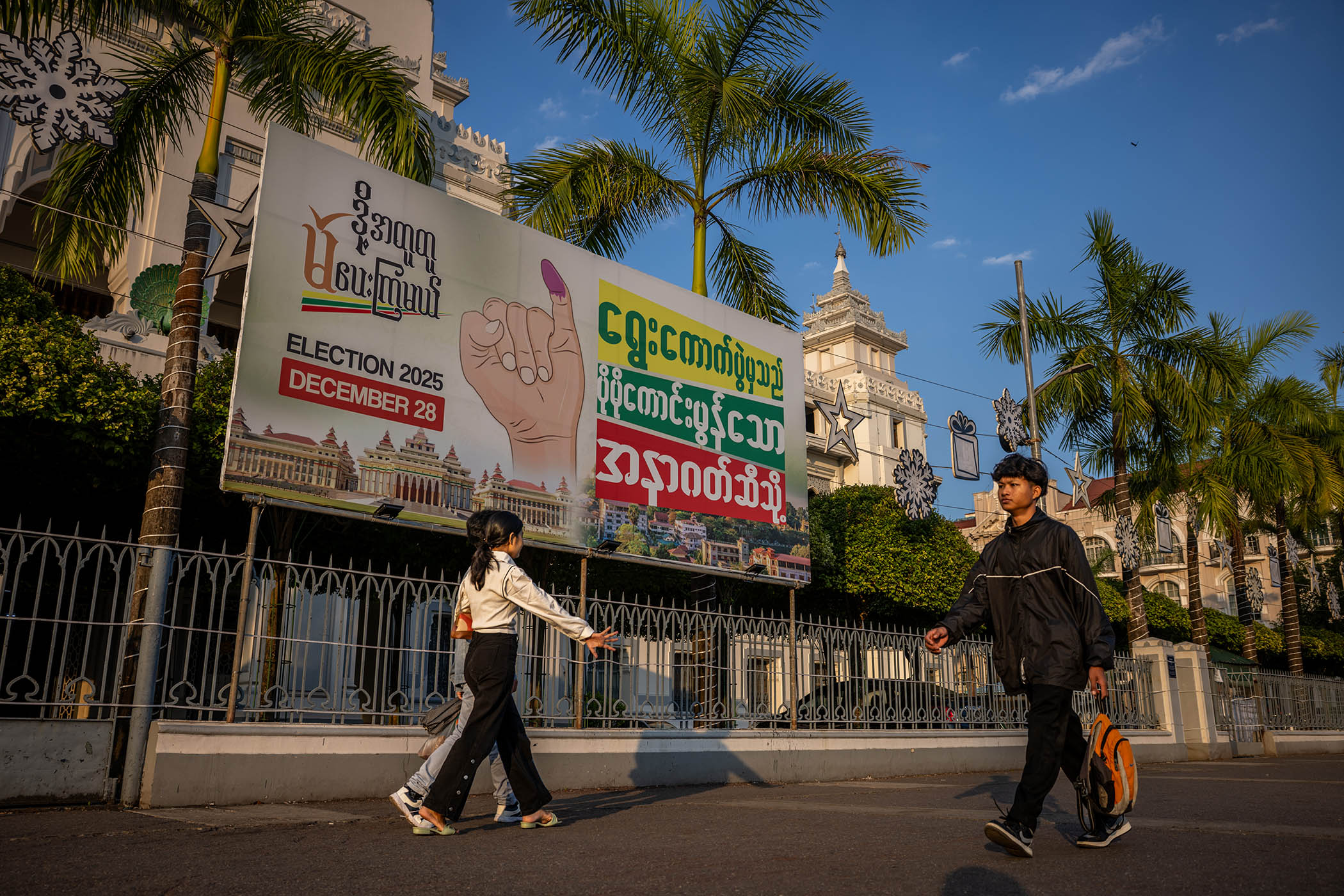



The buildup to the general election in Myanmar has been subdued. The most popular politician – Aung San Suu Kyi – is in prison, much of the country is controlled by rebels and there has been little campaigning in Yangon, the country’s economic hub.
“There is a reason for the silence – fear,” said a salesperson in the city, who requested anonymity for fear of reprisals. “People are afraid that if they speak about politics and the election, they could be arrested. This fear is strong, and it fills our daily lives.”
Myanmar’s military regime hopes the vote will legitimise its grip on power, four years after it deposed Aung San Suu Kyi in a coup. Earlier this year it introduced a law to protect the election from “obstruction, disruption and destruction”, with penalties of up to 40 years in prison.
More than 200 people have been charged, including someone who posted a heart emoji beneath a Facebook post criticising the election. Spoiling ballots has also been banned. Some voters fear they will be punished for not going to a polling station.
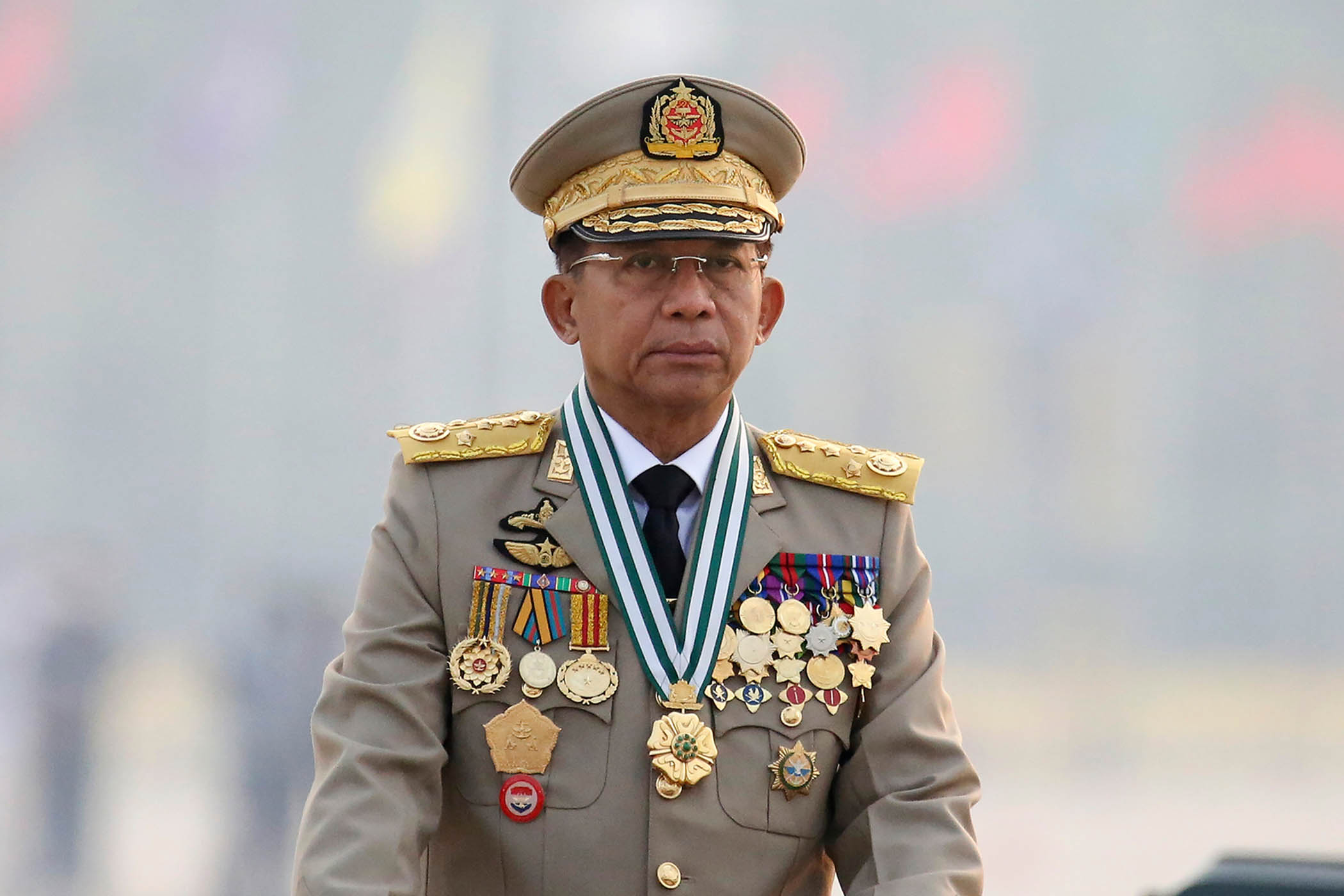
Military ruler general Min Aung Hlaing
“I’m a well-known person in my town,” said a doctor in Mandalay, Myanmar’s second-largest city. “I will vote because if I don’t, I will definitely be arrested.” But turnout is still expected to be low. “I don’t want to vote, and many others feel the same way,” said another resident of Yangon. “People are scared to speak their minds. They feel it’s safer to have nothing to do with the election.”
Related articles:
Tom Andrews, the UN’s special rapporteur on Myanmar, has denounced the vote as a “sham”, and the Association of Southeast Asian Nations (Asean) is not sending observers. But the election has received the backing of the region’s most important power, China, which shares a border with Myanmar.
Beijing has invested billions of dollars in the country, building roads and a strategic pipeline connecting the Chinese interior to oil and gas fields in the Bay of Bengal. Stability is its key priority in Myanmar, where thousands of young people and several ethnic rebel groups are fighting the military.
‘The military are using this election as a political tool to legitimise the coup and their power’
Ejaz Min Khant
“The Chinese government sees this as an opportunity for a return to a degree of normalcy that enables them to engage further with the regime, stabilise the country and protect their interests,” said Paul Vrieze, a Myanmar expert at the Swedish Institute for International Affairs.
Vrieze added: “China is comfortable with a degree of chaos [in Myanmar]. But what they don’t want to see is a complete collapse of the regime.”
Myanmar’s military rulers see the election as an opportunity to end their pariah status. The regime has lifted a state of emergency and rejects criticism of the vote, which will be held in three stages. It is calling it a way to “transition the country towards a multiparty democracy”. Fifty-five parties have registered to participate, although only nine are competing nationally. Many voters feel the candidate lists are dominated by serving or former military personnel.
“They are using this election as a political tool to legitimise the coup and their power, so they don’t want any competition or opposition,” said Ejaz Min Khant at Fortify Rights, a regional civil society organisation. “All the parties participating are supported by the military, directly or indirectly.”
Aung San Suu Kyi’s National League for Democracy, which won landslide victories in the past two elections, is not on the ballot. The party was dissolved in 2023 after it refused to comply with tough electoral rules set by the regime, and Aung San Suu Kyi has been in prison since 2021. She is one of 22,000 people the regime has put behind bars on political grounds, according to the Assistance Association for Political Prisoners.
Myanmar’s conflicts are also intensifying, with airstrikes by drones and fighter jets increasing by 30% this year. This includes a strike against a hospital in Rakhine state this month that killed dozens. The uptick came as the military tried to recapture territory ahead of the vote. The government controls about 20% of the country, according to the EU, and there will be no voting in several areas.
Many Myanmar nationals simply want an end to the violence. “I’ve lost many friends, on both sides,” said Wai Yan Phyo Naing, an independent analyst who lives in exile. “Many, many young people have been killed.”
Photograph by Lauren DeCicca/Getty Images, AP