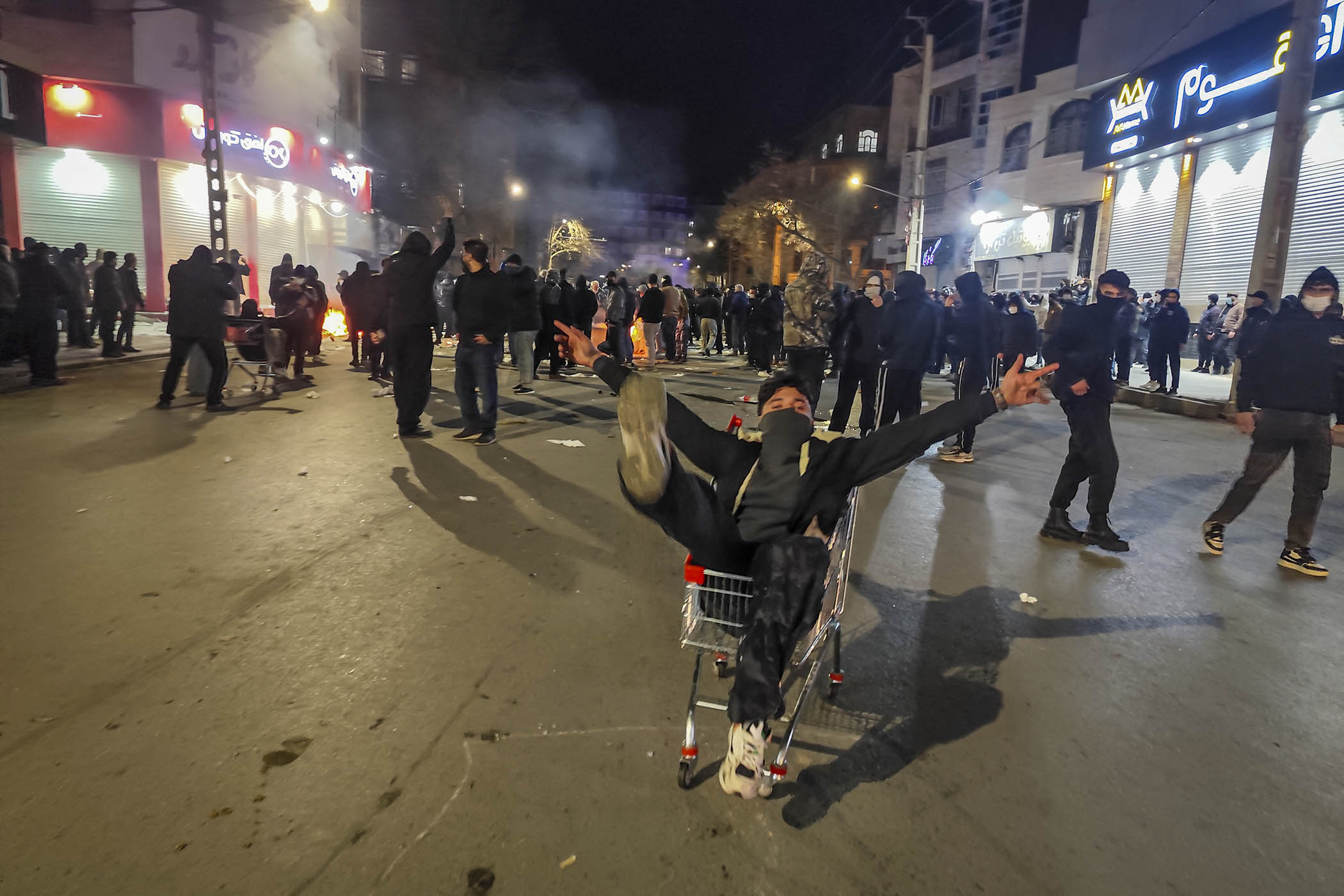
A column of cars and shouting protestors stretched along the highway on the outskirts of Mashhad. Video showed smoke rising above the long line of traffic as demonstrators on foot wove between cars, chanting against the regime.
Other videos from Iran’s second largest city showed protestors confronting security forces along a highway in Mashhad, sometimes walking among fires burning along the road. State media showed images of buses set ablaze, while last week demonstrators joyfully tore down a flag from a pole in the centre of the city before ripping it apart.
That major protests have spread to Mashhad is a sign of just how deep discontent runs with the Iranian regime. Iran’s second-largest city is the hometown of supreme leader Ali Khamenei, as well as several other top government officials and influential clerics. Close to the border with Afghanistan, it is also one of the holiest pilgrimage sites in Shia Islam, home to the golden dome of the shrine of Imam Reza.
“Mashhad is symbolic, it’s the religious heart of Iran,” said Maziyar Ghiabi, a professor and expert on Iran at Exeter university. “Mashhad has a population that is certainly conservative but is changing under huge economic pressures – and they don’t have hope that the system, as it stands today, can deliver. Very few do – even those in government.”
Protests about Iran’s collapsing economy have tipped over into mass demands for the fall of the regime, fuelled by the demonstrators’ conviction that the state is unable to solve the cost of living crisis or improve their lives at all. The religious population of Mashhad is not spared this economic pain, said Ghiabi, even if the city’s role as a pilgrimage site means that clerics and their networks are often able to benefit from what he described as “a mafia-like rentier system, which is what Iran’s economy has become now”.
Iran’s religious community is feeling “the economic burden of the past few years,” he explained, pointing to a wave of criticism about inflation and Iran's failing economy that built up on social media before an internet blackout plunged the country into darkness.
Some critics from within Iran’s religious community have even voiced ideological disagreements with the regime. In one viral video, an elderly cleric in a white turban curses Khamenei as well as his predecessor Ayatollah Khomeini. “All the people must rise to uproot this evil, murderous regime,” he says, speaking softly to the camera on the street before agreeing with onlookers who call for Khamenei’s death.
‘When the dust settles these are likely to have been some of the largest protests in the recent history of the Islam Republic, certainly the most threatening
‘When the dust settles these are likely to have been some of the largest protests in the recent history of the Islam Republic, certainly the most threatening
Farzan Sabet, analyst, Geneva Graduate Institute
The inclusion of religious conservatives in the protest movement has not stopped demonstrators targeting mosques and other religious sites, aiming their anger at symbols of the theocratic state’s repression. In Mashhad, protestors reportedly set fire to a seminary building, while the Tasnim news agency – allied to the Iranian Revolutionary Guard Corps – described demonstrators desecrating a mosque in Tehran.
Related articles:
“When the dust settles these are likely to have been some of the largest protests in the recent history of the Islamic Republic, certainly the most threatening to the system,” said Farzan Sabet, an analyst at the Global Governance Centre at the Geneva Graduate Institute. “They are some of the most wide-ranging, and an important part of that is what’s happening in Mashhad. The city is a bastion of the regime, its supporters, and a stronghold of the system.”
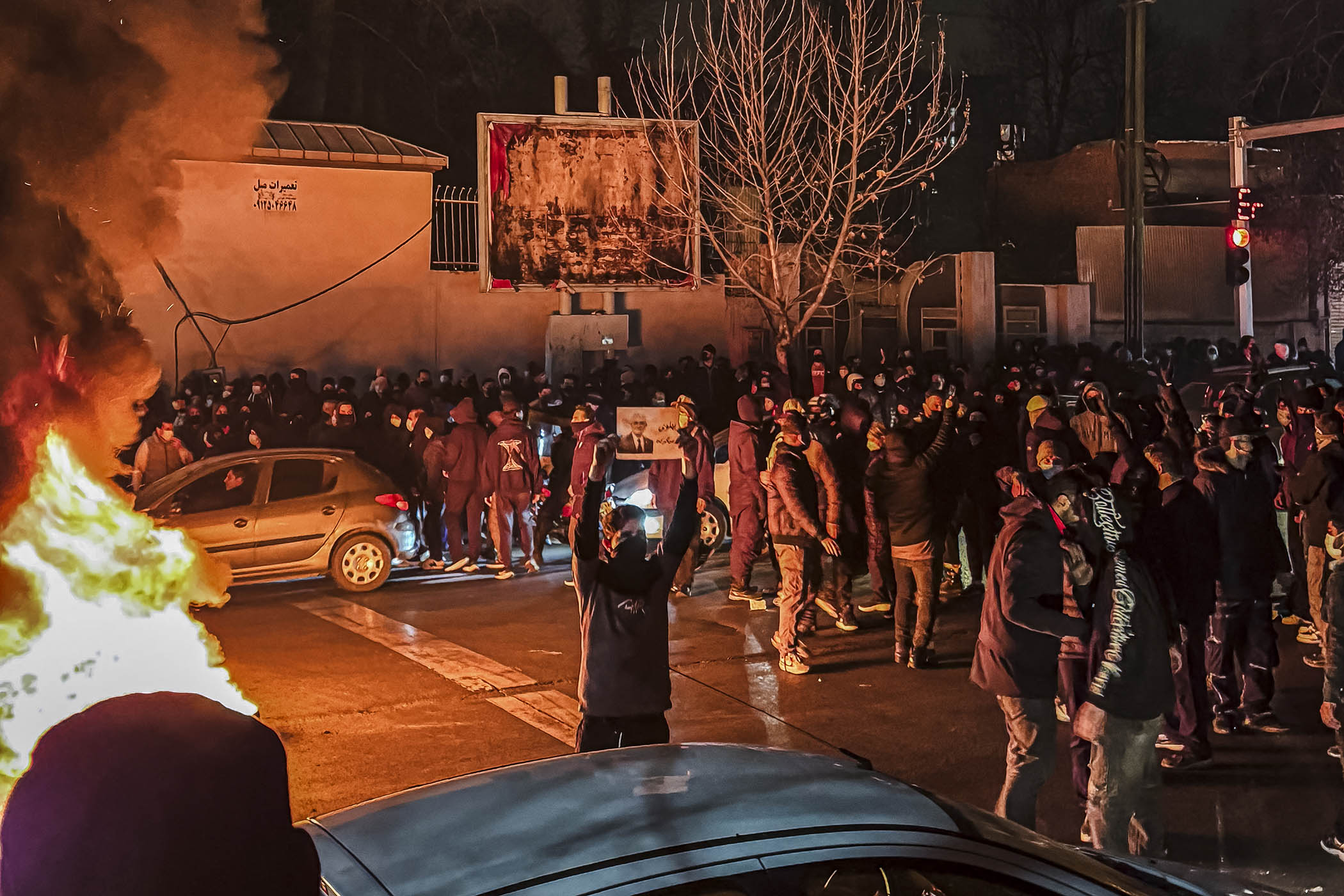
Iranians block a street during a protest in Tehran, Iran, on 9 January
All are under attack: the Tasnim news agency accused assailants of carrying out what it termed “an assassination”, of Farajollah Shooshtari, an influential figure in Mashhad, former provincial official, and the son of a notable member of the IRGC during protests that swept the city.
Newsletters
Choose the newsletters you want to receive
View more
For information about how The Observer protects your data, read our Privacy Policy
Mashhad briefly saw large protests during the 2009 Green movement, and again in 2022 during a bout of protests sparked by the death in custody of Jina Mahsa Amini, the activist jailed for refusing to wear a hijab. When 23-year-old Majidreza Rahnavard was accused of stabbing two members of the Basij paramilitary forces in Mashhad during the 2022 protests, his public execution became symbolic of how far the regime would go to prevent demonstrations from happening again. A news agency with deep ties to the country’s repressive judiciary published a slideshow of images showing Rahnavard hanging from a crane in Mashhad with a black bag over his head, his hands and feet bound as masked security forces stood by.
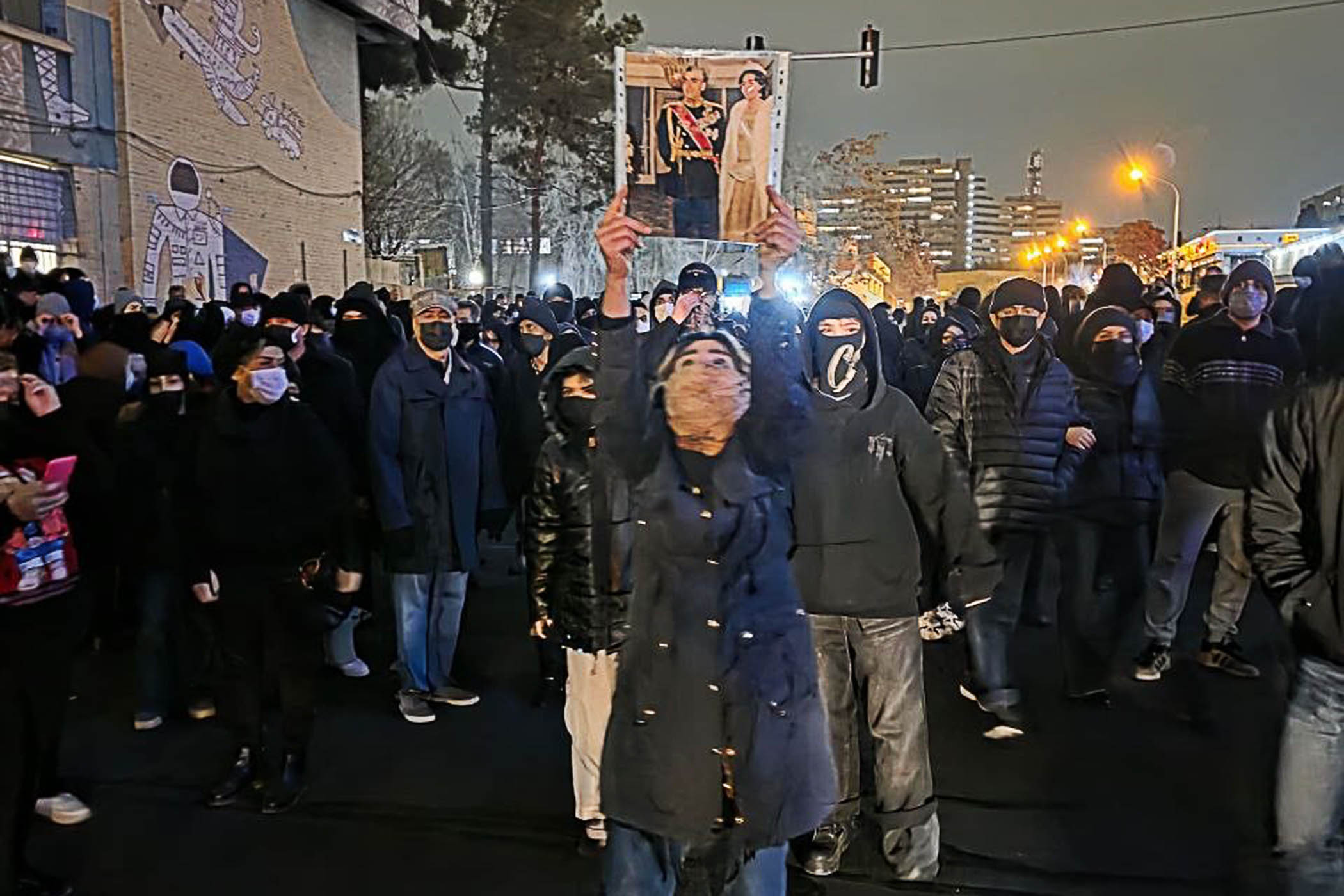
Rahnavard’s public hanging failed to quell the discontent building up in the city, and protests against the regime have sprung up this year in unexpected places normally associated with high levels of regime support, including in Sabet’s family hometown in the province of Fars. “I saw videos from this small town with a large procession of conservative women wearing the chador, chanting death to Khamenei, long live the Shah,” Sabet said.
Protests have also been reported in the seminary city of Qom. But their holy status has not spared cities like Qom and Mashhad from being swept up in a brutal state crackdown on the protests: 17-year-old Mohammed Nouri was killed at a demonstration in Qom – relatives told Iranian media that he was shot in the chest.
Rights groups fear that an internet blackout now lasting several days has cut off information about a mass crackdown by the security forces across Iran. The monitoring group Human Rights Activists News Agency said at least 490 protestors had been killed during demonstrations, as well as 48 members of the security, warning these numbers were expected to rise. Over 10,600 people have been detained, they said.
One video from late last week showed piles of bodies in black bags lying in the grounds of a forensic medicine centre in Tehran, as relatives searched among them to identify their loved ones. Even state television broadcast scenes from a morgue that showed multiple rooms with dozens of bodies lain on the floor, families searching amongst the faces of the dead.
Sabet said protests about the economy spiralling into demonstrations where even traditional supporters of the regime are calling for its end show the depth of Iranian society’s impatience with its leadership – even if the risk of protesting is death.
“This is people expressing that they understand, this system has no solutions,” he said. “People feel their lives are going nowhere.”
Photographs by Kamran/Middle East Images/AFP via Getty Images