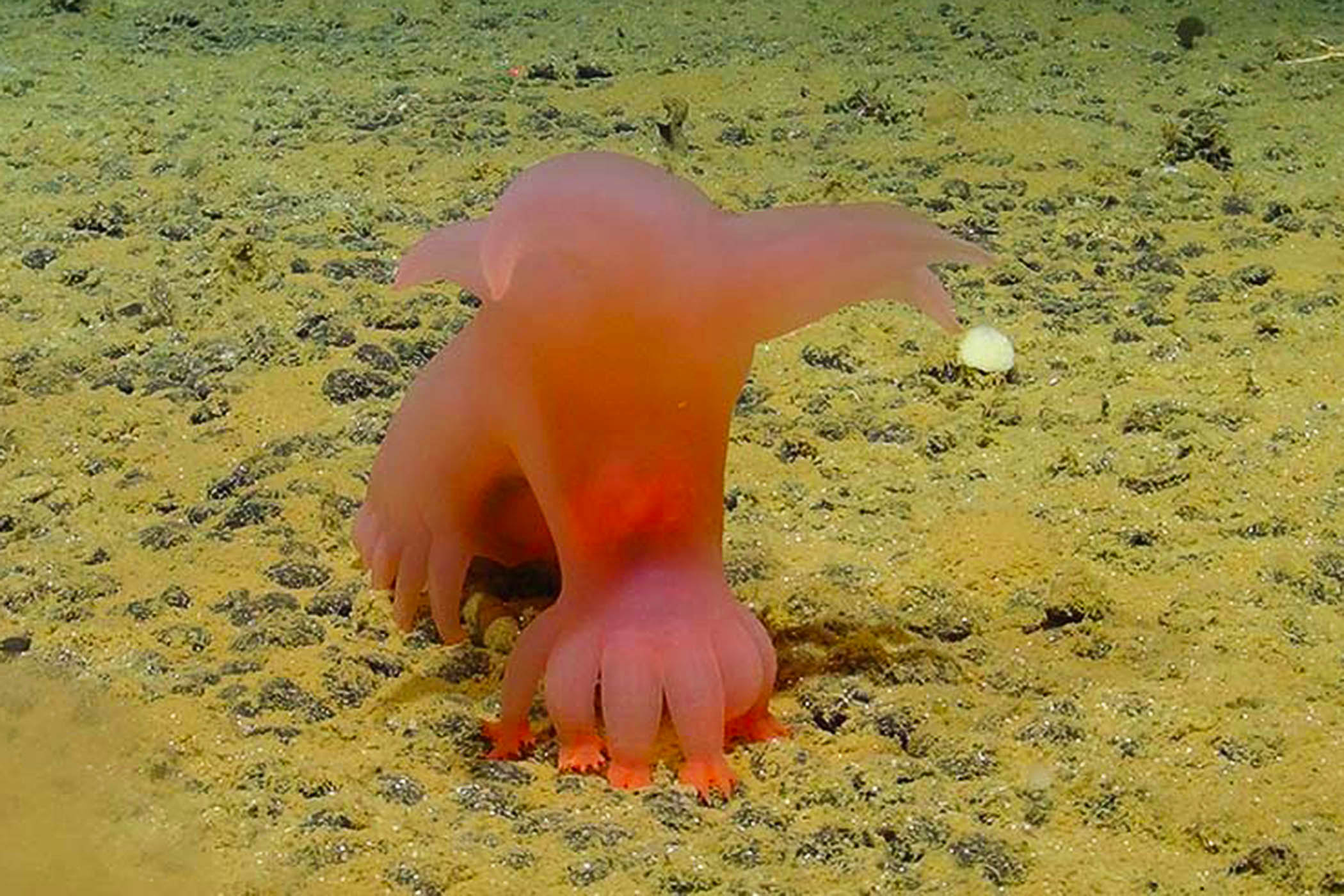


Four thousand metres below the surface of the Pacific, without sunlight and at near-freezing temperatures, there is an abundance of alien-looking life, from the bright pink sea cucumber that scientists nickname the “Barbie pig” to the brittle star, which has long, whip-like limbs it uses to scuttle across the seafloor.
That abundance is under threat from a plan being considered by the Trump administration to open up this part of the ocean – far beyond US territorial waters – to mining for nickel, cobalt, copper and manganese.
This week (27–28 January) the US government will consider mining applications from the Metals Company, a business based in Canada and listed in the US, which aims to start extracting minerals from the seabed next year.
The move to increase US access to the minerals bypasses international law, and has drawn protest from environmental activists and China. Deep-sea riches include metals critical for the green transition, such as nickel and cobalt for batteries and copper for electrification.
At first sight, securing these resources seems a curious priority for a US administration that has thrown its weight behind oil and gas extraction and strangled offshore wind. However, geopolitical rivalry has given impetus to the move to dig for treasure in the abyss. Trump signed an executive order pushing for mining, describing it as a “core national security and economic interest”.
Louisa Casson, deep-sea mining campaigner at Greenpeace, said: “There is definitely a concern among the Maga crowd that the US is behind China in the dominance of critical mineral supply chains.”
China has a powerful grip on the global supply and processing of many metals essential for the green transition. One Chinese company, CMOC, produces about a third of the world’s cobalt supply. Indonesia, where rainforest has been cleared for mining, is the world’s biggest supplier of nickel. But Chinese business controls the supply chain.
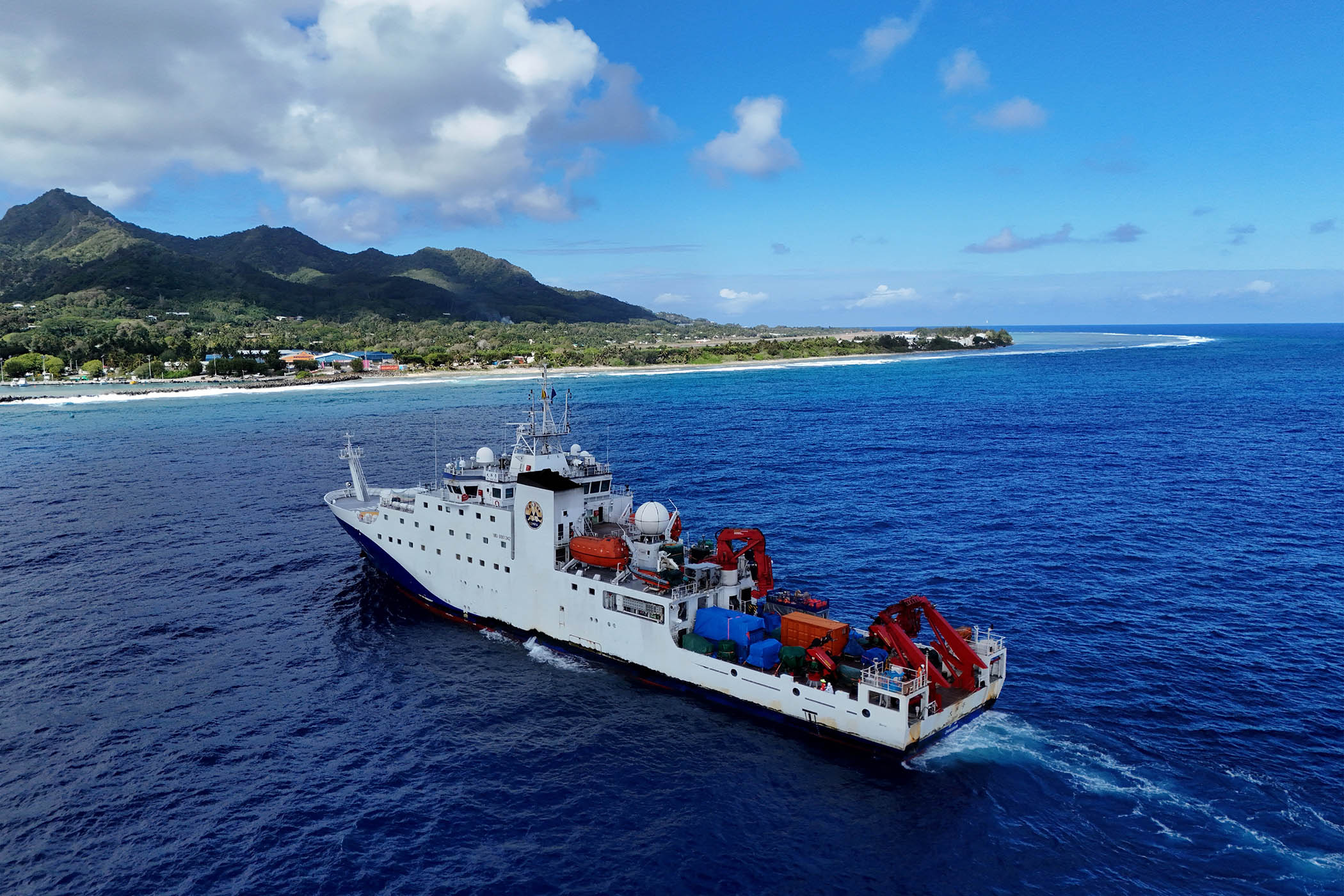
A Chinese vessel in the Cook Islands last November as part of a mission to support research into potential deep-sea mining
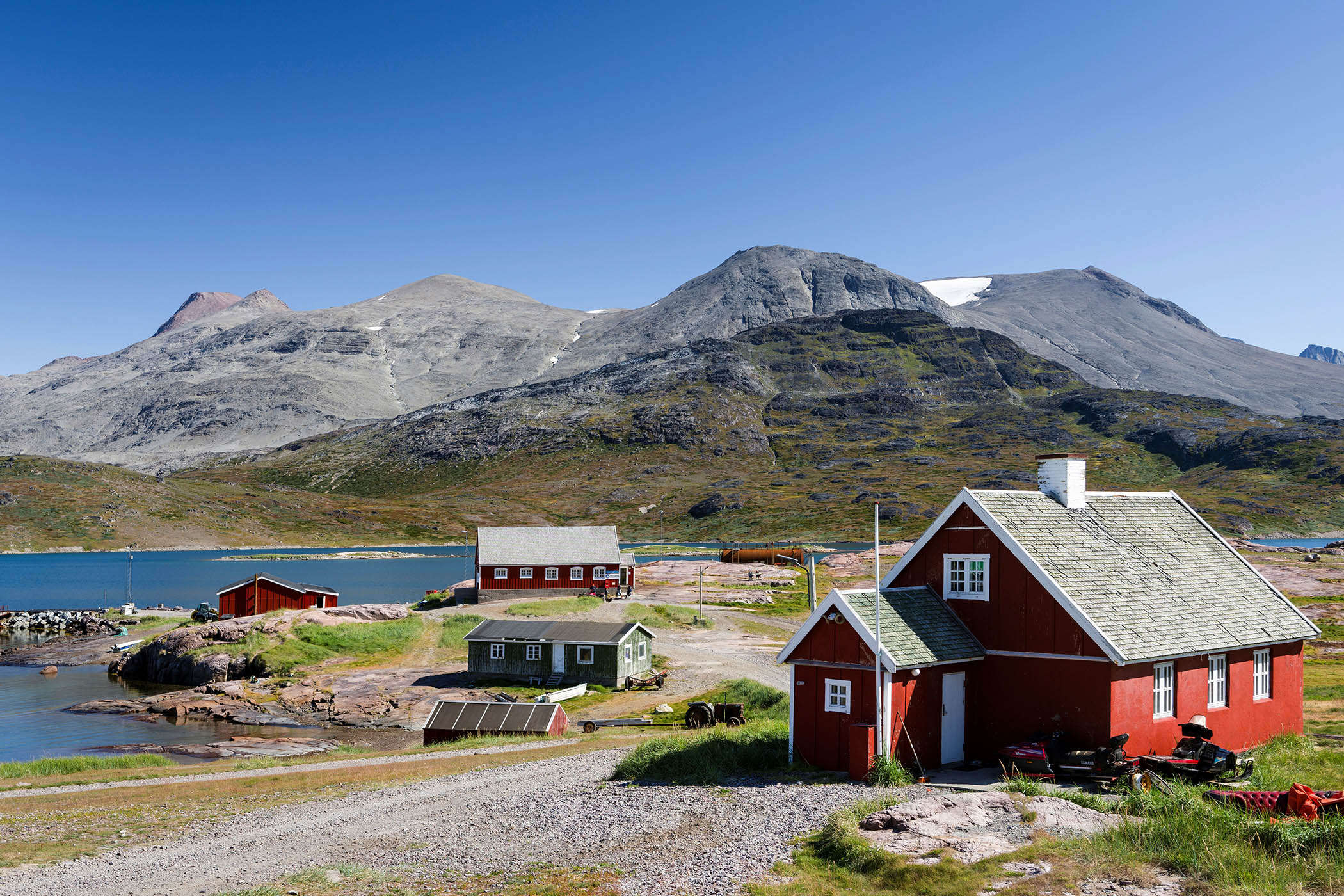
The quest for US companies to benefit from the planet’s resource wealth has been a theme of Trump’s foreign policy, from the negotiation over Ukraine’s deposits of lithium and titanium in exchange for aid to the agreement to supposedly end fighting in Democratic Republic of Congo, and the acquisitive eye the president has cast over mineral-rich Greenland. For all these efforts, China still dominates on land. Beneath the high seas, though, everything is up for grabs.
Related articles:
The deep sea is an extreme environment, not just for its dark and cold but for the extraordinary pressure exerted by the water above it. At 4,000 metres, the pressure is approximately 400 times that on the surface – way beyond what an unprotected human body could tolerate.
The specially adapted creatures that thrive on the seafloor live on what scientists euphemistically call “marine snow” – the remnants of dead animals and plants, as well as faecal matter drifting down from higher levels.
Newsletters
Choose the newsletters you want to receive
View more
For information about how The Observer protects your data, read our Privacy Policy
In 2022, the Metals Company conducted a test extraction in a remote area of the Pacific between Hawaii and Mexico, a vast undersea plain known as the Clarion-Clipperton zone that spans about 6m sq km. The test vessel extended an enormous pipe to the thick mud of the seafloor, pumping up more than 3,000 tonnes of nodules – lumps of matter the size of potatoes that are rich in metals.
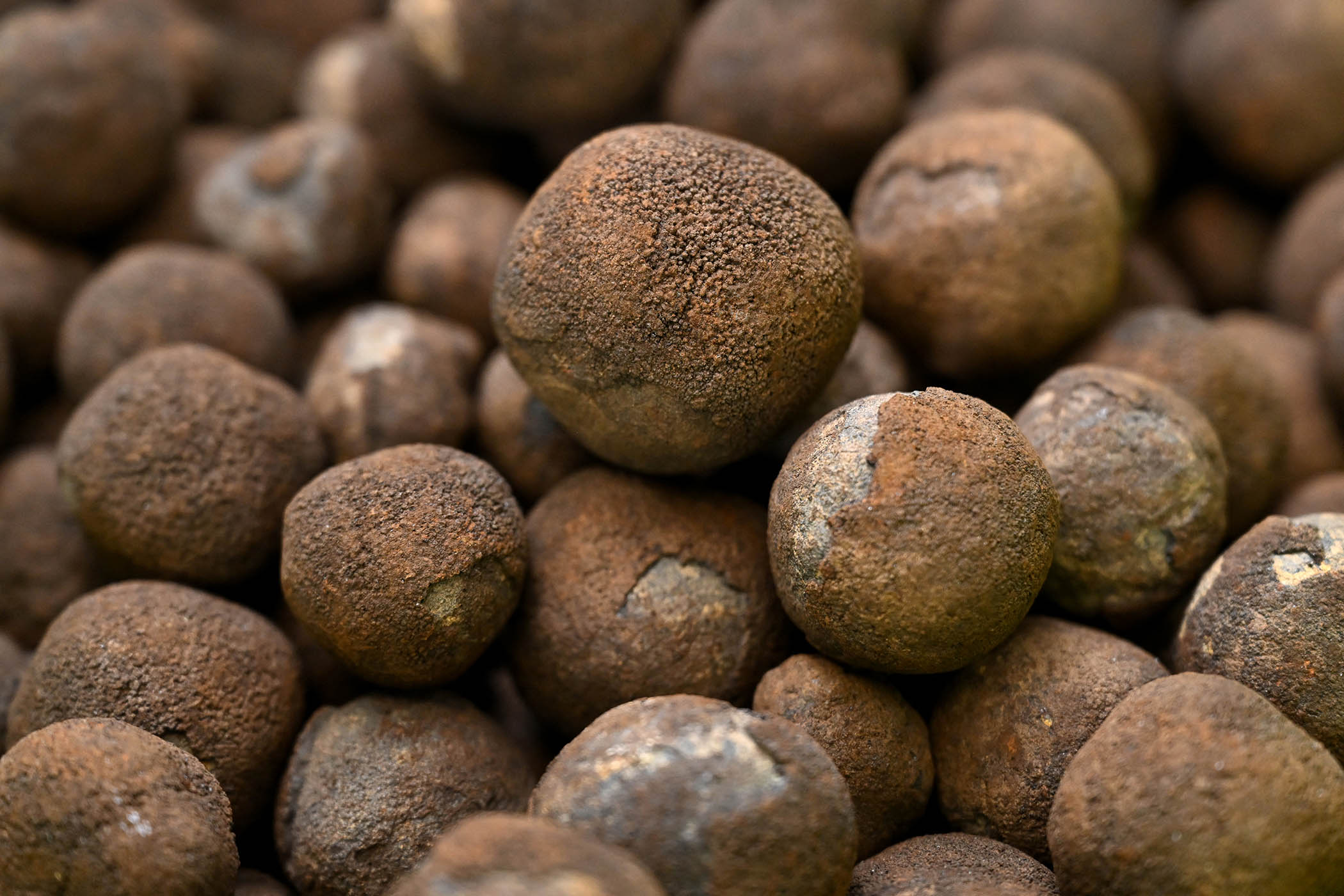
Polymetallic nodules are encrusted with coveted minerals
Scientists who accompanied the mining vessel, comparing samples taken before and after the extraction of the nodules, found that the number of species declined by more than 30% while the overall number of deep-ocean-dwelling animals dropped nearly 40%. Samples taken from unmined areas did not show the same changes, according to a study published in science journal Nature Ecology and Evolution late last year.
This is one of the least explored regions of the planet, home to a variety of creatures that filter feed on marine snow or trawl through the thick sediment at the base of the ocean for edible fragments. As well as the Barbie pig, the inhabitants include glass sponges – whose bodies contain glass-like particles of silica and are thought to live for up to 15,000 years – and a sea cucumber with a translucent body. Photographs of this creature show the sediment filling its intestines, like the invisible man putting on a hat.
The rules governing seabed mining in international waters are set by a UN-affiliated body called the International Seabed Authority (ISA), which was set up under the Law of the Sea, a global treaty. When other countries backed the deal in 1982, the US voted against it, and President Ronald Reagan refused to sign, stating that it would “deter future development of deep-seabed mineral resources”.
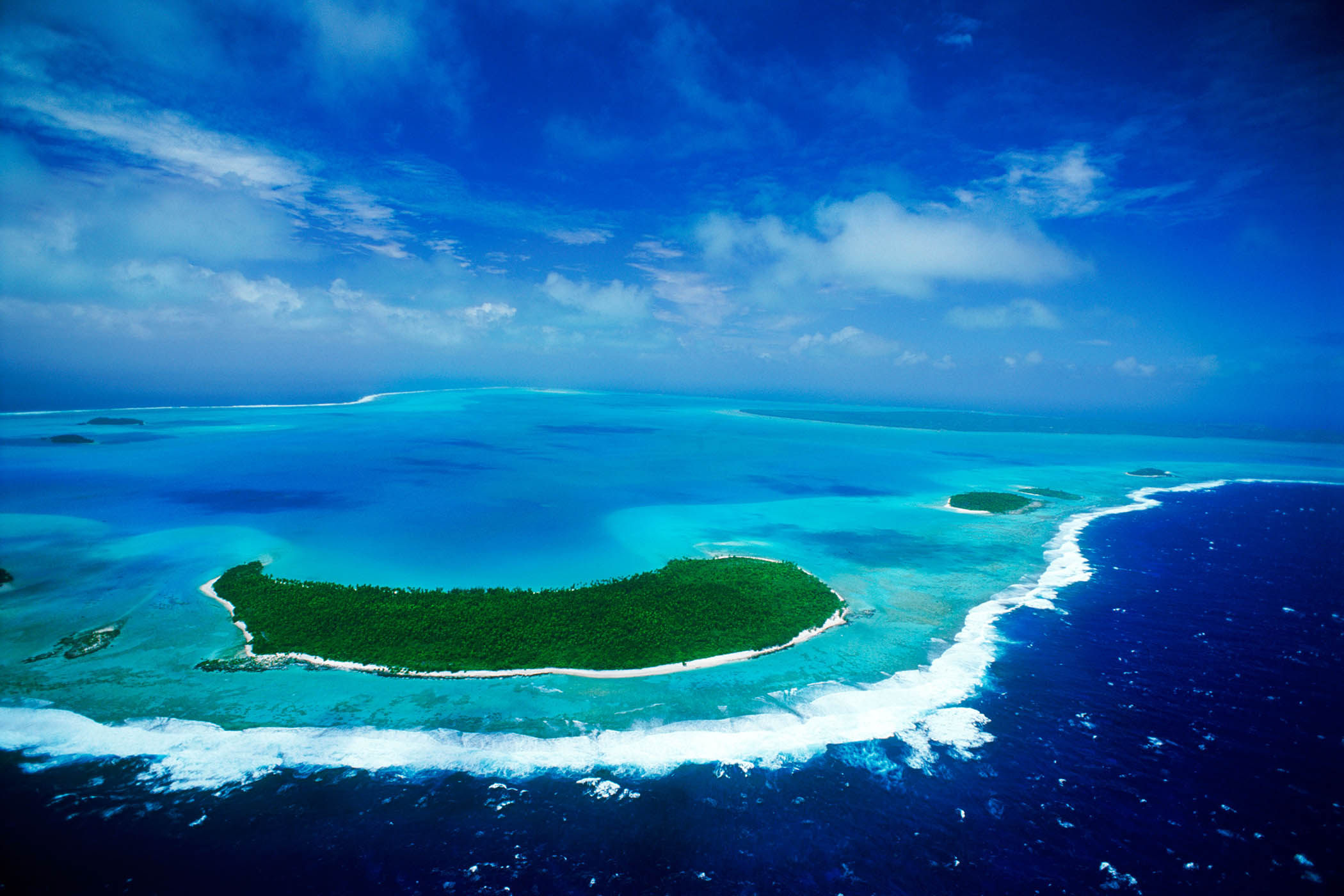
The Aitutaki atoll and lagoon in Cook Islands South Pacific, a potential Chinese deep-sea mining region
At ISA meetings, a split has emerged between countries pushing for rules that would allow exploitation of the deep sea and others backing a moratorium. Russia, which wants to mine the Arctic continental shelf, is among those calling for international standards, including an agreement on the permissible environmental impact of undersea mining.
France, which controls large swathes of the Pacific through overseas territories that are the residue of its colonial empire, has banned deep-sea mining in its own waters and is calling for a global moratorium in international waters. France’s president, Emmanuel Macron, said last year: “I think it’s madness to launch predatory economic action that will disrupt the deep-seabed, disrupt biodiversity, destroy it and release irrecoverable carbon sinks – when we know nothing about it.”
The US government has now skirted the international process, and will hold public hearings on two applications from the Metals Company on Tuesday and Wednesday. Washington is acting unilaterally under a US law passed in 1980, the Deep Seabed Hard Mineral Resources Act, which allows US citizens to explore and mine international waters until an international regime is in place.
‘There’s a concern among the Maga crowd that the US is behind China
‘There’s a concern among the Maga crowd that the US is behind China
Louisa Casson, Greenpeace
Questions remain about whether deep-sea mining is commercially or even practically viable. Lyle Trytten, a mining consultant, said: “Whether you are operating tethered or autonomous devices, this is three times as deep as the Deepwater Horizon [a BP-operated drilling rig in the Gulf of Mexico], and more than 10 times as deep as North Sea oil. It is an unforgiving environment, which is going to cause high costs of operation.”
The difficulties were illustrated in 2021, when a Belgian company’s deep-sea mining robot was stranded at the bottom of the Pacific after a 5km cable linking it to a surface ship detached. After a survey by a remotely operated submarine the robot was recovered a few days later.
There will be vast demand for nickel, copper and other metals in coming years as countries electrify their energy systems, but the huge production of nickel in Indonesia has pushed down prices in recent years and forced the closure of mines in Australia.
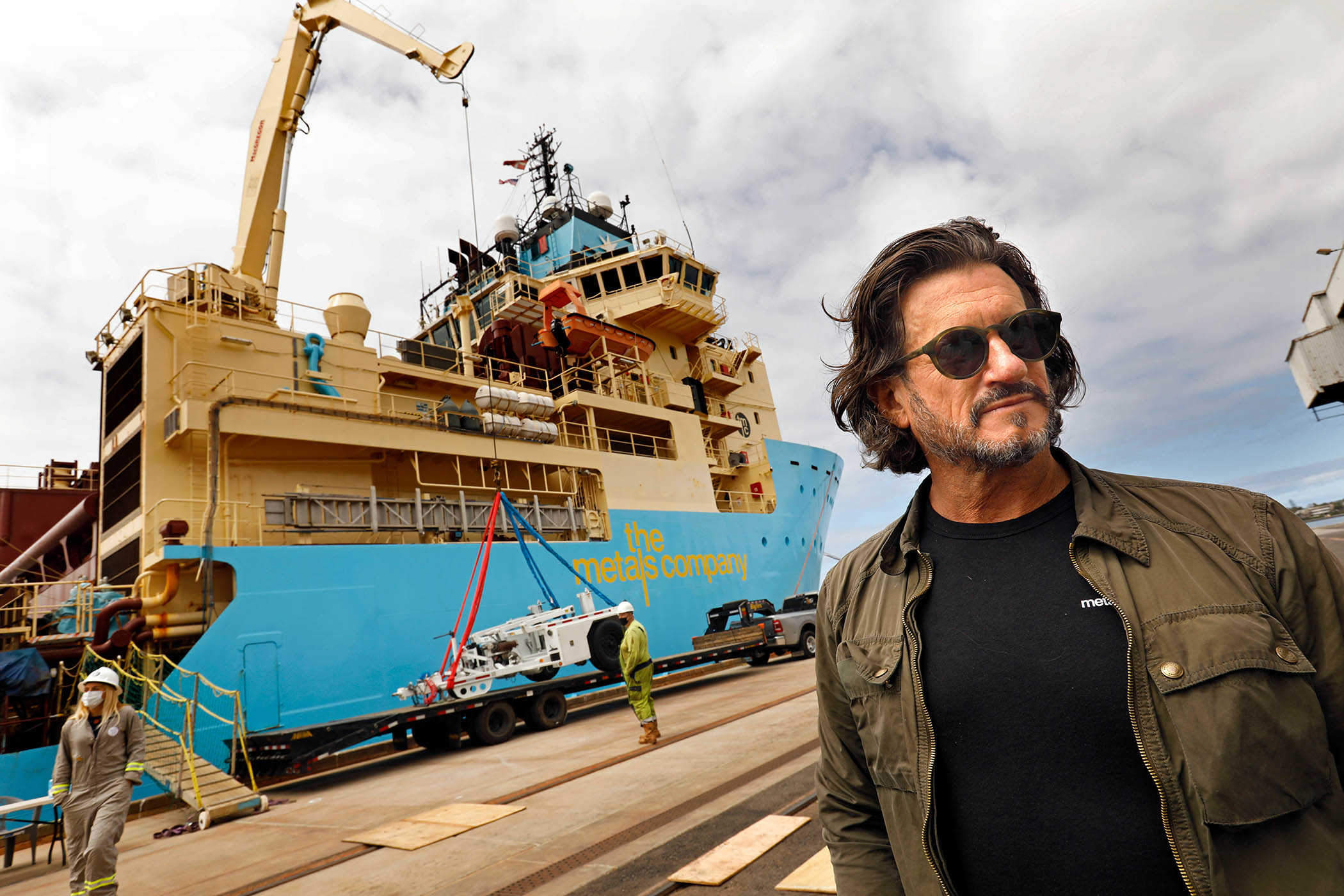
Gerard Barron, chief executive of The Metals Company
The Metals Company appears confident it can make money from the venture, declaring last year its break-even cost worked out at $2,569 a tonne of nickel – the price it would need to sustain its operations. At the end of last year nickel prices reached about $16,500 a tonne on the London Metal Exchange. Investors have backed the deep-sea mining venture, which has raised $657m since it was launched, according to a public filing. The company’s shares soared more than 400% last year.
The company declined to comment but a person familiar with the business noted that, unlike with terrestrial mines, the metal-bearing nodules lie loose on the seabed and do not need to be excavated. Deep-sea extraction does not require the building of any new roads or railways to move the metals. Instead, they can be shipped to existing processing facilities, which may also lower costs.
As with investments in AI and defence, financial motives may align with political ones. Greenpeace’s Casson said: “Regardless of the Trump administration’s position on the energy transition, they are obsessed with minerals – both for data centres for AI and military uses, and this is all tied up with their fixation on what they deem national security.”
She added: “The chance to protect an intact ecosystem is vanishingly rare. And these are our most ancient ecosystems on the planet – offering us clues about the origins of life on Earth.”
Photographs by NERC/smartexccz.org, Johnny Beasley/AFP/Getty Images, William West/AFP/Getty Images, Chad Ehlers/Alamy, Carolyn Cole / Los Angeles Times via Getty Images