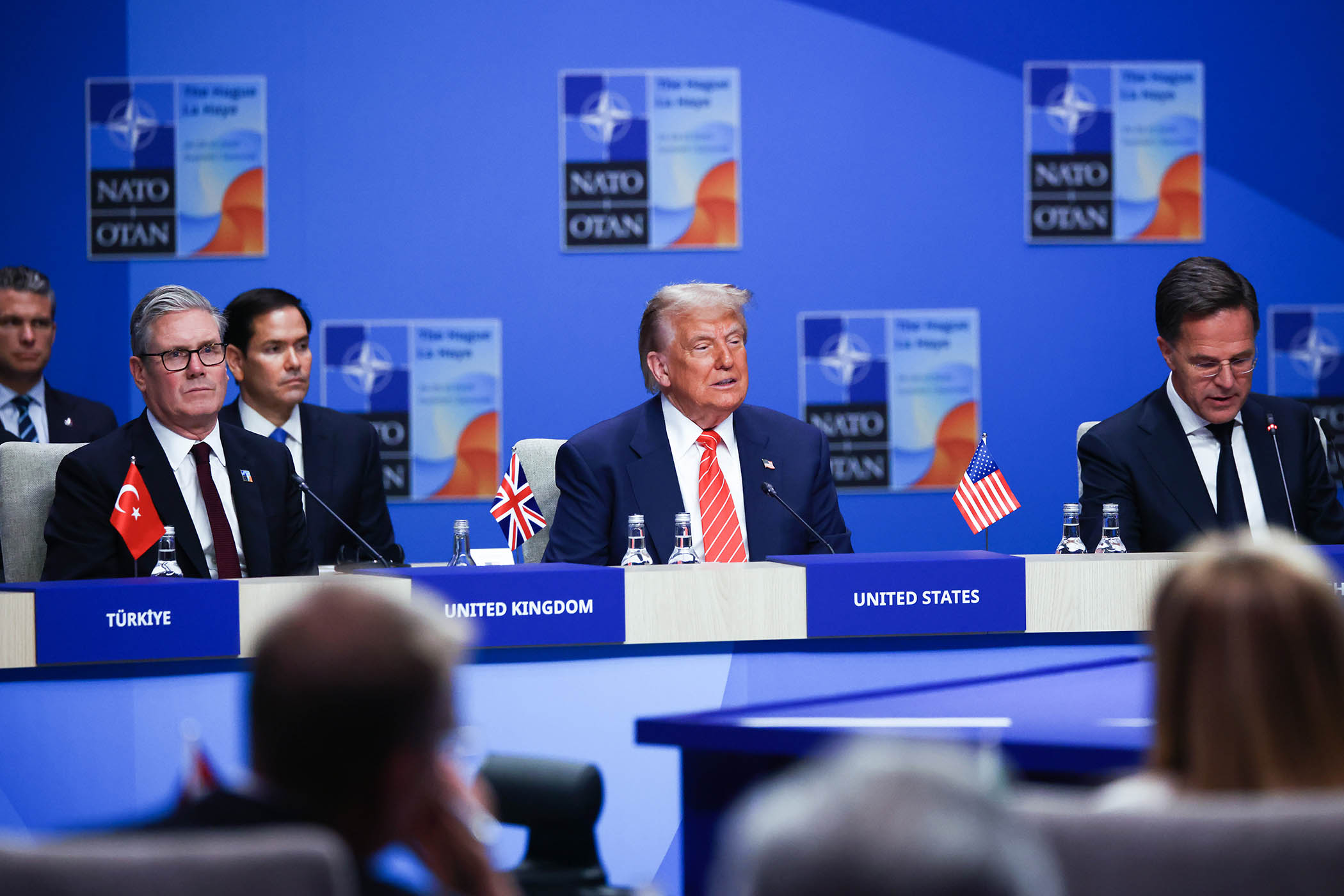


Keir Starmer on Saturday night said Donald Trump’s decision to impose new tariffs on all goods from the UK and other Nato allies over their opposition to his moves to take over Greenland was “completely wrong”.
European leaders scrambled to respond to the president’s Truth Social post threatening eight Nato allies with 10% tariffs after they sent military forces to Greenland.
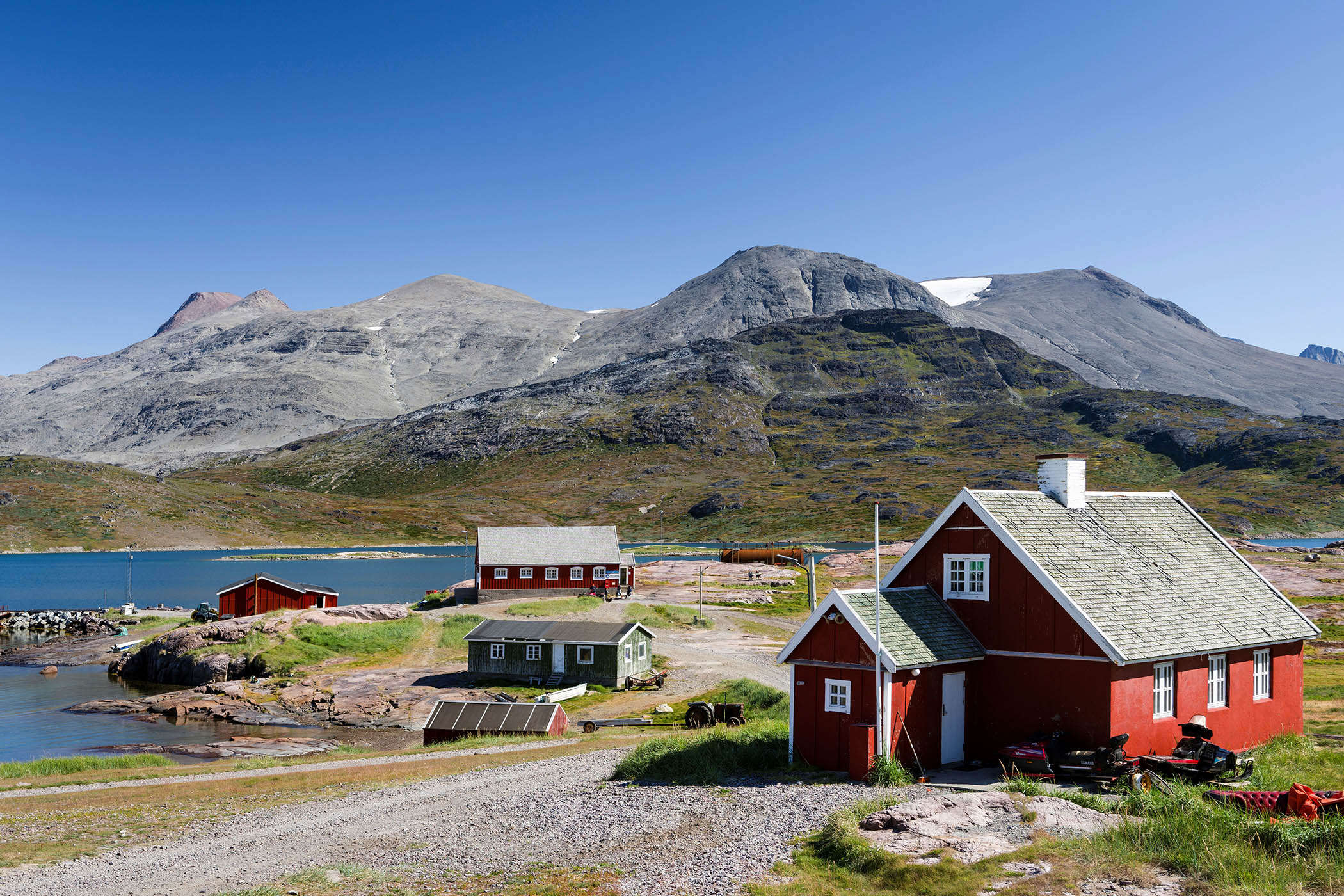
Trump said tariffs of 10% would come into effect on 1 February and remain in place until “such time as a Deal is reached for the Complete and Total purchase of Greenland” by the US. The tariffs will increase to 25% on 1 June, Trump said, challenging Denmark, Norway, Sweden, France, Germany, the Netherlands, Finland and the UK. According to Trump, the US had subsidised Denmark and the EU for many years by not charging them tariffs and it is now “time for Denmark to give back”.
Starmer said that Greenland’s future was “a matter for Greenlanders and the Danes” and that Nato allies should “all do more together to address the threat from Russia across different parts of the Arctic”.
“Applying tariffs on allies for pursuing the collective security of Nato allies is completely wrong,” he said. “We will of course be pursuing this directly with the US administration.”
It is the strongest statement Starmer has made against Trump since he became president.
Emmanuel Macron, the French president, said he sent French troops to Greenland because “it concerns security in the Arctic and at the frontiers of our Europe”.
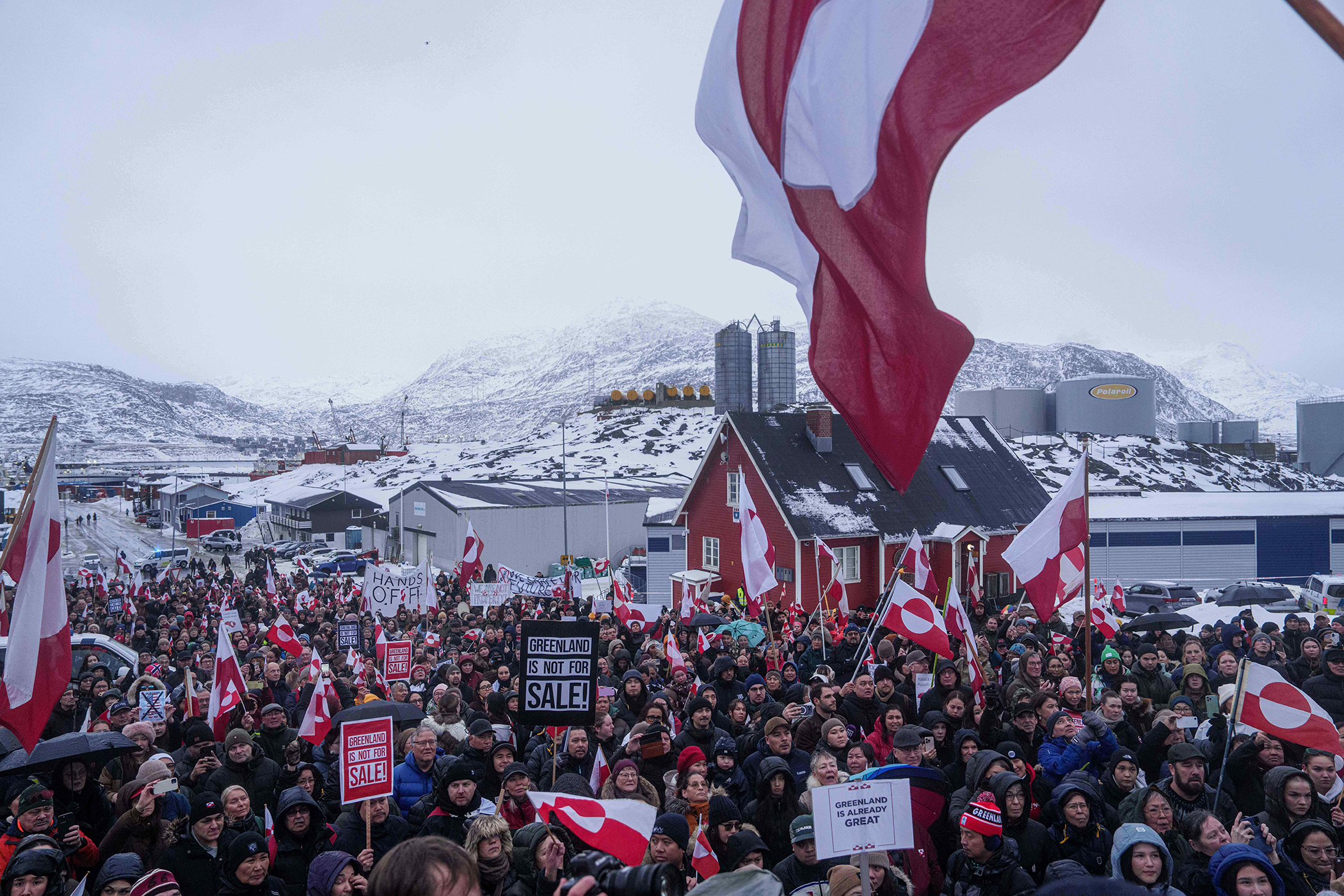
Protesters gathered to demonstrate against Trump’s threats in Nuuk, Greenland, on Saturday
“No intimidation nor threat will influence us, neither in Ukraine, nor in Greenland, nor anywhere else in the world when we are confronted with such situations,” he said. “Tariff threats are unacceptable and have no place in this context. Europeans will respond to them in a united and coordinated manner if they were to be confirmed. We will know how to uphold European sovereignty.”
Related articles:
The European Council president, António Costa, said he was “coordinating a joint response” to Trump’s intervention. “The European Union will always be very firm in defending international law,” he said at a press conference, “which of course begins within the territory of the member states of the European Union.”
Hours before Trump announced the tariffs, hundreds of protesters took to the streets of Copenhagen, and in Greenland’s capital, Nuuk, rejecting a US takeover. Placards read: “Greenland is not for sale” and “Hands off Greenland”. Polling by Ipsos shows that 85% of Americans oppose invading Greenland.
Newsletters
Choose the newsletters you want to receive
View more
For information about how The Observer protects your data, read our Privacy Policy
In response to Trump’s escalating threats, European Nato members began deploying troops to Greenland last week after the White House repeatedly refused to rule out using force to take over the Arctic territory, which is part of the Danish kingdom.
The deployment, which was requested by Denmark, is led by Danish soldiers, aircraft and naval vessels, and supported by the UK, Germany, France, Norway, Sweden, the Netherlands and Finland. One UK military officer was deployed as part of the mission called Operation Arctic Endurance, said the UK defence secretary, John Healey, last week.
The deployment aims to address Trump’s criticism that Denmark and other Nato members have failed to protect Greenland from China and Russia, while signalling to the US that it will stand by Copenhagen.
Announcing the tariffs, Trump said the eight Nato countries “have journeyed to Greenland for purposes unknown”, adding that they were playing a “very dangerous game”.
Having tiptoed around Trump during his first year in office, the UK and other European leaders are now experiencing the consequences of standing up to the US president. His insistence on getting control of Greenland is increasing cracks in the Nato alliance that had already been strained by the US approach to the war in Ukraine.
The tariff threats are also a humiliating blow to Starmer, who has risked political capital in trying to shore up the UK’s special relationship with the US. The prime minister has refused to criticise the president, arranged an unprecedented second state visit and was quick to announce that Britain had helped US forces track down a Russian oil tanker accused of breaking sanctions on Venezuela.
‘Will he do it? Who actually knows? The uncertainty carries on and the madness carries on’
‘Will he do it? Who actually knows? The uncertainty carries on and the madness carries on’
David Henig, trade specialist
Starmer raised the issue of Greenland in a phone call with Trump last week, but his words, and any personal chemistry between the two men, seem to have had no effect on the president.
The foreign ministers of Denmark and Greenland went to the White House last week hoping to defuse tensions. Danish officials have stressed the US is welcome to expand its military footprint in Greenland under an agreement dating back to 1951.
But the meeting with the US secretary of state, Marco Rubio, and the US vice-president JD Vance, only crystallised that Trump is intent on taking control of Greenland. The Danish foreign minister, Lars Løkke Rasmussen, said afterwards there was a “fundamental disagreement” and Greenland’s foreign minister, Vivian Motzfeldt, broke down in an interview.
Trump repeated claims the US needs Greenland to defend against threats from China. “World Peace is at stake! China wants Greenland, and there is not a thing Denmark can do about it,” he said in a social media post.
Danish and other European intelligence agencies agree that Beijing and Moscow pose a long-term challenge in the Arctic but dispute Trump’s claims that Greenland is besieged by Russian and Chinese ships. Maj Gen Søren Andersen, the leader of Denmark’s joint Arctic command, said he had never seen any Chinese or Russian combat vessels during his two and a half years in Greenland.
In the UK, politicians condemned Trump’s threats. Kemi Badenoch, the Conservative leader, wrote on social media that imposing tariffs was “a terrible idea” and that Trump was “completely wrong”.
“The sovereignty of Greenland should only be decided by the people of Greenland,” she said.
Ed Davey, the Liberal Democrat leader, said that the prime minister’s US policy was “in tatters” and Trump was “punishing the UK” and Nato for doing the right thing. “Time for the PM to stand firm against the bully in the White House, and work with European and Commonwealth allies to make him back down from this reckless plan.”
Labour MP Stella Creasy said that being unable to rely on the US meant the UK needed to “get serious about our strategic future with Europe”. Since returning to office, Trump has wielded the International Emergency Economic Powers Act to threaten tariffs against numerous countries on a whim. The US supreme court is considering whether to overturn that legal authority, which would force Trump to rely on other legislative avenues to impose the tariffs
Because the UK is mainly a services-based economy, the additional tariffs would not have a disastrous effect, said David Henig, a trade specialist at the European Centre for International Political Economy. Motor manufacturers and pharmaceutical companies would be hit, however, and the uncertainty over tariffs is very damaging.
“We have no idea if these tariffs will actually happen. Will he do it? Who actually knows” Henig said. “The uncertainty carries on and the madness carries on.”In May 2025, Trump announced he had reached the first trade deal of his second term with the UK, reducing tariffs to 10%. During his state visit to the UK, the president said the US would invest £150bn of tech investments, but by December, that deal was on hold. “Nothing Trump signs can be assumed to hold,” Henig said.
Photographs by Beata Zawrzel/NurPhoto via Getty, AP Photo/Evgeniy Maloletka