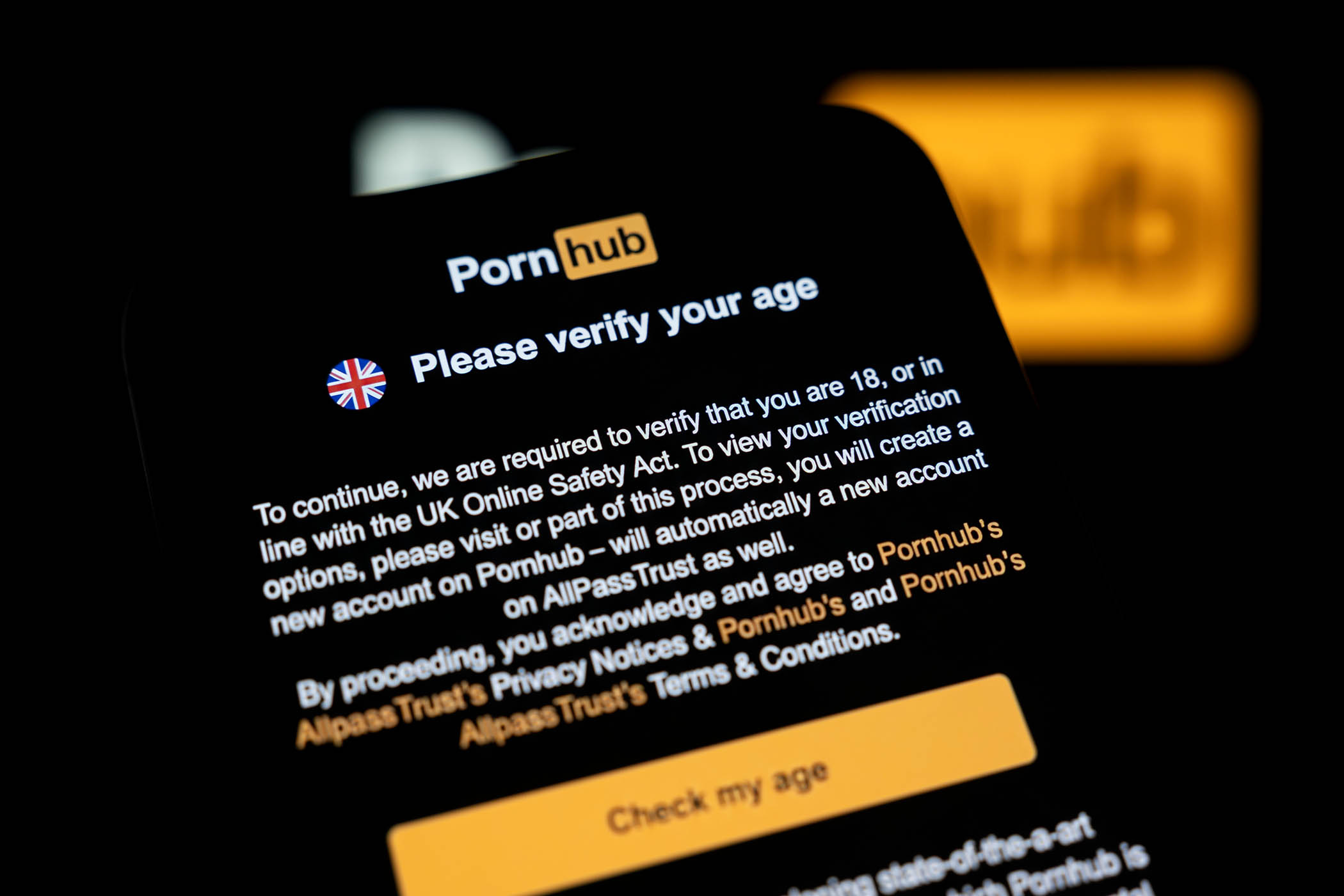



Pornhub, until recently the most popular pornography website in the UK, is closing its doors to new users as the impact of age verification legislation begins to be felt. Customers who have previously verified their accounts will be allowed to keep accessing the site.
Verification techniques have been bad for Aylo, Pornhub’s parent company. In the UK traffic to the site dropped by 77% after age verification requirements were implemented in July last year. When Louisiana passed a law requiring ID for access in 2023, traffic from the state dropped by 80%. In July the company left France, and is now unavailable in 23 US states, in each case citing age verification laws.
In a press conference, Aylo called the Online Safety Act a “failed system”. The latest developments do not mean fewer people are accessing porn – just not via Aylo’s sites. Research from child safety charity the Lucy Faithfull Foundation found that 45% of UK pornography users have visited sites without age verification checks since the rules came into effect.
Unregulated sites are more likely to host extreme, violent, or criminal content – 39% of those who used unregulated websites reported seeing content that made them uncomfortable – and are less likely to have protections for users against scammers or ransomware.
“The way age verification methods are implemented and enforced today leads to a situation where websites that comply with the law simply lose users to those that do not,” said a spokesperson for xHamster, one of Pornhub’s competitors.
Ofcom said it had launched investigations into more than 80 non-compliant porn sites since age verification laws were put in place.
“Pornhub is one of very, very few companies big enough to be able to pull off taking a stand against these [age verification] policies,” said Noelle Perdue, a writer and porn historian who used to work at Pornhub. “Smaller platforms are forced into submission because they can’t lose the user base and they can’t afford to show up in courts.”
Aylo advocates for a different approach to online safety known as device-based authentication, which involves every laptop, smartphone and device communicating directly with a website to verify a user’s age. Supporters say it gives parents more control, and individuals don’t have to hand over their data to multiple companies. It means platforms don’t have to pay money for a verification service, an obvious incentive for sites such as Pornhub.
Related articles:
Apple’s most recent software update introduced a version of this type of device-based age verification, but implementing it as part of legislation would require collaboration between governments and big tech across a web of operating systems, regions and devices. The EU has started developing device-side age assurance as part of its digital ID wallet, which would exist as an app, but this is still in the pilot stage.
But the UK government seems unlikely to change its stance on age verification and the Online Safety Act, and Pornhub’s tactical retreat seems unlikely to move the dial.
Newsletters
Choose the newsletters you want to receive
View more
For information about how The Observer protects your data, read our Privacy Policy
An Ofcom spokesperson said: “There's nothing to stop technology providers from developing solutions which work at the device level, and we urge the industry to get on with that if they can evidence it is highly effective. Our job is to enforce the rules as they stand.”
Photograph by Samuel Boivin/NurPhoto via Getty Images