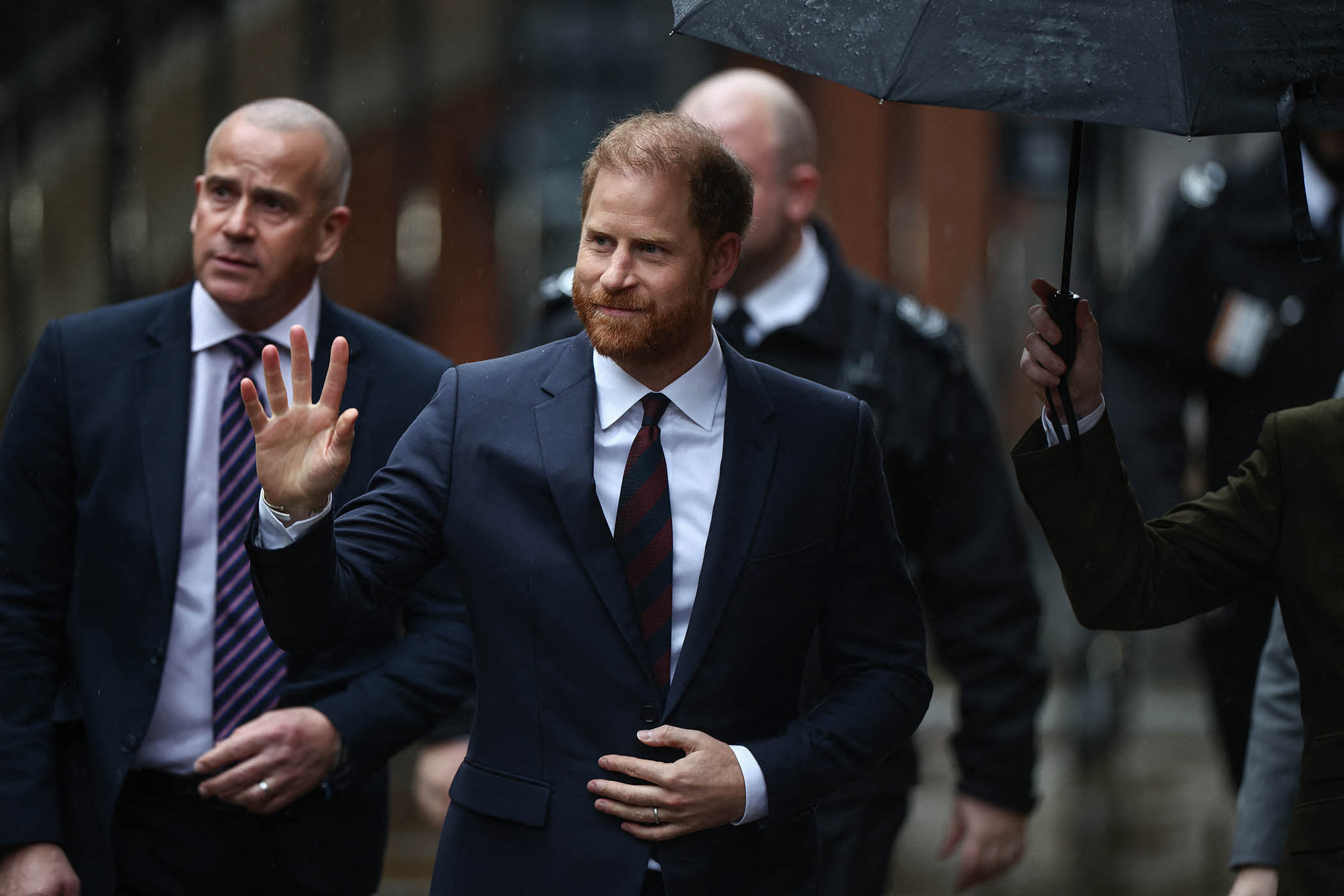

Justice may be blindfolded but she hates surprises. So at the high court this week, Prince Harry made his case against ANL, the publisher of the Daily Mail and Mail on Sunday, in two distinct ways: in person from the stand; and in a written witness statement – something every claimant files before a civil case goes to trial.
The formal purpose of witness statements is to give the defendant and judge notice of allegations that will be made (no surprises); their fascination lies in what they inadvertently reveal about the motivation and methods of the person bringing the claim. One week into a trial which may last for nine, the footprints left by Harry in giving evidenceform a trail which his co-claimants can be expected to follow. The broad path of the case has been set.
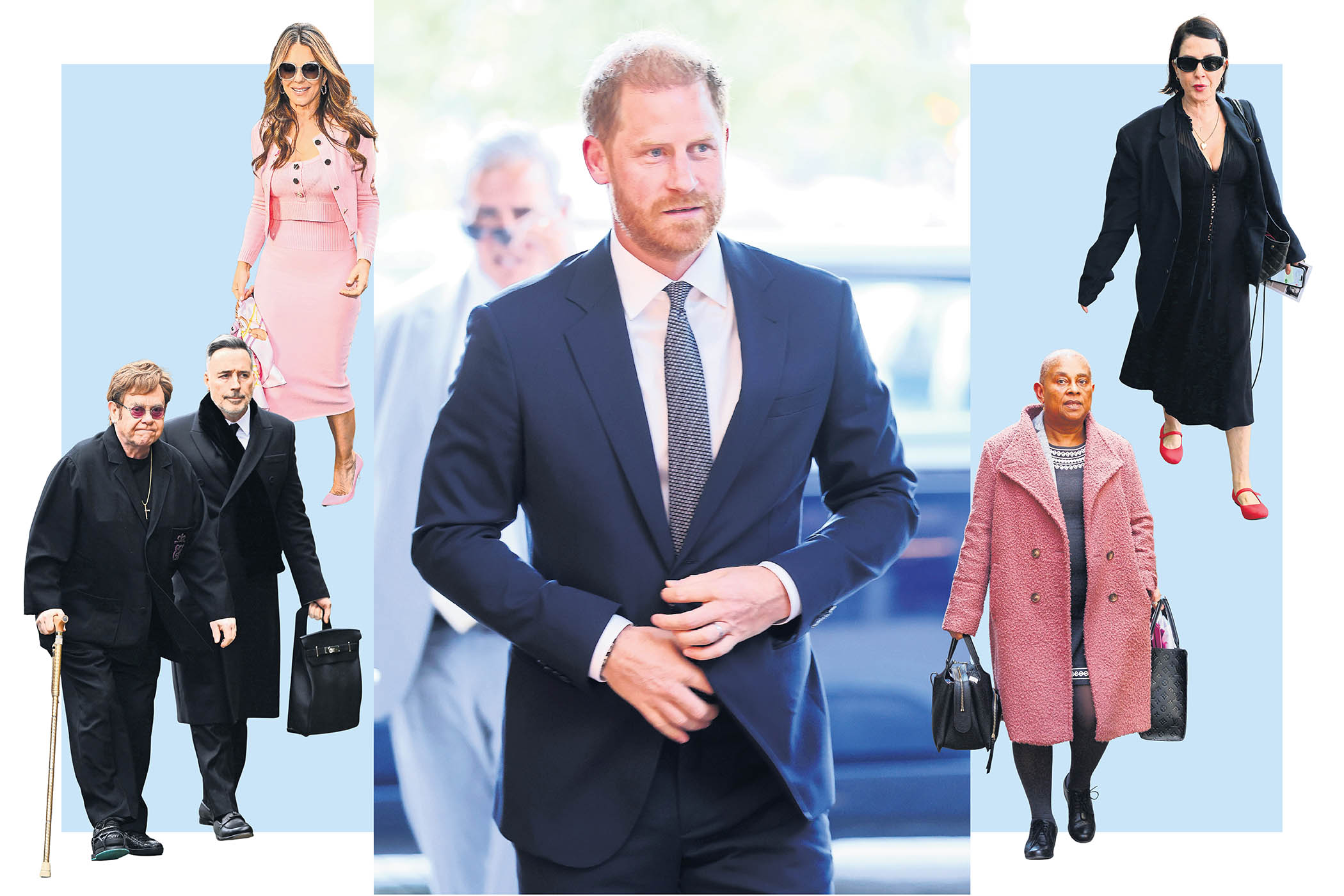
Prince Harry’s claim cites 14 newspaper articles written about him, his friends and his family between 2001 and 2013. He says information in them could only have been obtained illegally, through phone hacking and blagging. ANL says those are “preposterous smears”, as are the similar allegations made by his fellow claimants, actors Elizabeth Hurley and Sadie Frost, Baroness Lawrence (mother of Stephen), Sir Elton John and his husband David Furnish, and former Lib Dem MP Sir Simon Hughes.
Meanwhile, the contours of the defence are becoming clear. There are two prongs to it. You can see them in the strategy of ANL’s lawyers, in court, and read them between the lines of the witness statements, which anticipate where the defendants’ push-back will come from. First, ANL says, it is fanciful to believe the information in the articles at the centre of the case could only have come from illegal sources. Harry and Hurley faced sustained questioning about the possibility that friends or family might have briefed Mail journalists. “My social circles were not leaky,” Harry said on Wednesday.
‘When my relationship with Meghan, my now wife, became public, I started to become increasingly troubled by the approach of not taking action against the press’
‘When my relationship with Meghan, my now wife, became public, I started to become increasingly troubled by the approach of not taking action against the press’
Prince Harry
Second, ANL will keep pushing a “limitation” argument: that the claims should be time-barred. Privacy cases have to be brought within six years unless the claimant can give a compelling reason why he or she could not reasonably have been expected to know about them until later. So, for the first article in his claim – “The Godfather: Prince Harry on pram duty as he is about to become a godparent to the son of former nanny Tiggy Legge-Bourke”, which appeared in the Mail on Sunday in September 2001 – Harry has to explain why he didn’t realise until 2016 that he might have been wronged. His witness statement becomes – necessarily – the story of a slow awakening.
The law has developed a shorthand for the instant when a claimant says the scales fell from his or her eyes: a personal watershed moment. In his witness statement, Harry gets to one in stages. He had an “uneasy” relationship with the press after the death of his mother in 1997, he says, but as a member of “the institution” (as he calls the royal family) “I was conditioned to accept it”.
As a consequence, he was not paying attention as some landmark events unfolded: “I did not closely follow the Leveson inquiry at the time (2011/2012) and I cannot recall reading reports about it. I have no real recollection or knowledge of the phone hacking trials from before 2016.”
That year was the turning point, he says. “When my relationship with Meghan, my now wife, became public, I started to become increasingly troubled by the approach of not taking action against the press in the wake of vicious persistent attacks on, harassment of and intrusive, sometimes racist articles concerning Meghan.”
Related articles:
Finally, in 2019, Meghan Markle issued a claim against ANL over the publication of a private letter she had sent to her father. His eyes now fully open, he says, Prince Harry launched the first of a series of cases alleging unlawful information gathering by newspapers. From his witness statement again: “This was the first time I had my own legal representation outside of the Institution. Until this point, it had never occurred to me to be a possibility.”
ANL’s scepticism about the claimants’ personal watershed moments was illustrated on Thursday when Hurley was challenged over evidence which, according to the company, showed that she should have known she had a claim as long ago as 2015. The court was shown emails suggesting that press standards campaigners were in touch with her then, and discussed “deploying” her to help their cause. It was “preposterous”, said Hurley, as she did not even know the man who had written the email. ANL says the claimants and their lawyers have effectively colluded to fix their watershed moments to keep them on the right side of the law – an accusation denied by those same parties.
Newsletters
Choose the newsletters you want to receive
View more
For information about how The Observer protects your data, read our Privacy Policy
On one question there is a measure of unacknowledged agreement between the two sides’ legal teams: there is little direct evidence that journalists on the Daily Mail and Mail On Sunday, or private investigators they hired, hacked phones, blagged information, bugged premises or intercepted calls. In its place, the claimants will submit a small mountain of indirect evidence including invoices and emails which, in their view, are strong indicators that the papers “were using unlawful acts to get their stories”. The defendants say that argument is “threadbare”.
How might the claimants fill in the gaps? There are clues in Prince Harry’s witness statement, and there were more in court last week. The signs are that emotion will play a role. Harry’s statement portrays ANL as malign, intent on making him “paranoid beyond belief, isolating me, and probably wanting to drive me to drugs and drinking to sell more of their papers”.
The headline on an article “... speaks to exactly how they wanted me to be: lonely, miserable, depressed”, he says.
More than once, he invokes the memory of Princess Diana: “I lost my mother and now I watch my wife falling victim to the same powerful forces.”
The headlines on the coverage of both Prince Harry’s and Elizabeth Hurley’s days in court continued in the same vein: she broke down in tears, he nearly did.
How much of an impact might an emotive approach make? There is no jury in this case, only a judge.
Photograph by Henry Nicholls/AFP via Getty Images