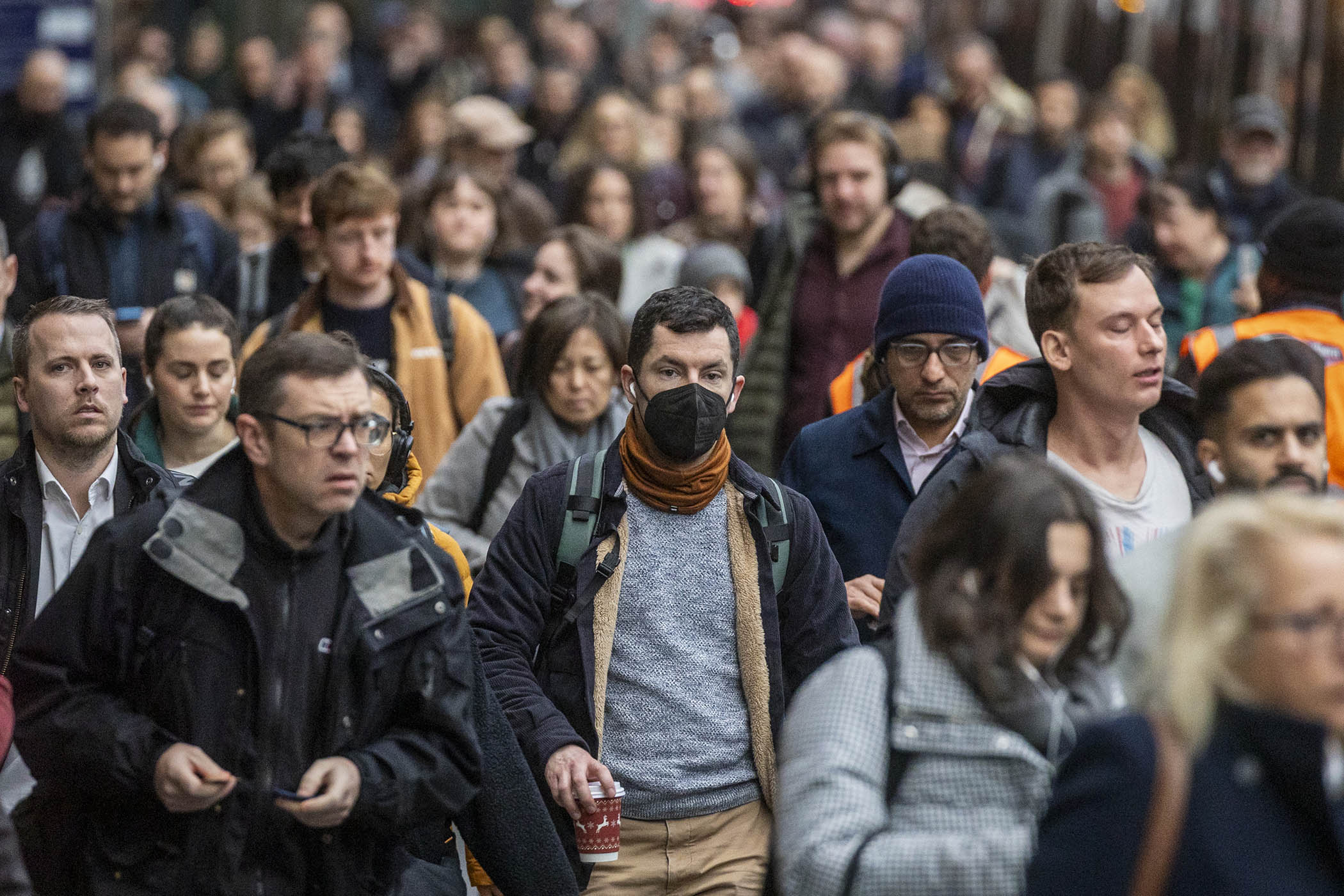

It has been called the “super flu” but there is no need to panic just yet: the new strain of the virus is no more dangerous nor is it harder to treat than previous versions.
Doctors and scientists have urged people to get vaccinated after flu season began earlier than usual this year. An average of 2,660 patients were in hospital with flu each day in England last week, the earliest that these levels have been reached.
This rapid start was driven by seven mutations to the H3N2 strain of influenza, which developed at the end of the southern hemisphere’s flu season.
That means people’s natural immunity to the virus has been lower than normal, according to Edward Hutchinson, professor of molecular and cellular virology at Glasgow University.
“So far, there isn’t any evidence that this season's H3N2 is more dangerous than it normally would be if you get it,” he said. “It’s just that there are more cases than normal for this time of year, and the small proportion of people who become very unwell with influenza adds up when there are a lot of cases.”
The good news is that vaccine uptake has risen this year, NHS data shows, even before the “super flu” panic began last week.
By 7 December, 17,441,182 people in England had received a flu vaccine; 381,000, or 2.2%, more than by the same period in 2024 and nearly 400,000 more than in 2023.
Related articles:
Anti-vaccine views have been amplified since the Covid pandemic. Aseem Malhotra, a cardiologist who has advised the US health secretary, Robert F Kennedy Jr, a prominent anti-vax activist, was invited to speak at the Reform UK conference in September. He was criticised for claiming that Covid vaccines were a “significant factor” in cancers affecting the king and the Princess of Wales.
But the data suggests that the public are not convinced. This year’s rise cannot be explained by population growth, which the Office for National Statistics estimates was only 0.2% in the year up to mid-2025.
Newsletters
Choose the newsletters you want to receive
View more
For information about how The Observer protects your data, read our Privacy Policy
However, uptake remains low in younger adults, at less than 40% of those under 65 who have an underlying health condition.
Prof Nicola Lewis, director of the World Influenza Centre at the Francis Crick Institute, said people who had not had a flu jab were more likely to get severely ill. “It’s impossible to predict whether it will be a longer season or if it will finish earlier than usual, so protection is still important and there is still time to get this year’s flu jab.”
On Saturday, the British Medical Association (BMA) accused Wes Streeting, the health secretary, of “scaremongering” after he said that strikes by resident doctors before Christmas “could be the Jenga piece” that would collapse the NHS while it also deals with the flu outbreak.
BMA members are voting on whether to carry out planned strikes this week, with the result due on Monday. If the government’s deal is rejected, then resident doctors, previously called junior doctors, will begin a five-day strike in England on Wednesday.
The NHS Confederation, which represents leaders of hospitals and other health bodies, said the surge in flu was “deeply concerning” because of other pressures that hospitals were dealing with .
Rory Deighton, acute and community care director at the NHS Confederation, said that A&Es had seen record attendances every month from June to November.
“Also, bed occupancy is worryingly high at 95% nationally,” he said. “There were nearly 13,000 people stuck in hospital beds each day last week when they were medically fit enough to go home.”
Photograph by Marcin Nowak/LNP