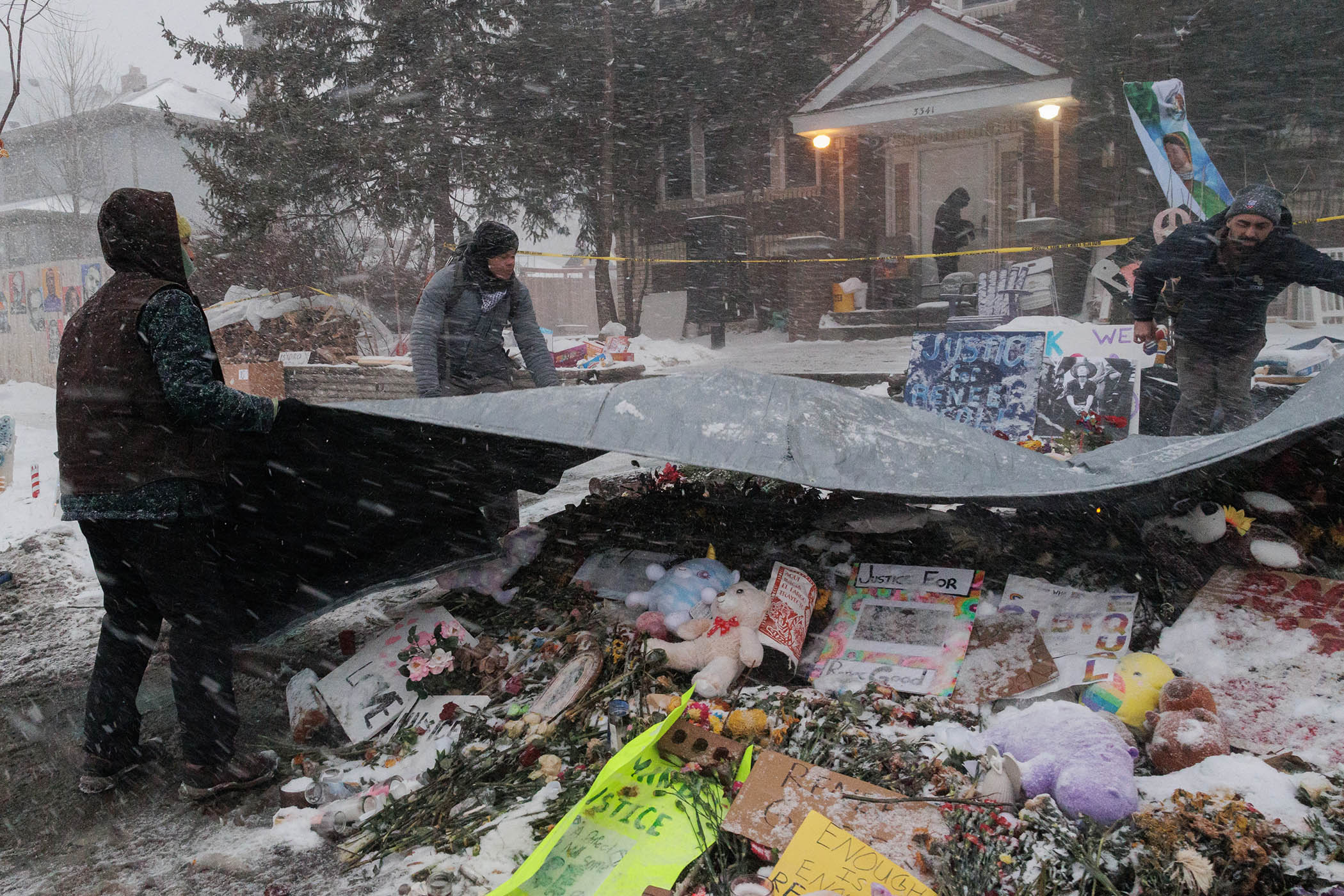
I am writing from Brooklyn after a big snow that reminds me of the snows of my childhood in Northfield, Minnesota, a small college town of about 20,000 people south of Minneapolis. It’s cold in New York City, well below freezing, but not as cold as in my home state, where residents have organised to protest Minnesota’s occupation by Immigration Customs and Enforcement troops, known by the wintry acronym ICE.
On 27 January, my Minnesota sister Liv wrote: “ICE was in Northfield on Saturday night and detained a kitchen worker at the Reunion. All the staff walked out in solidarity. The same day Carleton [College] went into lockdown as ICE was roaming about campus. Yesterday, when leaving my office, I heard loud chanting. I got in my car and followed the noise. ICE was at the Fairfield Inn, and a large crowd had gathered outside peacefully protesting. People in cars were honking in support. Temps and wind chills have been below zero all week, but Northfielders have been out supporting neighbours.”
The organisation to protect immigrants in town is called Northfield Supporting Neighbors.
“Neighbour” has become a rallying cry in Minnesota: “We Love Our Somali Neighbors” and “We Love Our Immigrant Neighbors” are emblazoned on protest signs. Rev Dr Jessica Patchett, of Westminster Presbyterian Church in Minneapolis, wrote in a public statement: “As a church grounded in the call to love our neighbor, we cannot remain silent when an entire [Somali] community is targeted in a way that dehumanises its people. The church must be a voice of compassion and truth, standing firmly for the dignity and worth of every person.”
Neighbour is a word defined by proximity – those near you; other human beings who in one way or another are not far away. My father believed in neighbourliness. Born in a log house in a rural Norwegian-speaking immigrant community in 1922, he remembered collective barn raisings and harvests, neighbours caring for the sick and making meals for the grieving. As children, my sisters and I were tasked with delivering vegetables from our garden to neighbours up and down Old Dutch Road where we lived on the outskirts of town.
“Minnesota nice” is intended to summarise a local attitude: polite, self-deprecating and ever accommodating. There is self-irony in “nice”, an awareness that the veneer may hide moral ugliness. There are deep political divisions in the state and plenty of Maga voters, for whom the word neighbour does not include any person of colour, recent immigrant or protester. The man who disrupted a town hall meeting and attacked Minnesota congresswoman Ilhan Omar with a vinegar-filled syringe was not “a nice guy”. For years Trump has insulted Omar, born in Somalia, in racist and misogynist terms. She is “garbage” from a “shithole country”, who “does nothing but bitch”. All Somalis are “garbage”. “I don’t want them in our country.”
Scapegoating is a form of exorcism, and this licence-to-hate feels good
Scapegoating is a form of exorcism, and this licence-to-hate feels good
A friend recounted that an ICE agent stopped a white woman in Minneapolis and asked for her papers. She told him she did not have to show her documents. Examining her, he said: “Your cheekbones are too high for you to be white.” He let her go. Every brown and black person is suspect now.
And yet “race” is a moving target. In the US, newly arrived Irish and Italian immigrants were once not considered “white”. They became white over time. In White by Law: The Legal Construction of Race (1996), Ian Haney López documented US legal cases in which individuals sued the courts to establish white status. The wobbly legal decisions expose a truth: race is a fiction, a fiction made real by history.
Related articles:
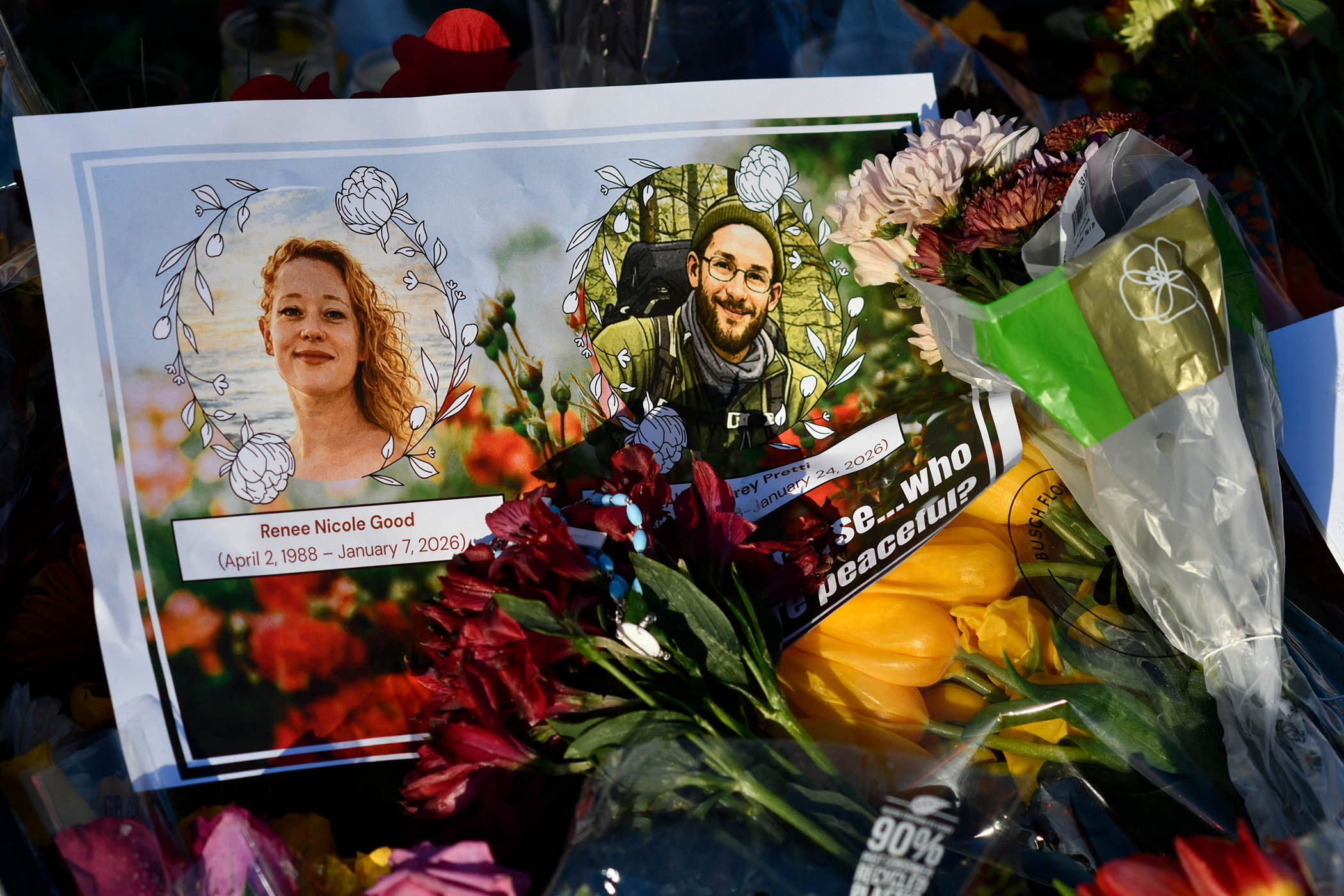
A memorial to Renée Good and Alex Pretti in Minneapolis, where they were shot and killed by federal agents earlier this year
ICE has killed two people in Minneapolis: a poet, Renée Nicole Macklin Good, and an intensive care nurse, Alex Pretti. Both were ICE observers, both were white and both were branded a “domestic terrorist”.
Can “Love Thy Neighbour” do rhetorical combat with the tediously repetitive invective streaming from the administration?
Newsletters
Choose the newsletters you want to receive
View more
For information about how The Observer protects your data, read our Privacy Policy
Words are political action. I don’t know if any of the Maga wizards have read Joseph Goebbels, the Nazi propaganda minister, but their rhetorical strategy is identical: vilify a particular enemy; appeal to emotion, not abstract ideas; and repeat the same slogans over and over. Permission for undisguised bigotry is granted from on high: go ahead and be mean!
Scapegoating is a form of exorcism. The demons within – mingled feelings of malaise, humiliation, rage – are dumped into a convenient Other, which liberates you of all guilt, and this licence-to-hate feels good. Racialised, gendered Manichean fantasies of we, the good and pure people fighting the evil, filthy non-people replace reality. Ironically, just as bids to love your neighbour create solidarity, collective sadism can feed human desires for belonging, identity and community.
Comparisons of ICE to the Gestapo, the SA, Mussolini’s blackshirts and other autocratic-totalitarian versions of secret police abound, but parallels to colonial slave patrols – charged with apprehending runaway slaves and suppressing slave rebellions – are also widespread. The Ku Klux Klan – the white supremacist, Protestant organisation infamous for brutal lynchings of black people – included police, sheriffs and politicians in its ranks. Theodore Bilbo, a lifelong Klan member, served as governor of and then senator from the state of Mississippi. The country fought a civil war over slavery, but the fiction of whiteness survives.
Neither Good nor Pretti died far from George Floyd Square, named after the Black man who in 2020 suffered cardiopulmonary arrest after a white police officer held his knee on Floyd’s neck for eight minutes and listened to his victim say: “I can’t breathe” 27 times. Although police officers in the US are rarely charged with murder and convictions for that charge are even rarer, the murderer is now in prison. Not even six years after George Floyd’s death ignited global protest as part of the Black Lives Matter movement, the screaming, revanchist, far-right Trumpist blowback is upon us.
I am proud of my protesting neighbours in Minnesota with their networks of observers, their whistles and their recording phones. I am proud that they are bringing food and supplies to people afraid to leave their houses, and comforting those who have lost parents and children to prison and deportation.
At this moment the Trump administration seems a little worried about the unrestrained cruelty it has unleashed on the state. Has non-violent resistance that champions “the dignity and worth of every person” rattled our increasingly authoritarian regime? I make no predictions. What is certain is that despair, passivity, appeasement and collaboration will not curb state terror, but massive, relentless, loud and visible neighbourliness just might.
Ghost Stories: A Memoir by Siri Hustvedt is published by Simon & Schuster in May
Photographs by Madison Thorn/Anadolu via Getty Images, Octavio Jones/ AFP via Getty Images