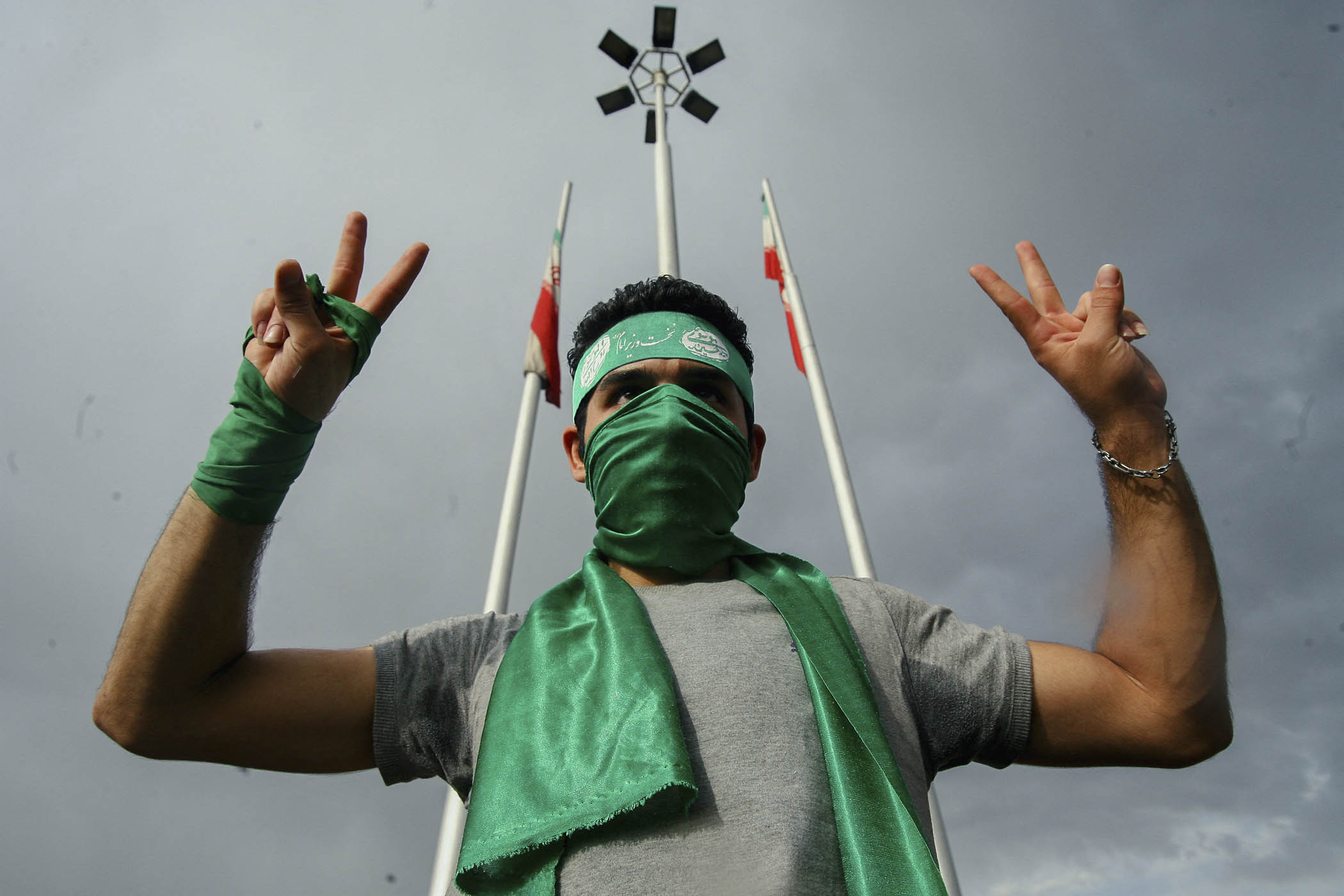
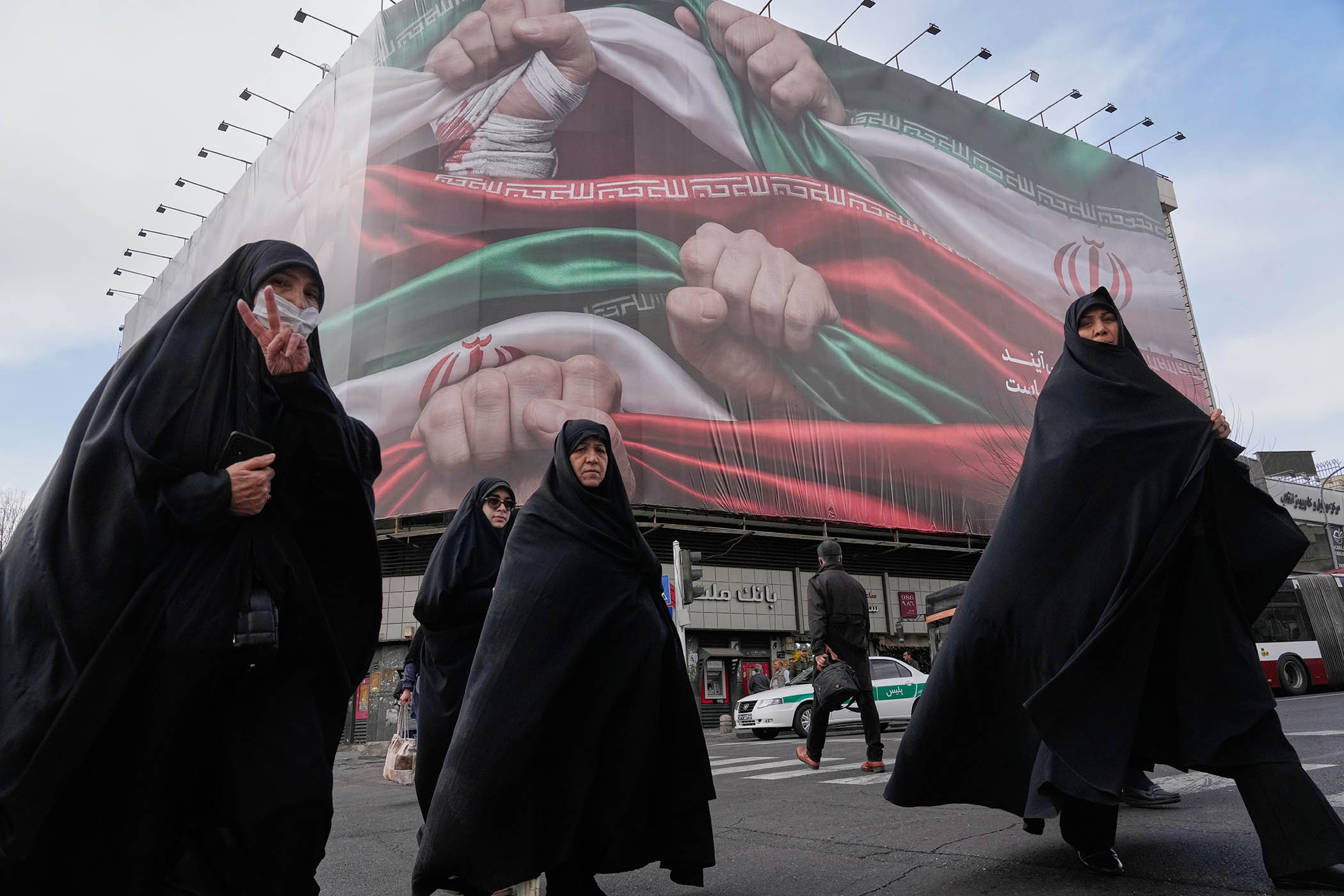
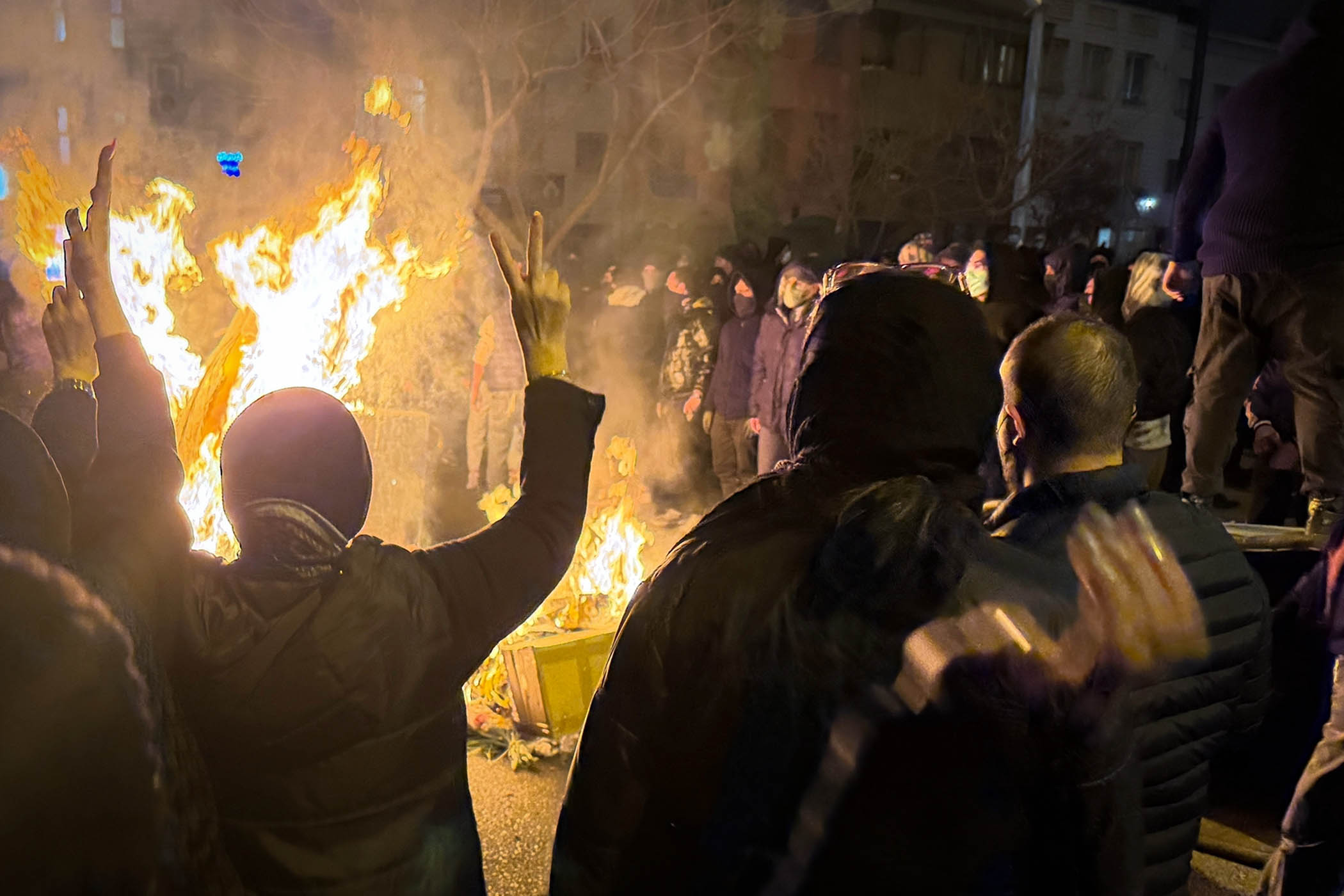
In the absence of a functioning democracy, or anything approaching it, street protests are all that the Iranian people have to vent their opposition to the theocratic regime of Ayatollah Ali Khamenei and his enforcers. Indeed, it was through street protests that the previous monarchical regime of the Pahlavis was swept aside by Khamenei’s predecessor, Ruhollah Khomeini, who was installed as supreme leader in early 1979.
Such protests have punctuated Iran’s modern history, including the 47 years since the revolution – most recently in 2022 and 2023 following the death in custody of Mahsa Amini, a young woman arrested for allegedly not wearing the hijab in accordance with government standards. But the nearest parallel to today is the “Green Revolution”, of 2009-10, which followed the brazen theft of the general election by Khamenei’s placeman, Mahmoud Ahmedinejad, despite the reformist candidate Mir Hossein Mousavi having received the most votes.
Thousands took to the streets, for weeks on end. Hundreds were killed, thousands arrested. Ultimately, the brute force of the regime triumphed, as it has in respect of every eruption of mass discontent since the revolution itself.
Will this latest eruption succeed, where previous ones have failed? I’ve been to Iran eight times: five as foreign secretary, three since, including a “holiday” that had to be aborted because of disruption by the Basij, the irregular fanatics attached to the Islamic Revolutionary Guard. I know this: the regime today has emphatically lost the support of about 80% of the Iranian people.
The country has two faces – official and real. My wife has never forgotten going into the female bathroom attached to a famous mosque we visited, where Iranian women rushed in, throwing off their shapeless gowns to adjust their tight dresses and heavy makeup. (Iranian women’s consumption of cosmetics ranks seventh in the world, for a population ranked 17th). Alcohol, officially banned, is also officially recognised as a major public health problem.
There are two other factors that distinguish today’s protests from those of the past. First, their roots – and their trigger – has been economic, rather than political. The Khamenei regime is not only brutally authoritarian, but also endemically incompetent and corrupt. It has presided over water shortages, power outages (in a country with the world’s third-largest oil and gas reserves), high unemployment – especially among the young – and a precipitous collapse in the value of its currency.
In contrast to previous protests, it was market traders and other small-business people who led the current protests at the outset. Ominously for Khamenei, it was the breadth of protests in 1978, from traders and industrial workers as well as students, that ultimately forced the Shah from office, despite a reign of terror by his security forces in which hundreds died.
The second big difference from 2009 is the regime’s serious international weakness. Then, Iran could rely on its “forward defence” doctrine through its proxies across the region: Syria, Hezbollah in southern Lebanon, Shia militias in south Iraq, Hamas in Gaza and the Houthis in Yemen. Its nuclear programme continued largely unmolested. US president Barack Obama was trying to withdraw from Iraq. The American people had no appetite for further Middle East adventures.
Related articles:
Iran’s doctrine was that, if threatened, it could fight back through these proxy forces (which it was largely arming and funding) beyond its own territory. Today, that “forward defence” is a shadow of its former self. Loyal Syrian despot Bashir al-Assad is gone; Hamas and Hezbollah have been crushed; and Khamenei’s reckless backing for the terrible Hamas massacre on 7 October 2023 of more than 1,200 innocent Israelis made Iran itself a target. Its nuclear programme has been severely damaged and its air defences effectively destroyed.
Iran now has very few friends. Major Arab states, such as Saudi Arabia and those of the Gulf, have been actively courted by Donald Trump, and by Israel. Those states are also autocratic, but better run than Iran – and would not mourn the demise of the Islamic Republic.
Newsletters
Choose the newsletters you want to receive
View more
For information about how The Observer protects your data, read our Privacy Policy
Until two weeks ago, Khamenei could at least rely on Venezuela – but that, too, has gone. Iran retains relations with Russia and China. It sells arms and drones to Moscow for use in Ukraine and oil at knockdown prices to Beijing. Both would prefer a supine Khamenei regime to stay, but neither can control what happens on the streets of Iranian cities, nor are they likely to intervene.
Another difference from 2009 is that Khamenei is now 86. Always internationally isolated, he has not travelled abroad once since taking office in 1989. He has grown more paranoid with each passing year, not least with his bile against the “Zionist entity”, Israel, which he blames – along with the US – for his troubles.
Ironically his predecessor, Ruhollah Khomeini, could never have survived the eight-year Iran-Iraq war without Israeli help. All the major powers – the US, the Soviet Union and most of the European nations – backed Saddam Hussein in the hope he would crush the Islamic Republic. Israel was the only consistent supplier of arms to Iran because Iraq was at the time a bigger threat. In return, Khomeini agreed to facilitate the emigration of 50,000 Iranian Jews to Israel. And Iranians wonder why Israel has such intense intelligence coverage on Iran.
If Khamenei does fall or flee, few outside will mourn his departure. But there will be no sunlit uplands of democracy for Iran, not for a long while. The most likely outcome is a military regime based around the Revolutionary Guards, but more pragmatic and more secular. As we have seen with Venezuela, President Trump will seek to pressure any new Iranian government into cooperation through external means. Iraq taught us – me included – that lesson.
Jack Straw’s book, The English Job: Understanding Iran is published by Biteback
Photograph by Hossein Beris/Middle East Images/AFP via Getty