

Over the past three and a half years, it has become a familiar sight on the outskirts of many Russian cities and towns: long lines of fresh graves in local cemeteries, their mounds covered by large wreaths in the colours of the Russian flag – and beneath them, Russian soldiers killed in a war in Ukraine that shows little sign of ending despite American efforts to broker peace.
There were claims that in October the Russian army was losing as many soldiers in Ukraine each day as the UK lost in the Iraq and Afghanistan wars combined. New analysis by BBC News Russian puts Moscow’s losses at 160,000 and says they have grown faster in the past 10 months than at any point since the 2022 invasion.
The daily death toll is far higher than during the Soviet occupation of Afghanistan, when a report of 10 soldiers killed could lead to mutiny. And yet, 40 years on, these long lines of fresh graves grow in silence, as if dug in a vacuum.
Those not directly involved in the fighting prefer not to talk about it. Among those who are, only a very small minority dare raise their voices. Relatives of soldiers fighting in Ukraine who have protested can be counted in the dozens. In the autumn of 2022, groups of wives of forcibly mobilised men organised rallies across Russia, demanding that their husbands be allowed home. But by the spring of 2024, under immense Kremlin pressure, the protests had died out.
Russia hasn’t always counted its dead so cheaply. In the 1990s and 2000s a powerful nationwide movement – the Committee of Soldiers’ Mothers of Russia –demanded better conditions in the army and the return of their sons from war in Chechnya, while media independent of the Kremlin, including on national television, reported on the suffering of civilians and the brutality of the army.
The carnage in Ukraine does not go completely unreported. There are signs of discontent among Russian soldiers themselves, but in most cases these are limited to videos recorded for relatives –often intended to be watched in the event of their deaths – in which they protest horrific conditions and the brutality of their commanding officers, which include regular beatings and, in some cases, arbitrary killings of those accused of disobedience, cowardice or drunkenness. These videos almost never make it to the general public. They make news only when picked up by Russian journalists in exile.
Which poses a question: are there any limits to how much pain Russians can take? The short answer is no. For the question of the costs of the war to be raised, the Russian public needs to recognise how high that cost is, which means it must become part of the national conversation. As things stand, there is no platform for such a conversation: the Kremlin now has complete control of the media, and on social media even pro-war voices who raise the issue of casualties end up in jail.
Are there any limits to how much pain Russians can take? The short answer is no
Are there any limits to how much pain Russians can take? The short answer is no
Then there is the Kremlin’s own propaganda, crafted to evoke intense emotional reactions of a kind the Soviets could never harness in their invasion of Afghanistan. The politburo tried to justify that decade-long disaster with the tired cliche of “international duty”, but few took it seriously, not least because of Gorbachev’s glasnost.
Related articles:
Starting in the mid-1980s, Soviet media outlets were flooded with stories depicting the suffering of Soviet soldiers. On national television the country’s most popular bard, Alexander Rosenbaum, performed his song Black Tulip – the nickname for the planes that returned to the Soviet Union carrying the bodies of soldiers killed in action. The song captured how the country felt about the invasion, and the war came to be seen as a killing mechanism of the country’s youth.
The Kremlin under Putin did much better during the second Chechen war, combining an assault on independent reporting with a message portraying all Chechens as terrorists – an easy sell after a series of horrific terrorist attacks in central Russia, including Moscow.
Newsletters
Choose the newsletters you want to receive
View more
For information about how The Observer protects your data, read our Privacy Policy
To sustain support for the Ukraine war, the Kremlin has been using a wide range of emotive arguments – from the historical (Ukrainians have been Nazis since the second world war) to the alarmist (playing on fears of a Nato invasion and, by extension, an existential war with the west, with stakes as high as the survival of the Russian state). It’s clear to the Russian people that this war is exacting a far higher cost than any other of the past four decades, but the Kremlin’s argument is that it is bloody and brutal precisely because of the high stakes. This is not about suppressing a separatist movement or hunting down terrorists as it was in Chechnya, or teaching a lesson to Georgia – it is about a war with the entire west.
Even if Russians are growing tired of this propaganda, it still provides ammunition for blaming someone else, rather than themselves, for what is going on. A sense of war fatigue is palpable and widespread, but it’s unlikely to provoke mass protest any time soon.
Memo to Europe: Putin’s war machine will not stop until he tells it to, and there’s little sign of that.
Andrei Soldatov is a senior fellow at the Centre for European Policy Analysis and editor of Agentura.ru, a watchdog of Russian secret service activities
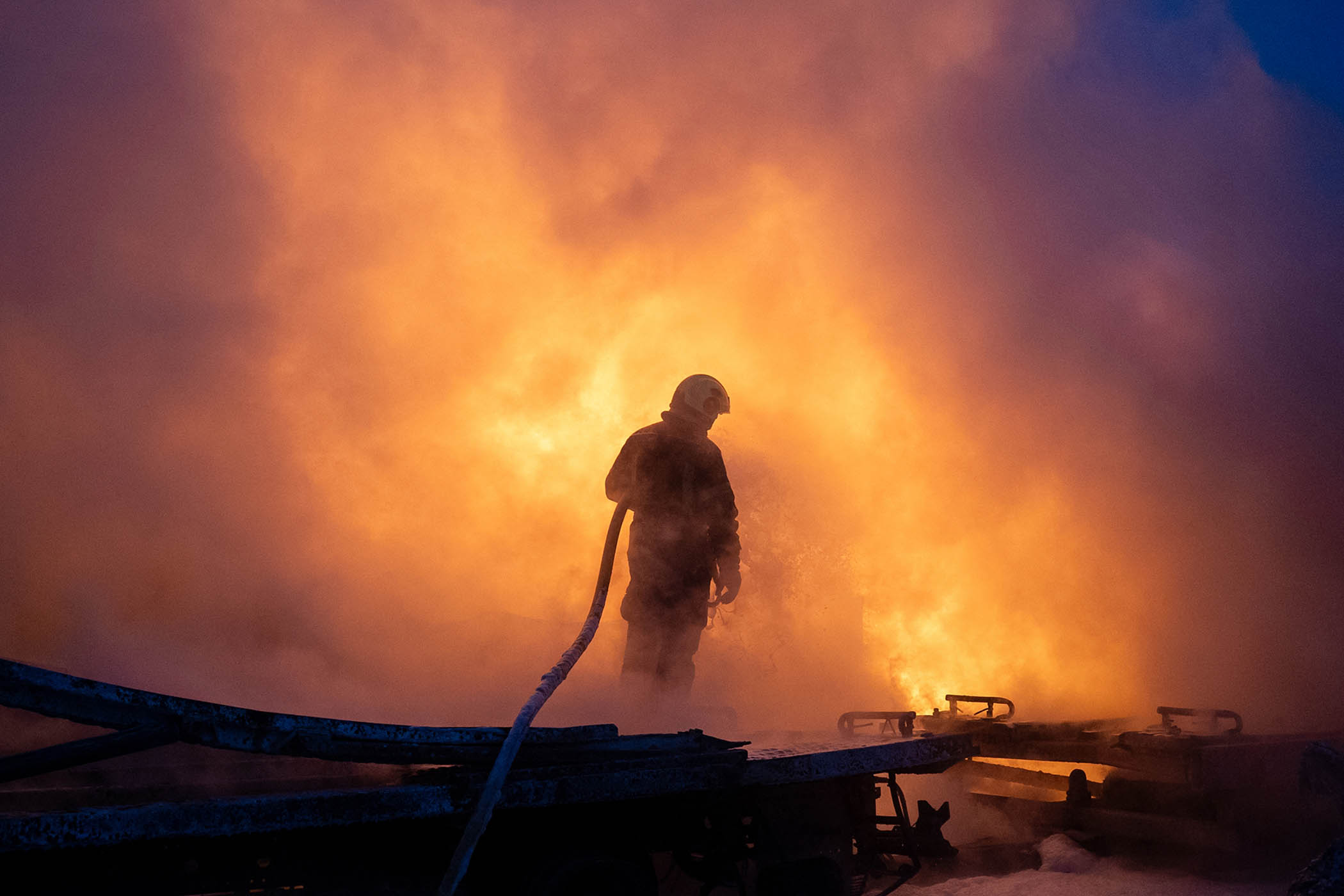
Photograph by Andrey Borodulin/AFP