Ten percent of the England or Scotland fans on our screens at next summer’s World Cup will have paid $60 to get in. These will be the lucky loyalists, to be hand-picked for fidelity to their nation’s team after Fifa’s micro U-turn.
And so it falls to England’s Football Association and 47 other federations to decide who fits Fifa’s definition of “loyal fans”. That should be fun. Officials charged with rewarding some and annoying many others will be wondering how they were dragged into someone else’s shame-avoidance exercise.
This week’s damage limitation gesture by the Fifa conglomerate is “hollow”, as at least one supporter group has said. It dresses up mercy for the few with the £45 tickets as a general climbdown. It’s also a small win for public pressure. Such was the disgust when the original prices were published that even Gianni Infantino’s fiefdom recoiled from the damage to its brand. The tiny reverse ferret, though, only stokes old questions about what Fifa thinks it exists for, whether international football is irrecoverably lost to the actual people of the world, and where all the money actually goes.
First, Fifa is inebriated on football’s version of the dotcom bubble or AI boom. It rode the female football wave by bolstering the women’s World Cup and turned the Club World Cup into an ersatz Champions League for the whole planet, not just Europe.
The gold rush vibe co-exists with Infantino’s view of himself as a mix of the Pope and secretary general of the United Nations, snuggled up to Trump, Putin or Gulf State autocrats as a political equal.
Related articles:
That synthesis of financial and diplomatic ambition has led Fifa’s rulers to think nothing can halt their march. The fantasy of a world without pushback led them to embrace the most extreme doctrine of supply and demand for a World Cup spread across the US, Canada and Mexico. For them, a World Cup is not something to administer but to gorge on.
Americans will tell you dynamic pricing in sport is the accepted norm. But a World Cup isn’t a Super Bowl between two private franchises. It’s global public property.
Fifa’s finances speak of relentless mission creep. Their original 2023-26 budget had to be upgraded to include the big 2025 Club World Cup push, which boosted the three-year pot to $13bn (£9.7bn) – 72% up on the previous three-year cycle. Expansion came with a promise to reinvest $11.6bn “in the game”.
In 2026 alone they’re expecting to generate $8.9bn – 44% from TV rights, 20% from marketing and 34% from hospitality and ticket sales. It’s not quite right to say Fifa is so deep in TV cash that it can afford to sell World Cup tickets cheaply. Admission prices are a major source of income. But across the whole piece of nearly $9bn in income this year alone, it shouldn’t be squeezing World Cup spectators until they squeak. It will spend 66% of its money next year on competitions and events – with 27% for “development and education” in member states – a share-out of $792m ($727m from the World Cup alone). Next summer $655m will be paid out in World Cup prize-money, with $50m to the winners.
This week Fifa republished those numbers as if to say: look how much good you’re doing in 211 member states by paying $1,000 for a ticket. The fig leaf of over-charging for World Cup matches so Fifa can “grow the game” could be seen instead as a tax on fans to keep the Infantinocracy rolling.
With such largesse it’s not hard to see how president Infantino was re-elected in March 2023 unopposed. The shoo-in was at the first elective Fifa congress to take place in Africa, in Kigali, where Rwanda’s president Paul Kagame opened the ceremony. Kagame is accused by the US and UN of supporting the brutal M23 rebels in Democratic Republic of Congo.
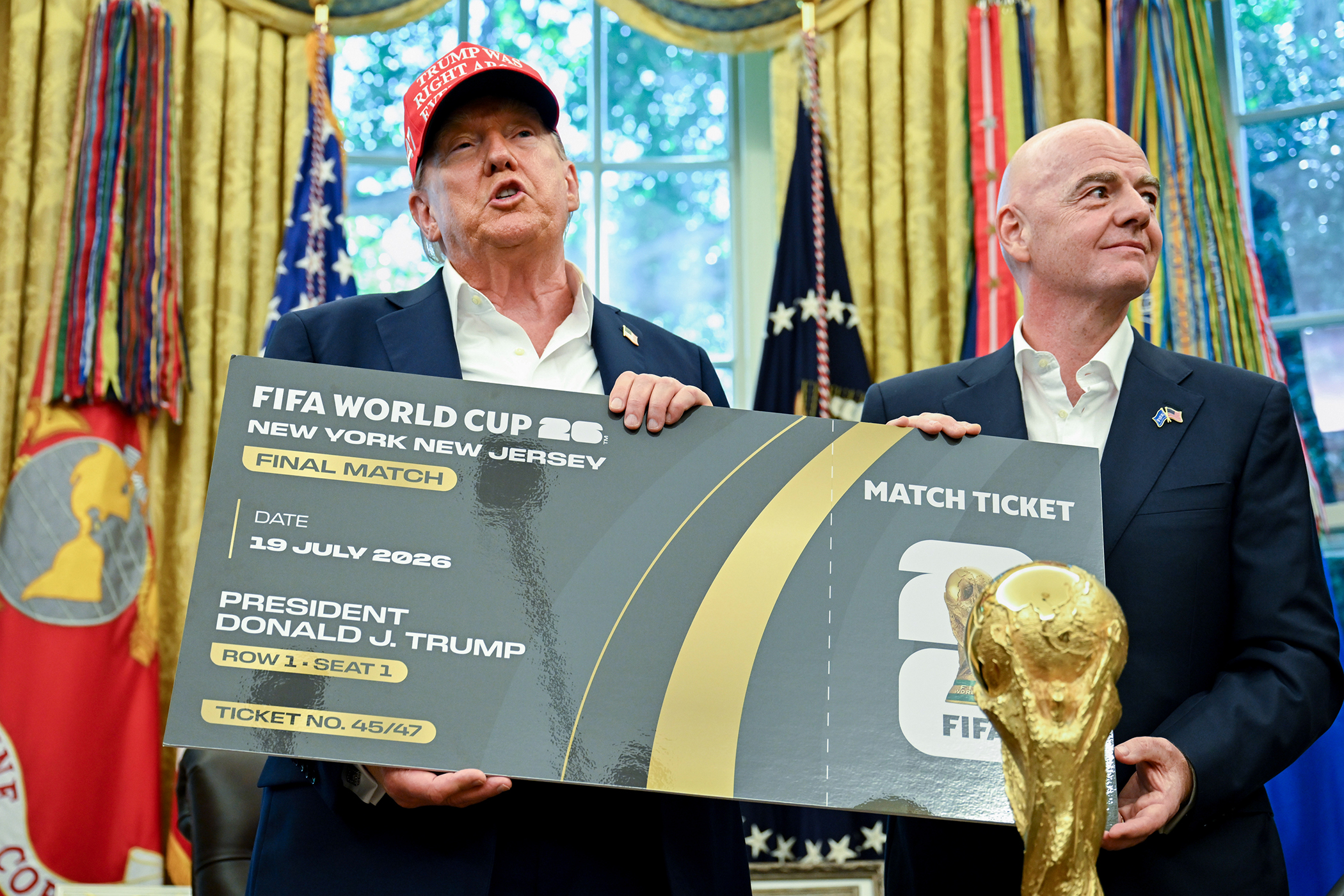
“We have listened to feedback and this new [ticket] category is the right thing to do,” a Fifa official said this week. The categories are even named to disguise the trick: supporter entry tier, supporter standard tier, supporter value tier, and the aspirational supporter premier tier. Under the original pricing it would have cost a minimum of more than £5,000 in tickets alone to follow a team to the final. Most will still have to pay that kind of sum. That’s before transport and accommodation. Assuming you haven’t been turned back at the airport for an unflattering tweet about Donald Trump.
In eight years, World Cups will have taken place in Russia, Qatar and the US. The first two of those were about prestige, reputation-washing and infrastructure transformation. Fifa has helped the North American World Cup feel entirely transactional – pure business – no surprise, given how Infantino has cosied up to Donald Trump, especially with that risible Fifa peace prize. Tickets for the final in New Jersey on 19 July are up to seven times more expensive than they were in Qatar.
It was smart timing this week by the 2028 Los Angeles Olympics to announce that one million tickets will be priced at $28 (£20). Granted “sport climbing” and handball couldn’t compete with Spain v Brazil in a World Cup final across the water from Manhattan. But at least you will be able to watch them not feeling you’ve been mugged.
Photograph by Annabelle Gordon/UPI/Bloomberg via Getty Images