

It was fitting that England, Wales, Scotland and Northern Ireland launched their bid for the 2035 Women’s World Cup in the week that England returned to Wembley for the first time since winning the European Championship.
A sold-out crowd was on hand to watch England host China as part of their “homecoming” tour, during which they will also face Ghana at StMary’s on Tuesday.
Over the past three years, since England won their first European Championship trophy at the stadium, Wembley has become the Lionesses’ spiritual home. The decision from the FA to host the tournament in 2022 paid off in spades, not just in the footballing sense given that they won, but also in the way it catapulted the team to the forefront of the public’s imagination.
It is a development that was not lost on Fran Kirby as she stared round Wembley prior to kick-off. Kirby was being paid a tribute following her decision to retire ahead of this summer’s Euros. She pointed out that when she made her debut in 2014, England were playing in Hartlepool. Only 4,547 fans watched on that day. Now the fact that Wembley was sold out barely feels worth a mention, it has become so normalised.
The balance between iconic grounds that can cope with ticket demand for the biggest games in combination with some smaller grounds that can host less popular games is a key consideration for the organisers of the World Cup bid. The bid, which is set to be uncontested, has seen 16 different stadiums shortlisted to host matches, including a number of grounds which are in the process of being built or redeveloped.
That includes Old Trafford, which has been submitted in its current form despite the proposed redevelopment, and Birmingham’s new Powerhouse Stadium. Intriguingly, Chelsea have also submitted Stamford Bridge despite the ground in its current form not meeting Fifa technical requirements. Any potential inclusion would be based on that ground being redeveloped ahead of the competition.
Mismatches get talked up in women’s sport. But there are a lot of mismatches in big men’s tournaments too
Mismatches get talked up in women’s sport. But there are a lot of mismatches in big men’s tournaments too
Sue Day, FA director of women’s football
“We want to show real ambition with this tournament,” said Sue Day, speaking prior to the match against China. Day is the FA’s director of women’s football, having been chief operations officer at the Rugby Football Union during the time that it prepared to host the women’s Rugby World Cup. “It’s a mix of trying to make sure we have the biggest, best stadiums in the country, and making sure that they’re spread out well around the country so that its accessible and meets people’s requirements.”
The 2035 World Cup will be contested by 48 teams. Fifa has already announced that 2027, which is taking place in Brazil, will be the final 32-team tournament, with the 2031 edition set to be the first one with 48 countries at the finals.
Related articles:
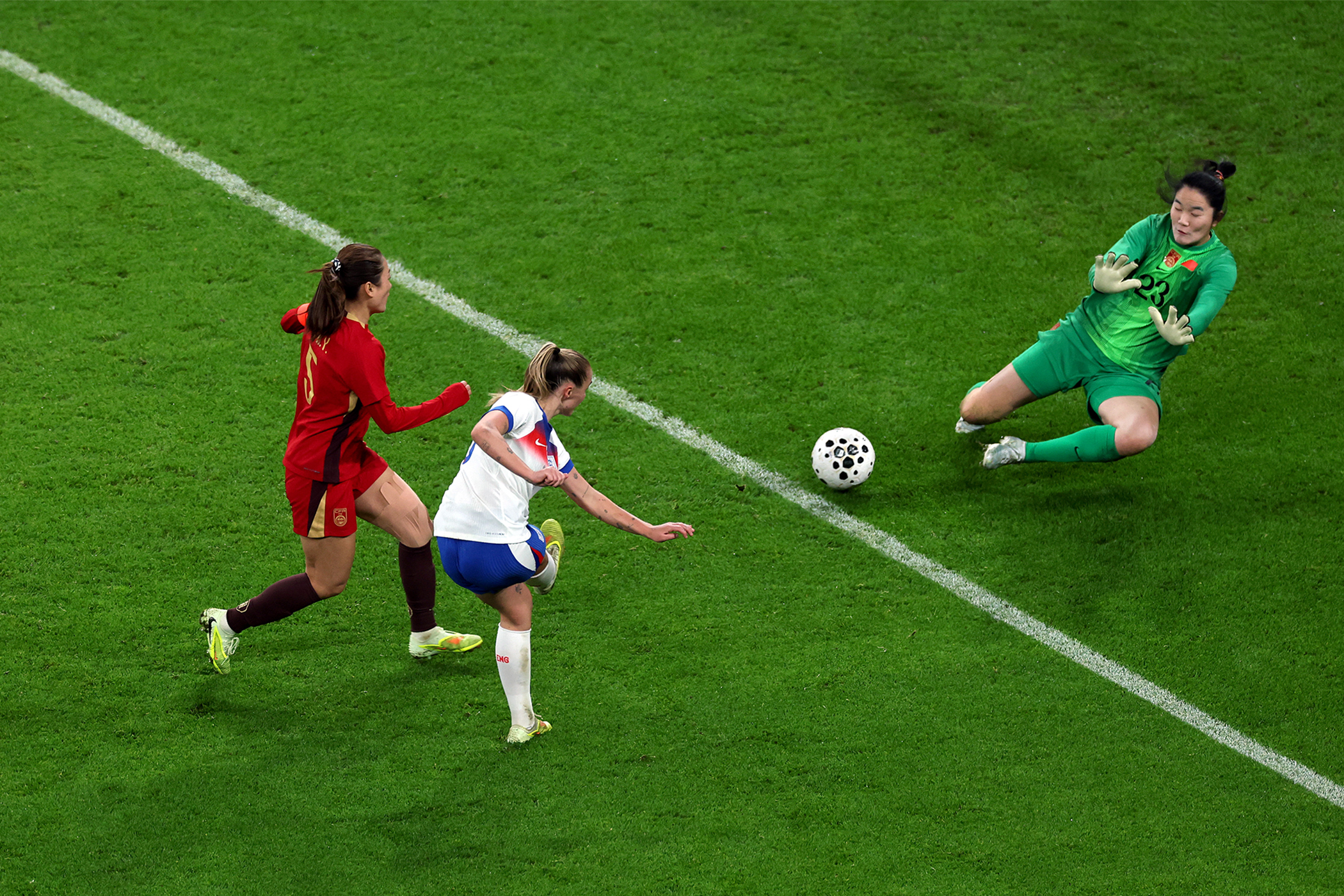
Yet as England dismantled China, scoring four goals in the space of 11 first-half minutes, it demonstrated the risks that the world governing body is undertaking in expanding the tournament so quickly.
Ranked 16th in the world, China are no minnows of the women’s game but they looked shell-shocked by England’s attack early on. Even prior to Beth Mead’s opener, Alessia Russo repeatedly broke the offside trap to get in behind China’s defence, but could not find a team-mate with her cutbacks.
Newsletters
Choose the newsletters you want to receive
View more
For information about how The Observer protects your data, read our Privacy Policy
England ripped China to shreds in wide areas and quickly turned the friendly match into a training exercise. They were 5-0 up by half-time and showed no signs of slowing down with Georgia Stanway completing a hat-trick in the 52nd minute. Concerns around mismatches at the Women’s World Cup came to the fore in 2019, when the United States were criticised for their exuberant celebrations in a 13-0 win over Thailand. The 2023 tournament was generally more even-handed, with the Netherlands’ 7-0 win over Vietnam the biggest margin of victory. The feeling was that even within the space of four years, teams had professionalised enough to minimise the gaps between the best and worst teams in the competition.
“Often mismatches get talked up in women’s sport generally,” said Day, when asked about the potential risks of playing a 48-team tournament in terms of competitiveness.
“But quite a lot of mismatches happen in big men’s tournaments too. One thing that expanding the number of teams in World Cups does is that it incentivises or inspires countries that haven’t in the past been able to qualify, but might be able to because there are more teams, to invest.
“I know that what Fifa hopes and expects, and probably it has seen when they’ve expanded before, is that it inspires countries to get involved and invest because they’ve got more of a chance of being on the big stage.”
China have only ever failed to qualify for one World Cup in 2011, so are a team who would be expected to be at the tournament whether it was 32 or 48 teams. England deserve credit for an exceptional performance undertaken by what is their strongest team of players who are currently fit. It was their best display since they beat the Netherlands in the group stages of Euro 2025.
It also serves as a reminder that the gap between nations within the women’s game can look particularly stark. It may well be the case that similar outcomes are seen at the men’s World Cup next year, the first 48-team tournament for them.
But men’s football is taken seriously regardless of the scoreline, whereas one-sided women’s games are seen as an indictment on the sport. That is obviously a double standard but it is a reality that the organisers of the 2035 Women’s World Cup will have to bear in mind.
Photograph by Eddie Keogh/Getty Images