If there is a thing that connoisseurs of the Africa Cup of Nations can agree on, it is that the playing infrastructure in all the host cities in Morocco is world class.
They have set the benchmark for what should be expected by any other country hosting the 24-team event.
“It is important that the Afcon, wherever it is played in Africa, has the best standards for our players,” says Mouad Hadji, former general secretary of African football’s governing body, CAF, who is a key official for the Morocco 2030 foundation project.
“It has taken a lot of effort for us to prepare for this Afcon. And I hope that what we are trying to do in Morocco is what will be done elsewhere. We cannot, as a continent, compromise on what we should have, for the top football tournament in Africa.”
Mattias Grafström, Fifa’s Swedish general secretary, has been effusive in his praise about the quality of the tournament.
“I have been visiting quite a number of the games,” he said. “It’s been a real honour and privilege. We have seen exciting competition of very high level, both organisationally and sportingly as well. We should have some very exciting quarter-finals.”
The quality of the playing pitches, which have contributed to the high quality of football, is a sharp departure from many Afcons, particularly the 2017 edition in Gabon and the 2022 tournament in Cameroon.
Now 30, the former Ghana defender Baba Rahman, whose team are conspicuously absent from the tournament, is a poster child for what horrible surfaces can do to your club season.
Rahman was 22 at the 2017 Afcon, on loan to Schalke 04 from Chelsea, when in a game against Uganda a terrible pitch in Port Gentil contributed to him suffering a “a rupture of the meniscus and a tear of the anterior cruciate ligament” in his left knee, keeping him out of the game for several months.
“There is no doubt that the standard of football I have watched in Morocco has been helped by the pitches the players are performing on. It enables them to play at their very best and this is quite encouraging,” says Segun Odegbami, the former captain of Nigeria, who was the top scorer at the 1978 and 1980 tournaments.
Newsletters
Choose the newsletters you want to receive
View more
For information about how The Observer protects your data, read our Privacy Policy
“It has been refreshing to see this change and I hope that we continue to set this standard at the Afcon.”
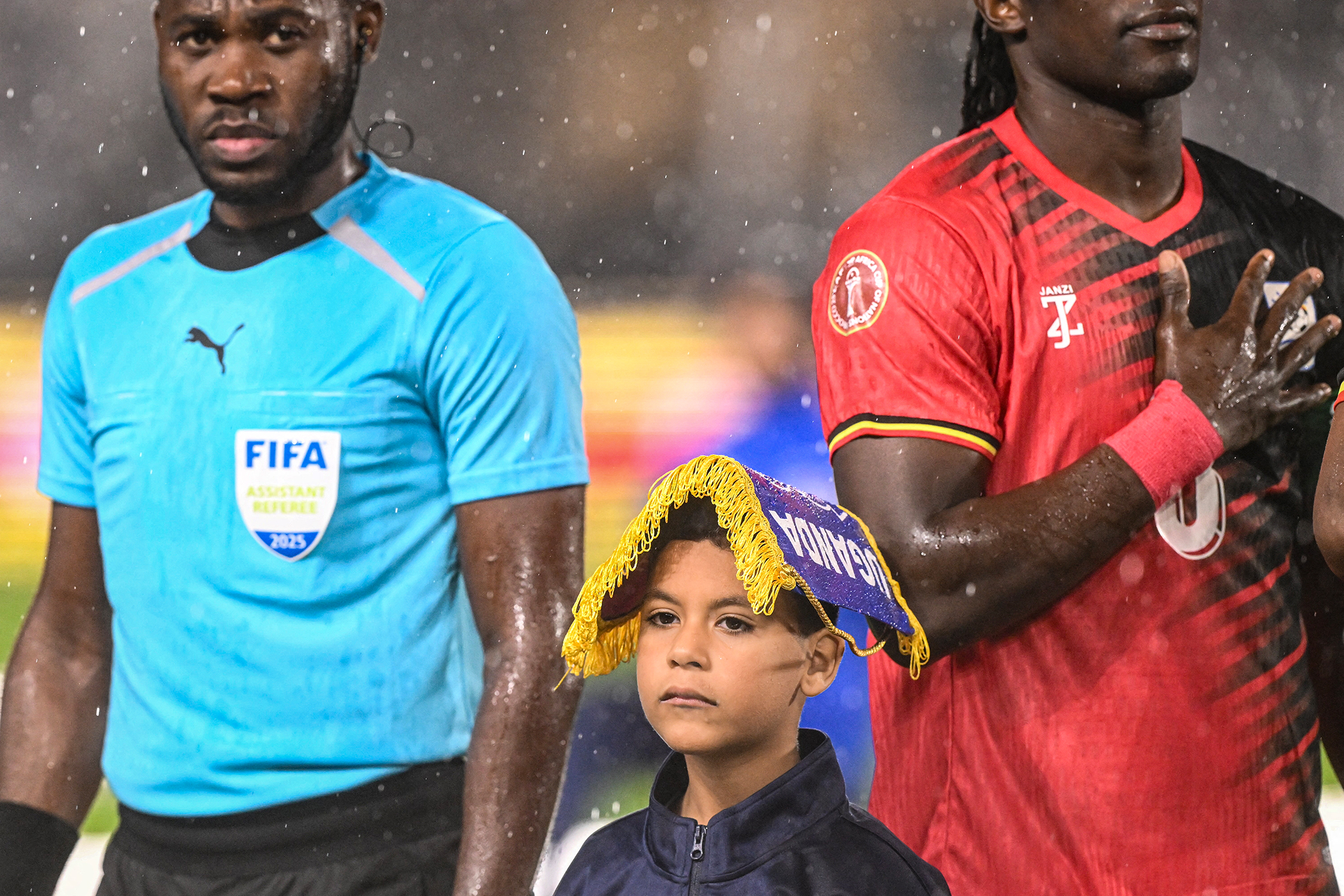
The climatic conditions for the 35th Afcon are another matter, however. Rain, wind and cold have been prevalent from the tournament’s opening game in Rabat, giving this Afcon a dour European winter ambience, in sharp contrast to the heat and sunshine which is more in tune with the vivacious vibe at the tournament.
Eric Chelle, Nigeria’s head coach, freely admitted that the “cold” weather in Fez, where they played all their group games and a last-16 match, was a challenge. Midfielder Tochukwu Nnadi, who plays for Belgian side Zulte Waregem, was down with a cold at the end of the group stages.
“It is very clear that it is not suitable for the Afcon to played in the winter. CAF must not repeat the staging of a tournament in North Africa during this period,” a member of the Nigeria Football Federation told The Observer.
The quality of refereeing has been a main talking point at the tournament, for all the wrong reasons. There has been a sharp contrast from the high standards set in Côte D’Ivoire in 2024, where the video assistant referees attracted global plaudits for their accuracy.
The failure of VAR to make penalty calls for a clear handball in the group match between Benin and DR Congo, as well as a foul on Tanzania’s Idd Suleiman by Morocco defender Adam Masina in a round of 16 encounter, are just two of many calls that have left a negative impression about the quality of refereeing.
Noumandiez Doué, the Ivorian who led CAF’s referees’ department, and played a key role in managing that performance, was mysteriously removed from his position just before the start of the African Nations Championship, staged in Kenya, Uganda and Tanzania last year.
CAF is yet to answer questions on why Doué, who was in Kenya to prepare for that tournament, was abruptly removed from his post.
“The departure of Doué, after the good work that he and his team did at the last Afcon was a surprise to everyone,” says a senior member of the CAF administration who spoke to The Observer.
“No excuse or explanation was given to us internally for the decision. But this is CAF.”
With the quarter-finals starting today – Mali v Senegal, Cameroon v Morocco, Algeria v Nigeria and Egypt v Côte D’Ivoire – guaranteed to be matches of intensity and high drama, the spotlight on the referees will be even greater.
Photograph by Sebastien Bozon / AFP via Getty Images