
David Moyes says he “quite likes it” when one of his players smacks another one of his players in the face during a match and gets sent off. Something else then to add to our list of things that football managers tell us they “like to see”.
Already on that list: players fighting each other on the training ground; players throwing immense wobblies when subbed off; players publicly complaining about not being selected or about being selected in an unfavoured position; players “trying things” rather than following the game plan; and players playing out from the back even when it’s clearly suicidal to do so.
Number them all as things which look manifestly sub-optimal to the untutored eye, but which, if raised in the context of a post-match interview, managers will say they “like to see”.
And now we can lob in the sight of Idrissa Gueye taking a slap at Michael Keane and then having to be prevented by team-mates from going back for more. Huge fun for the browsing viewer with no skin in the game, of course, but not ideal from Everton’s point of view, surely.
Wrong! “If you want a winning team, and that resilience and toughness that got us the result,” Moyes suggested, “you have to have players who are going to act that way.”
Really, though? True, it was a fantastic result for Everton at Manchester United. But wasn’t the player who was “acting that way” off the pitch by then?
And didn’t the team showing resilience and toughness and getting that result consist entirely of players who hadn’t punched anyone, including a couple who, when it all kicked off, had thrown themselves anxiously into trying to calm things down?
Even Gueye himself didn’t sound like someone who had merely taken his cue from The Seven Habits of Highly Effective Footballers and was aggrieved to be getting called out for it. “What happened does not reflect who I am,” he (and, quite possibly, a guiding publicist) solemnly clarified afterwards, “or the values I stand for.”
Related articles:
Yet, “I quite like it,” said Moyes. Are we missing something?
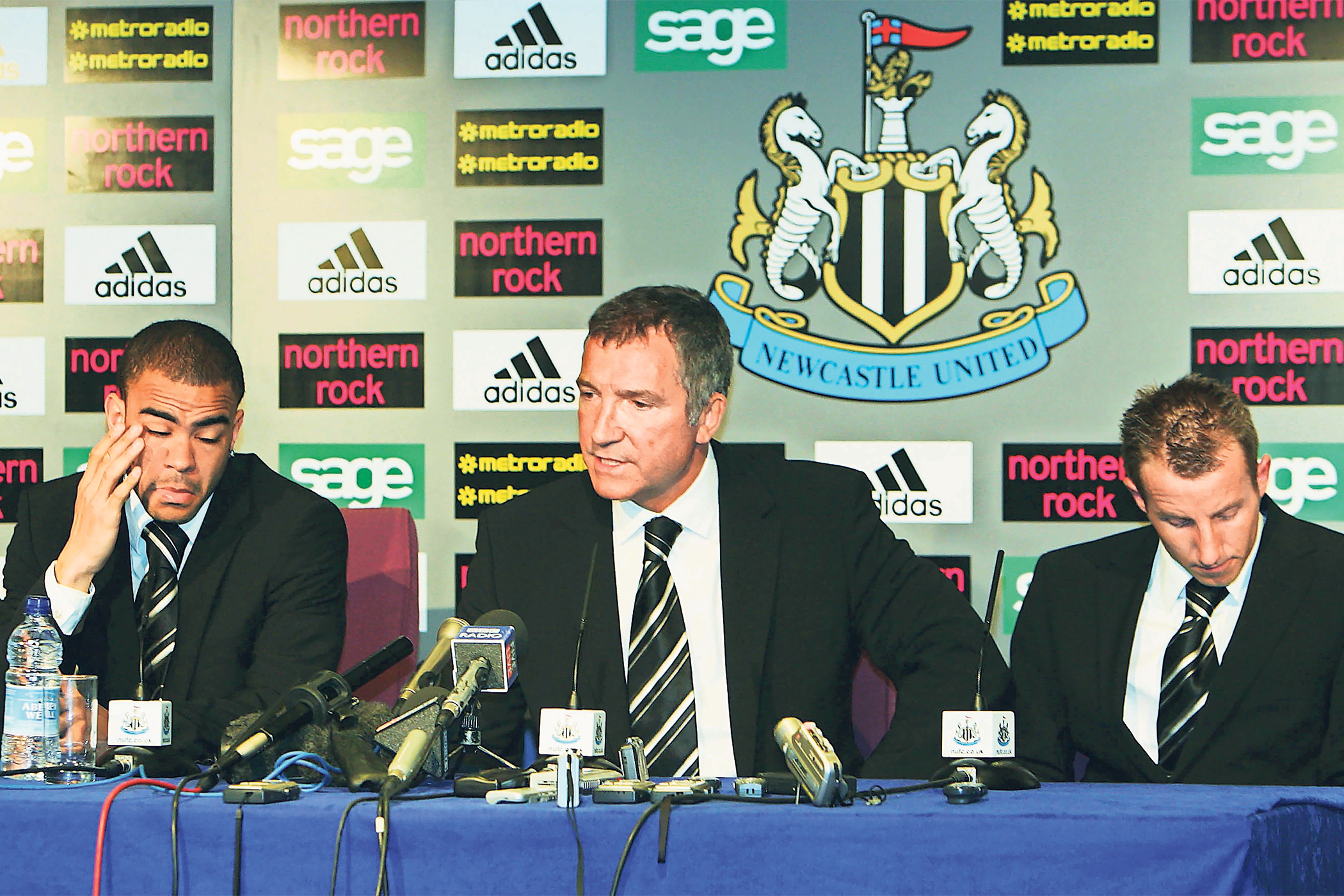
Until last week, Newcastle’s Lee Bowyer and Kieron Dyer in 2005 was probably football’s highest profile “blue on blue” incident (military term – nothing to do with strips). Graeme Souness, managing Newcastle, gave no indication of liking to see it.
Newsletters
Choose the newsletters you want to receive
View more
For information about how The Observer protects your data, read our Privacy Policy
Indeed, he stood on the touchline shaking his head in furious disbelief and then sat between the two offenders (reduced to sheepishly apologetic schoolboys in their club suits) at an excruciating “clear the air” press conference.
Before that, we probably have to go back to the 1995 punch-up between Graeme Le Saux and David Batty, both representing Blackburn Rovers against Spartak Moscow in the Champions League. Neither Le Saux nor Batty were sent off that night because it was the nineties and football was so loosely regulated that a player like David Batty could still enjoy a long and successful career in it. But Colin Hendry was sent off, for a foul committed after he, too, had squared up to a team-mate in a squabble about lost possession.
David Moyes, you sense, would have loved to see it. But Blackburn lost 3-0, and Ray Harford, their manager, was reduced to an incandescent near-silence, crisply telling journalists to “write what you saw” and hinting darkly that this matter would be dealt with privately. Meanwhile, Spartak’s coach, Oleg Romantsev, sounded like he couldn’t believe his luck. “Before the match I told my players they will be playing against 11 guys ready to fight for each other for 90 minutes – not with each other.”
Which, however sanguine Moyes now sounds, still seems like the best way of doing things, no?
Unless, of course, this is all code, and when managers assure you that they “like to see” something, what they’re really saying is: “Despite those strong signs to the contrary, I’m still in control here, and my plan remains intact.”
And also: “Trust me, I will be coming down like a ton of bricks on this unacceptable behaviour just as soon as the dressing-room door closes.”
Sending a message, in other words. Cunning, if so. You like to see it.
Photograph by Laurence Griffiths/Getty Images