
This article first appeared as part of the Daily Sensemaker newsletter – one story a day to make sense of the world. To receive it in your inbox, featuring content exclusive to the newsletter, sign up for free here.
Donald Trump has declared the airspace over Venezuela closed “in its entirety”, as speculation mounts that his administration intends to invade.
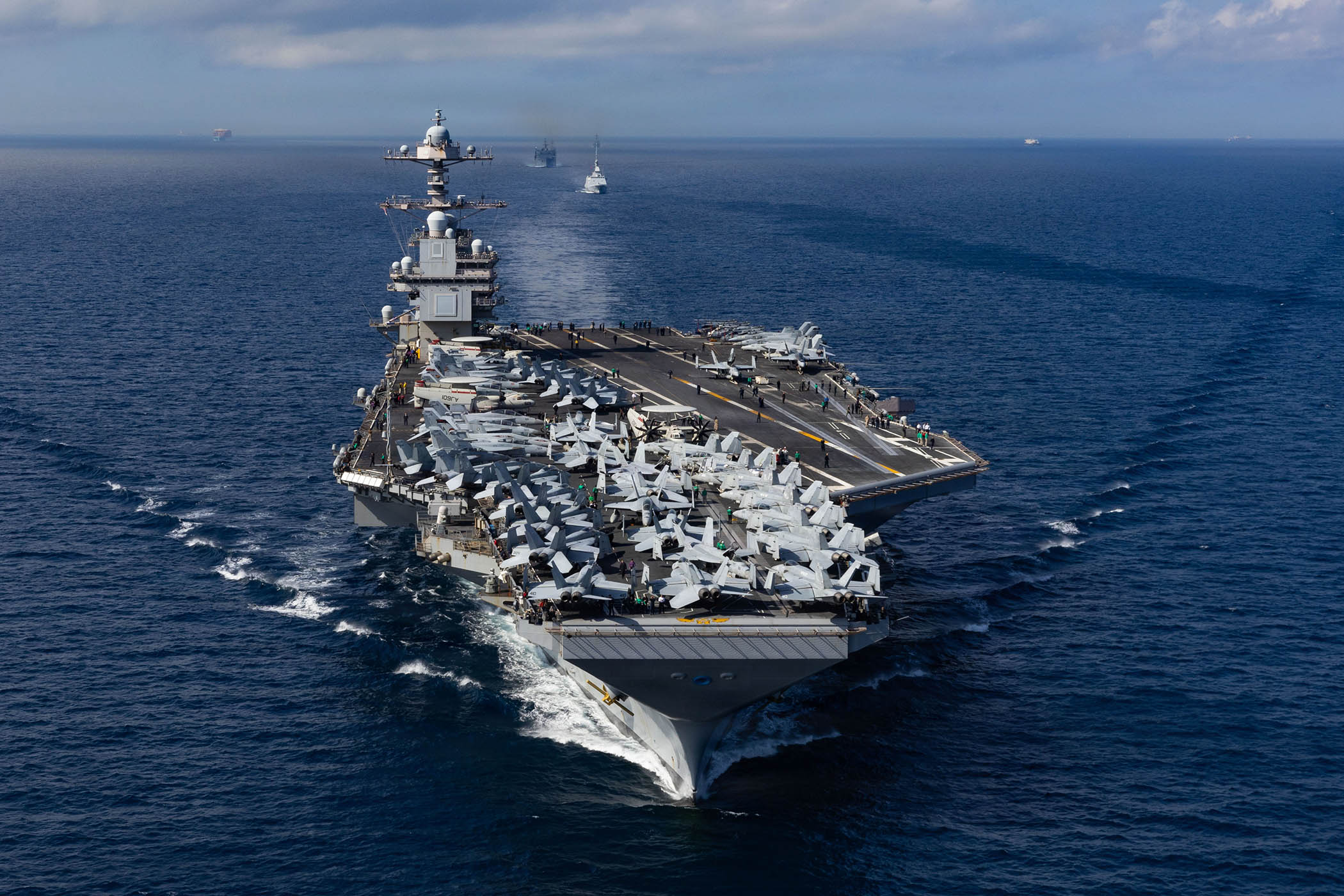
So what? This is from the self-confessed president of peace. The White House says Venezuela’s Nicolás Maduro is a narcoterrorist who is flooding the US with drugs. It is determined to oust him and has assembled a large armada in the Caribbean. But Trump’s policy
•
lacks a clear endgame;
•
rests on inflated claims about trafficking; and
•
risks creating yet another fracture in his Maga base.
Sea strikes. Since September the US has carried out 21 known attacks against alleged drug boats off Venezuela’s coast, killing at least 83 people. The legality of these strikes has been called into question, and the UK is one of several countries that have paused intelligence sharing with the US to avoid being implicated in them.
Undeterred. Trump continues to ramp up pressure on Maduro, widely seen as an illegitimate leader who allegedly rigged an election last year. The US president said on Thursday that strikes against the Venezuelan mainland could “begin very soon”.
Back story. Maduro and his late predecessor Hugo Chávez, both Marxists, have been bogeymen of the American right for decades. Venezuela’s economic collapse has produced eight million refugees, a major source of regional instability. Maduro’s regime is also aligned with Russia, China and Iran, giving US adversaries a foot in its backyard.
The claims. Trump’s administration is building a case against Maduro that rests on allegations of drug trafficking. The White House has described his regime as a "narcoterror cartel”, while the US defense secretary Pete Hegseth has said the naval build-up off Venezuela is aimed at securing America from “the drugs that are killing our people”.
The facts. Venezuela is a major go-between for cocaine, but most of this is destined for Europe. Less than 8% of the cocaine in the US passes through Venezuela, with Colombia supplying most of the American market predominantly via the Pacific. Meanwhile Mexico, not Venezuela, makes fentanyl, which is responsible for nearly 70% of overdose deaths among Americans.
Related articles:
Figure of speech. The US claims Maduro leads an organisation called Cartel de los Soles, which the State Department designated as a terrorist group last week. The name dates back to the 1990s when two generals with sun emblems on their uniforms were investigated for drug trafficking. It has since become a popular cultural myth. Venezuelans loosely use the term to refer to high-ranking officials engaged in criminal activity and corruption schemes.
Rewind. Drug-running claims by the White House have been compared to the false allegations levelled against Iraq about the existence of weapons of mass destruction in 2003. Venezuela has the world’s largest proven oil reserves.
Newsletters
Choose the newsletters you want to receive
View more
For information about how The Observer protects your data, read our Privacy Policy
Figurehead. The Trump administration has aligned itself with Venezuelan opposition figure María Corina Machado, who is in hiding and won the Nobel peace prize in October. She says she is ready to lead a new government if Maduro is toppled and has echoed the White House’s allegations about his links to drugs.
Home front. US boots on the ground are unlikely. Roughly 70 per cent of Americans oppose military action. Trump campaigned on a pledge to end “pointless wars”, and his Maga base is particularly averse to foreign military entanglements.
Wait and see. Instead the strategy appears designed to intimidate Maduro into fleeing or trigger an uprising against him. For now, there are few signs of this happening. The Venezuelan president has spent much of the last decade “coup-proofing” his regime, purging officers and creating an extensive patronage system. He survived several small-scale mutinies in the 2010s.
Rock, hard place. If the US backs down without inducing regime change, its gunboat diplomacy could strengthen the hand of Maduro as a leader who faced down a “colonialist threat”. If the US does oust him through military action, Venezuela could collapse into Libya-style chaos. Any upheaval would probably spill across borders.
What’s more… Trump said on Friday that he would pardon Juan Orlando Hernández, the former Honduran president imprisoned in the US on drug trafficking charges. The dissonance is hard to ignore.
Photograph by Alyssa Joy/U.S. Navy via Getty Images