
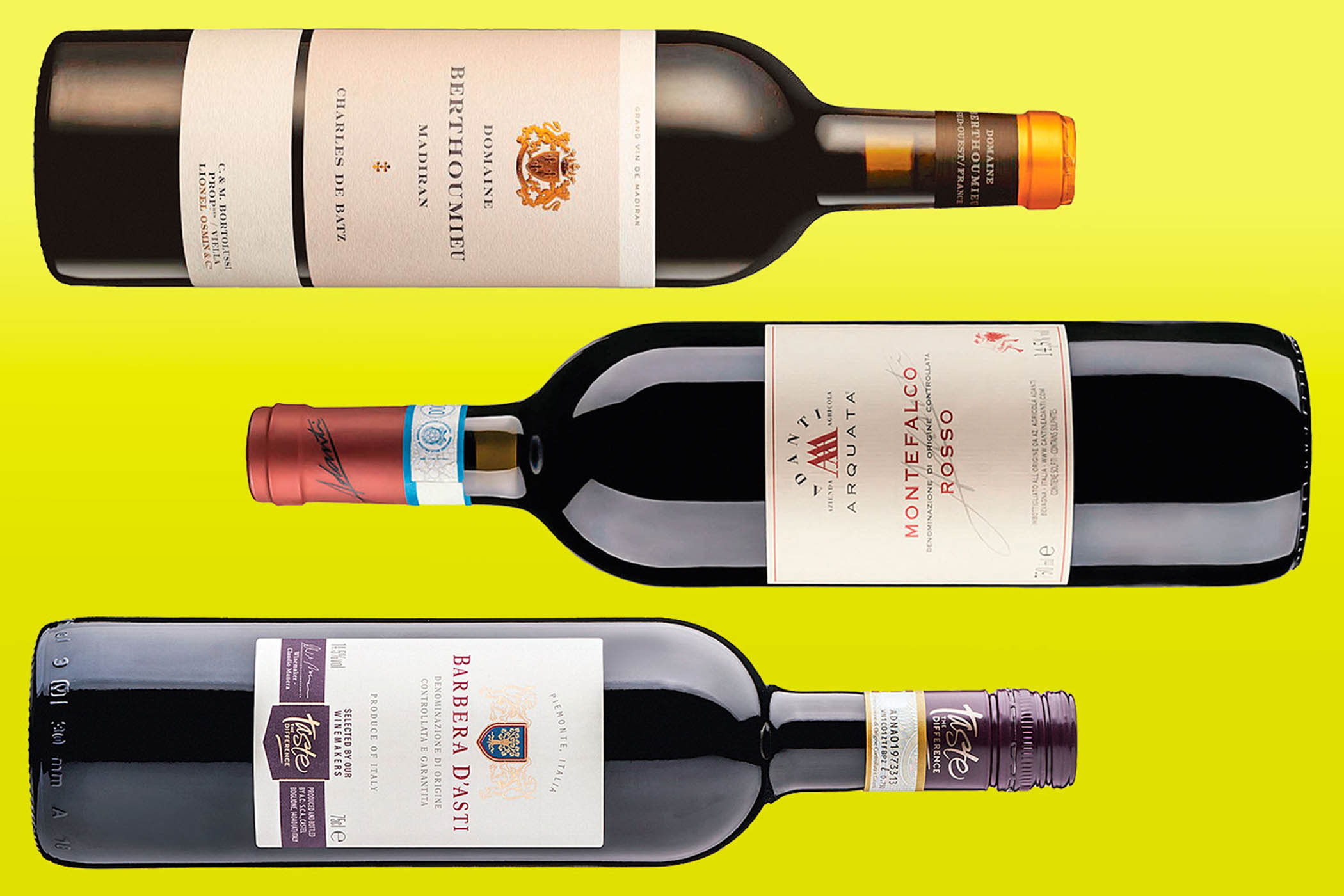
The label is tall and elongated, the bottle black and high-shouldered, weighty and expensive-seeming. The wine’s name is presented in a narrow, familiar serif that lies above a golden crest, a chunk of text and a red symbol. It bears a striking resemblance to a bottle of Tignanello, a “Super Tuscan” wine made by the Antinori family. Tignanello is one of Meghan Markle’s favourite wines; a single case can cost thousands. Except the wine I’m holding isn’t made by Antinori, and it costs only £20. It’s called Toscana Rosso, and it’s a “wine dupe”. I doubt any royals know it exists.
A wine dupe is an affordable alternative that resembles, in appearance, a more expensive or scarce bottle of wine. You might have seen or even bought one, perhaps in a supermarket such as Aldi, which sells the Toscana Rosso. The prevalence of dupes has been growing steadily, in tandem with the cost of living crisis – own-brand supermarket versions of pricey bottles that are similar enough to provoke a sense of brand familiarity but different enough to reasonably sidestep potential legal trouble.
I see these dupes at tastings and in press releases, but their intended audience will often first come across them on social media, where they are tasted and reviewed by prolific wine influencers such as Lucy Hitchcock, also known as Partner in Wine. Last summer, she published a review of Aldi’s Sainte Victoire rosé, and clocked up more than 5.3m views. The Sainte-Victoire is a dupe for Whispering Angel from the Côtes de Provence.
“Never underestimate how much people love a bargain,” Hitchcock told me recently, in a voice note. “I compare finding dupes to shopping around for a best price. An aspirational bottle might cost £25 at one supermarket and £28 at another, and £60 at a restaurant. If you can find a ‘dupe’ at £6, you’re going to be intrigued.”
Calling something a dupe suggests it’s a copy of something, only cheaper. But often, with wine, that’s not the case. In some cases – dupe cereal products, dupe birthday cakes – the dupe object need only really look like the original. But dupe wines are more complex. How do they smell – and taste? When you purchase a prestige wine, you are buying into a brand’s heritage, its stories and its often long-standing expertise. Is it enough for a wine to just look similar to the original to make it worth your time buying the cheaper equivalent? How much of a wine’s appeal stems from the way it looks, opposed to how it actually tastes, especially when we’re all squeezed for cash?
Perhaps it doesn’t matter. We’ll always drink what we can afford, after all. And I’ve previously recommended the Toscano Rosso for its benefits as a reliable Italian red, rather than as a dupe. It’s not that we wouldn’t buy the Tig if we could afford it – we just can’t afford it. It’s about finding what works best for us with what we have. And if you want to pay less for Tignanello, I suggest Antinori’s Chianti Classico instead. If there’s a fine wine you’re looking to try, it’s always worth checking out the other wines made by the same producer, which often come from similar vineyards.
Photograph by Yulia Petrova/ Getty Images
Newsletters
Choose the newsletters you want to receive
View more
For information about how The Observer protects your data, read our Privacy Policy