


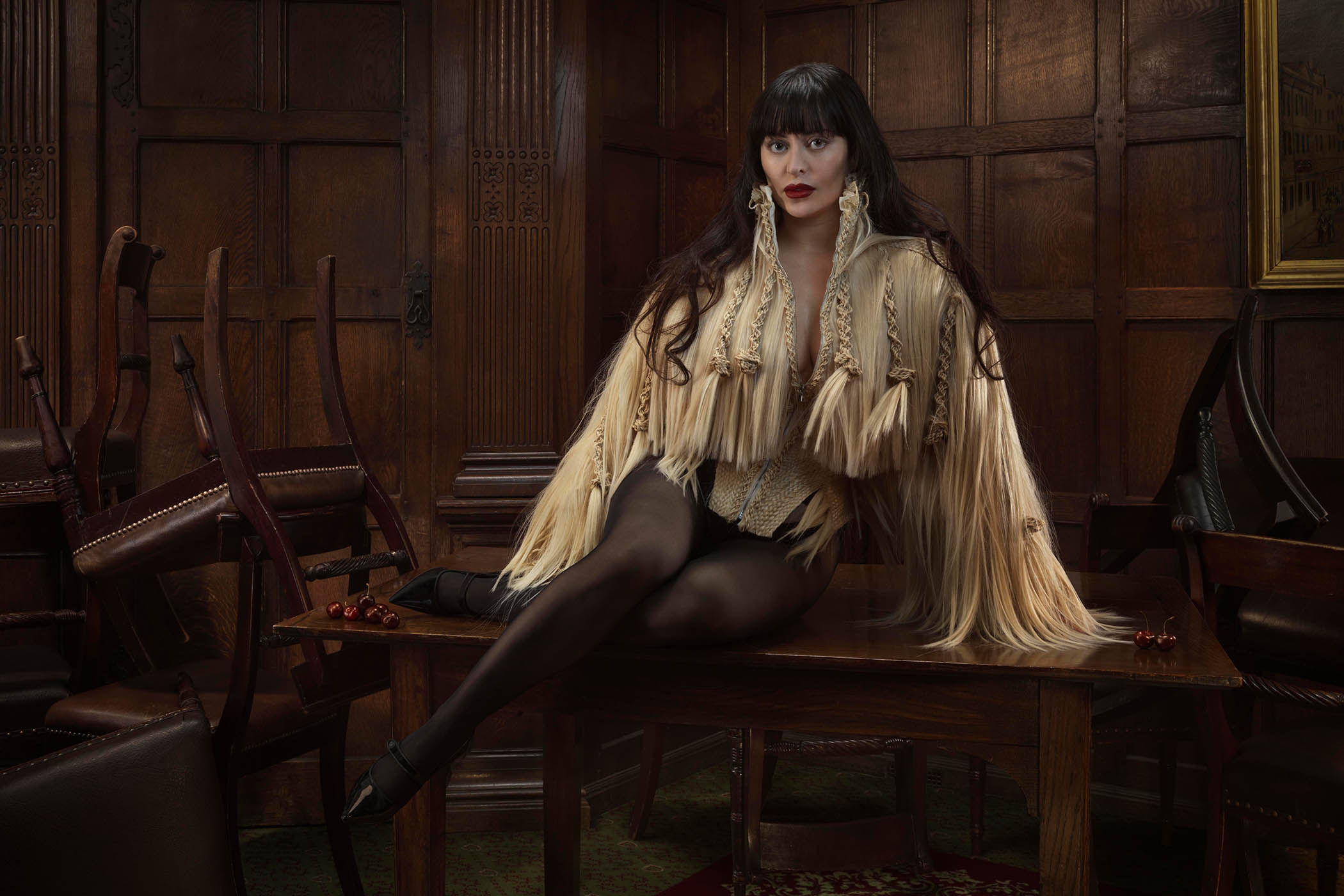
The first time I became aware of the menswear boom, it sort of got in the way of me having sex. It was 2020, the summer of park dates and pissing in bushes, and I had gone out with this younger guy a few times. He was pretty and had long, dirty blond hair, like the crushes of my youth, and he wore similar long-sleeved T-shirts and baggy trousers, only his were perfect and expensive.
At some point he gently criticised the feminine and sometimes gaudy, fanciful clothes I wore. “I just think you’d look good in something a little more masculine,” he said, sending me links to various brands, and leading me, inexplicably, to spend £300 on a pair of brutally unflattering slacks, before I broke up with him.
At the time it felt the way it does when men tell you that carbohydrates make you gain weight, actually, or that shampoo can be free of sulphates. Soon, though, I accepted that with clothes they had me beat. My guy friends swapped sale codes for Nordic hemp jackets and debated the merits of merino socks that cost more than my coat. I realised, hearing them chat excitedly, that I’d only ever really cared about looking nice, not about the quality or providence of individual items. I certainly didn’t have the energy or interest to maintain their gleeful and avid engagement. The menswear market is forecast to reach $937bn by 2033, from $596bn in 2024. Clothes are for the boys now.
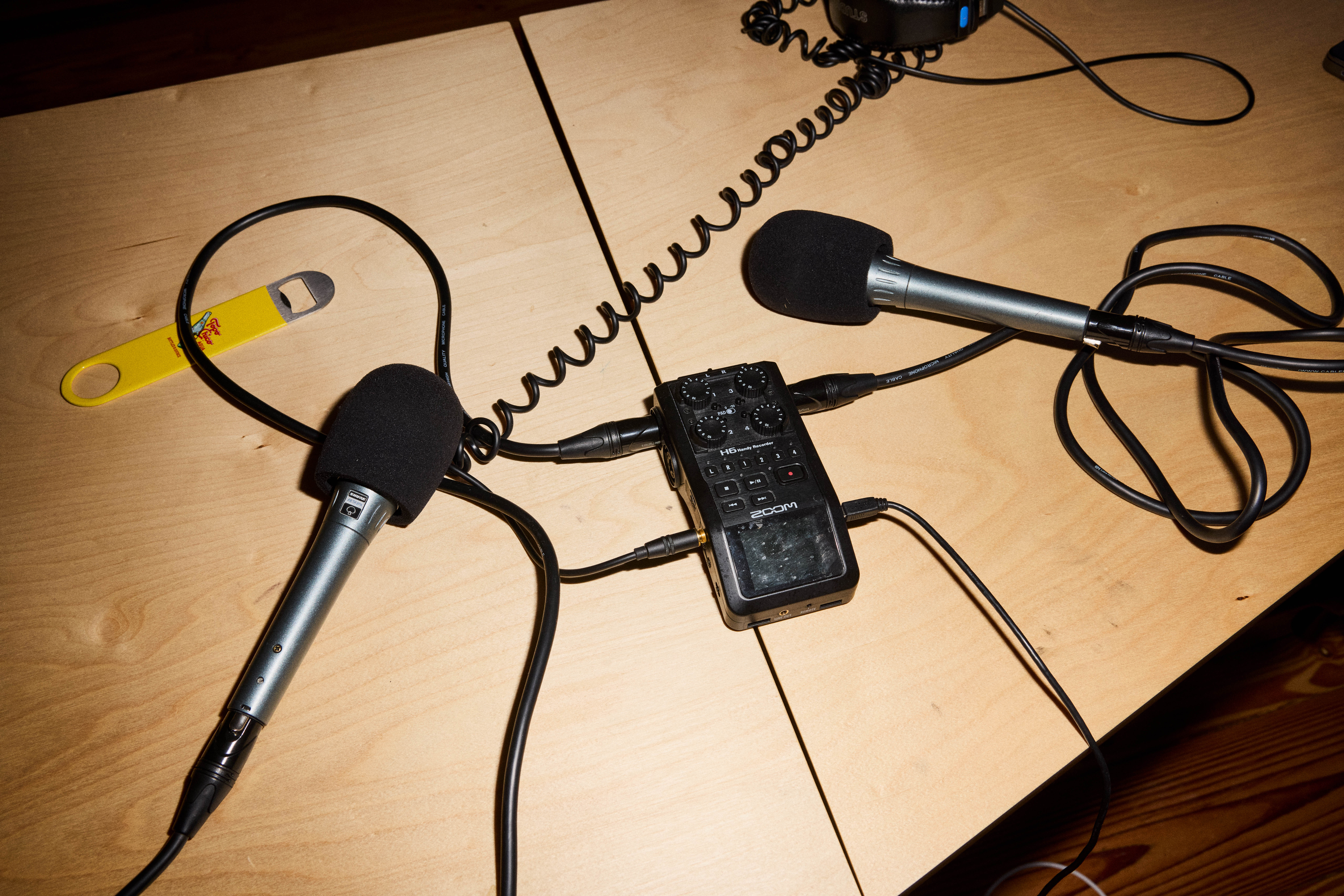
Lawrence Schlossman, by the time I became aware of this boom, had been working in menswear for a decade. We meet in the Lower East Side studio space where he and his co-host James Harris record Throwing Fits, their enormously successful thrice-weekly podcast about men’s style and the disparate cultural threads that produce it. As I’m introducing myself, he says, “You write books, I know! Well, meet another published author. I wrote a book that sold in Urban Outfitters that fucking nobody bought or read.”
Schlossman’s exuberance and warmth explains the mass appeal of his podcast. He and Harris don’t just relay information about products and trends during their patter (about items they love and interviews with stylish men), they have created a gang centred on enthusiasm that their fans want in on. (The pair’s Patreon reads: “By subscribing to the Throwing Fits Patreon, you’re officially behind the paywall with the gd mfing boyz”.)
Related articles:
Their effect, and its broad appeal, seems emblematic of a new era of mainstream masculinity, where one might hope to receive the soothing camaraderie of bro culture without the accompanying emotional deficits.
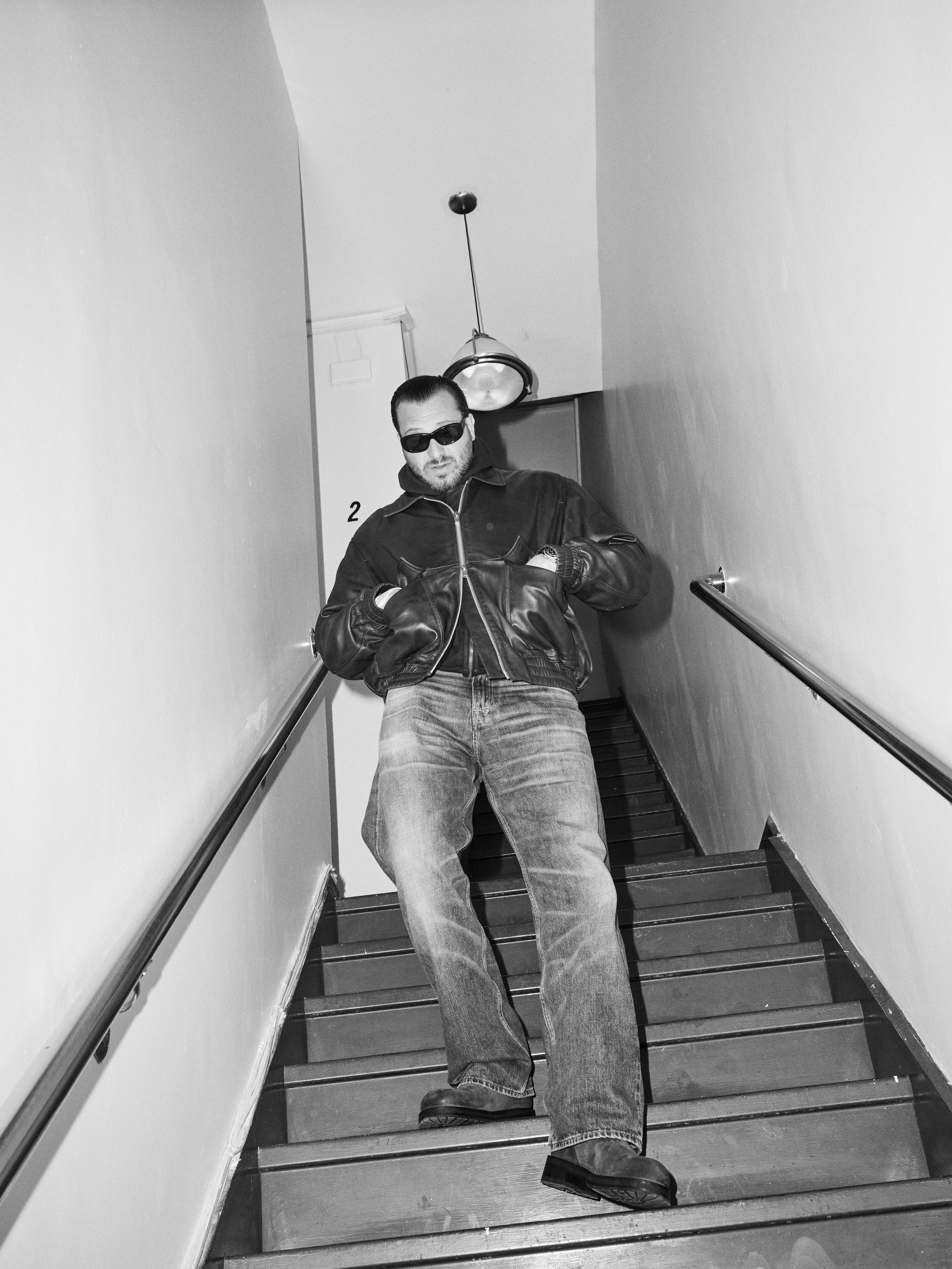
Schlossman, a 38-year-old Jersey boy, wields his masculinity deftly, with pristinely coiffed hair and old-school manners, a little Don Draper if Don Draper were a fierce proponent of double-denim, but lacking the associated rigidity. Several times he interrupts himself to clarify that the clothes he rhapsodises about are not only for one gender but any, and reflexively criticises himself for vanity. “I’m gonna be anxious until this comes out,” he says at one point. “Not so much about what you do, but the pictures…”
He was, in fact, the vice president of a southern college fraternity in 2008, that hallowed holding-pen for bro stereotypes. Becoming interested in clothes and style, he found his way into a then-nascent community of menswear bloggers, some of whom remain friends and colleagues. He began working professionally in fashion a year after completing his finance degree, and has moved around consultant and editorial roles ever since, becoming a beloved online big brother to a particular kind of millennial and zoomer male.
Eventually, he launched the podcast, which seems to best unite the boundless zeal and comprehensive knowledge of his industry with a natural affinity for chat. Of the irreverent register he and Harris trade in, he says, “I’ve always been able to laugh at myself,” and then, “also, I understand that this world of men who are in fashion is inherently ridiculous.”
‘For me, I’m never going to say: “Eat this, don’t wear that.” I’m descriptive, not prescriptive’
His attraction to the unofficial uniform of his frat peers – handed-down Barbour jackets, athleisure wear, Crocs – was the gateway to what would become his world, just as his initial adolescent interest in clothes was stoked by what those in scenes he admired wore to indicate inclusion. “I would use the term ‘poser’,” he says. “Loving skateboarding, but sucking at skateboarding and instead asking: ‘What are the clothes the skateboarders are wearing?’ Or, growing up in Jersey, there was a thriving music scene, pop-punk, post-punk. Trying to be in a band, being terrible, but still loving that kind of uniform…”
The word “uniform” is used both lovingly and derisively by Schlossman; to describe the subcultures of his youth, but also a different kind that repels him. “You see these gross tech oligarchs, Zuckerberg’s uniforms, guys with the idea, ‘I’m going to optimise my life with maximum efficiency, so I can fucking work like a robot.’ It’s not a uniform I’mparticularly attracted to, the nondescript grey T-shirt and athleisure hoodie.”
He glances down at himself.
“I say that… I’m wearing a hoodie. Mine’s cool though. It’s from Japan.”

When I mentioned to friends I was interviewing Schlossman, several of them sighed longingly and said something to the effect of, “I wonder what he would say about my outfit?” Schlossman and Harris’s sometimes ruthless “fit checks”, whereby they analyse a listener’s outfits, are a key pleasure of the podcast.
The parasocial relationships that listeners often develop with podcast hosts are distinct. (A friend of mine recently conceded he considers the hosts of Chapo Trap House – the defining politics and culture podcast of American left-ish millennial male – to be, in all meaningful senses, pals of his). I ask if Schlossman gets many fans asking for personal critiques? “Dude, yes,” he says. “And it’s like, ‘I’m not going to tell you your pants look like shit.’ On the other hand, when someone contacts me to ask for an assessment of value because something is expensive, I consider that almost part of customer service attached to the podcast. I’m much more comfortable in that context, where it’s individual and private, not a one-size-fits-all.”
He’s referring to a flattening of culture. We know that the algorithms define what we hear, see and buy to a depressing degree. What about Schlossman? Are salient tastemakers advising fans on what to buy antithetical to the scrappy subcultures that first inspired him?
“It does sometimes feel like recommendation culture has replaced honest, real discovery,” he says. “There are plenty of people who are prescriptive with advice, and rules, and that’s great if it’s what their audience wants. For me, I’m never going to say: ‘Eat this, don’t wear that.’ I’m descriptive, not prescriptive.”
There’s an anthologising instinct, I find, distinct to menswear fandom, which Schlossman describes as an “under-the-hood mentality” – an urge to categorise and collect instead of incorporating items in a more utilitarian organic way. Sometimes this reveals itself as nerdiness, but in others it comes off precious and showboaty. What, I wonder, is Schlossman’s greatest extravagance?
“Our fucking dog! Oh my God! Besides him…” He thinks. “I guess my watch is nice, but I have one watch that I wear every day. If you’re one of these people that thinks about cost-per-wear, it’s the best money I’ve ever spent. There’s a culture of flexing online where the level of ostentatiousness is fucking gross. I don’t see myself as that person… And I would hope that our podcast never encourages or enables anyone into doing that.”
What is it for, then?
“The reason that I care about getting dressed every morning is to make me feel good, so that everything else that is going on in my life, things that are more important, start off OK.”
He shrugs happily.
“Plus, I’m a fan.”