



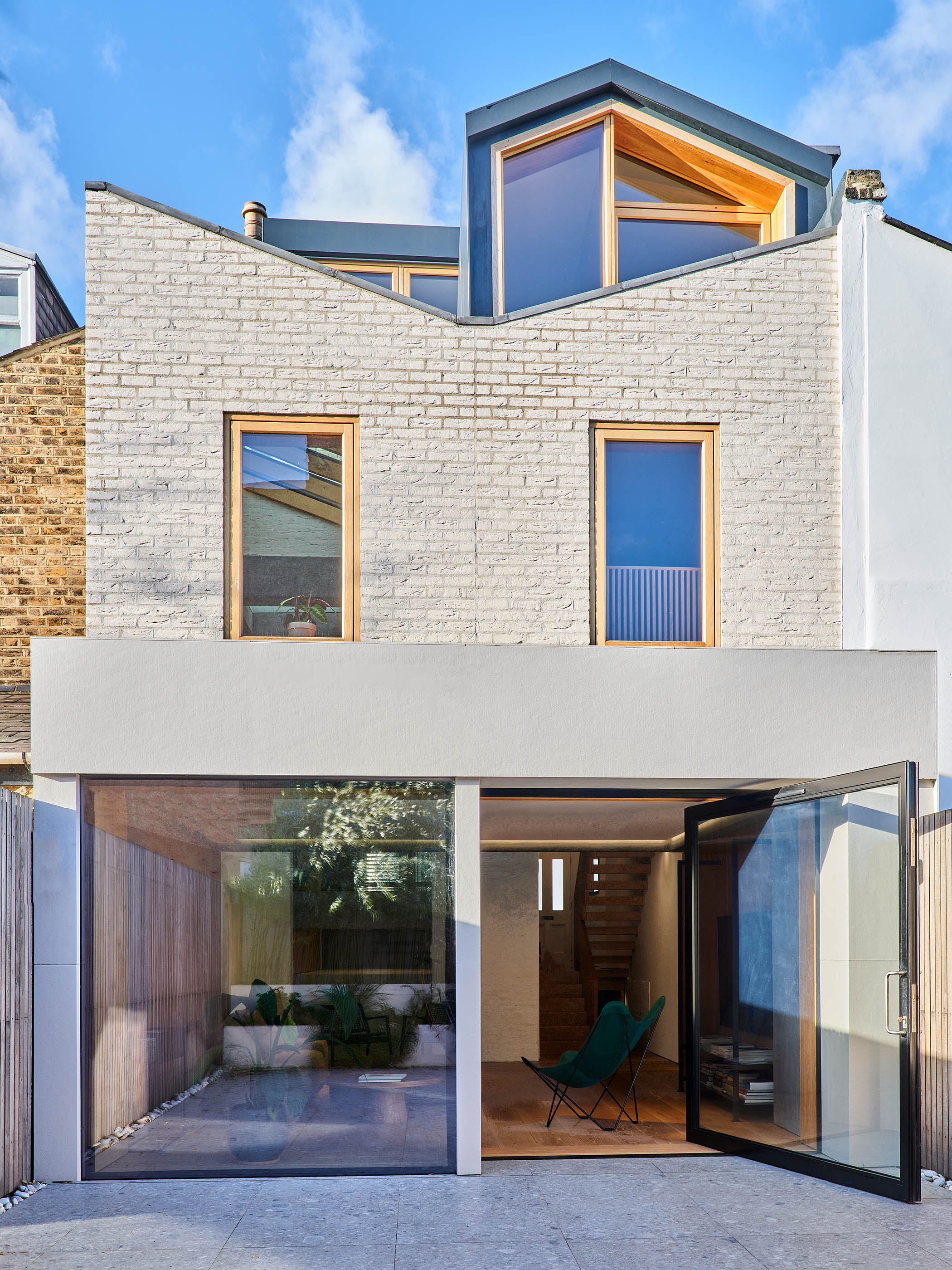
Looking from the street, you could be forgiven for thinking that Robin Cassidy’s home was a typical Victorian terraced house. With its brickwork exterior, bay windows and tiled roof, it looks just like all its neighbours in south London’s East Dulwich. It’s only when you step inside that you realise the entire rear of the building has been transformed into a bright, spacious picture of contemporary architecture.
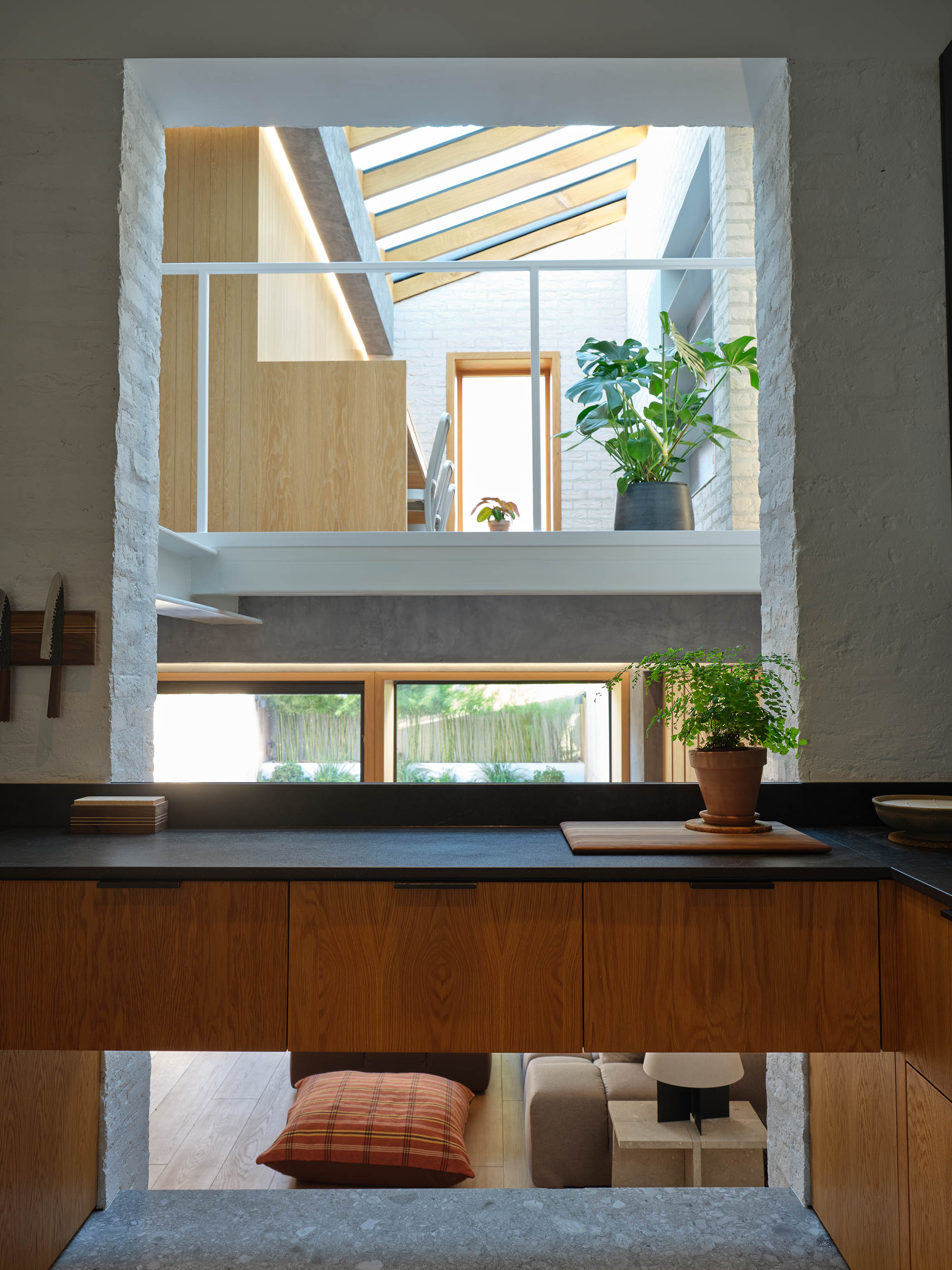
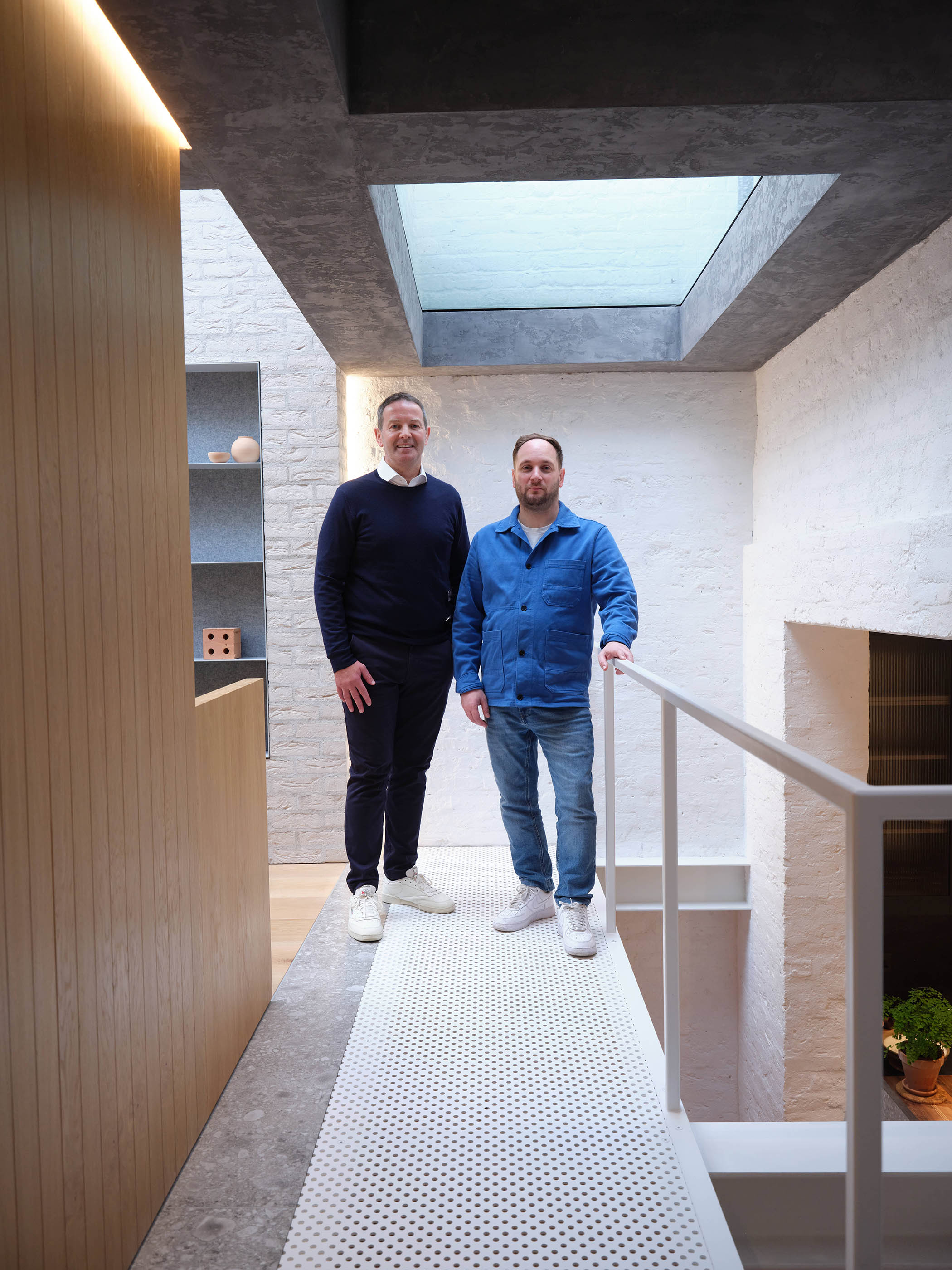
Separating the old and new – the front rooms, with their original proportions, from the modern back – is an open space that reaches the full height of the house. The only structure here is a steel walkway, drilled with tiny holes, through which natural light filters from a series of skylights high above. Getting the biggest of these windows up to the roof was “a big effort”, says Cassidy, peering upwards. “It came with a disclaimer: if you get something this size, four times out of 10 it breaks while installing it.”
Ben Edgley, co-founder of ConForm Architects, the practice behind the renovation, says this central space was the key to the project. “That split in the middle helps distinguish the two zones, but keeps them connected.”
To understand why the renovation looks the way it does, you first have to understand Cassidy’s family story. He moved into the house in 2009 with his wife, Liz, and their two young sons. “This was the first house where we really put down roots,” he says. But only months after the move, Liz was diagnosed with breast cancer and, after several years of treatment (Cassidy says she was “not just brave and courageous, but serene”), she passed away. Their sons were just three and five years old. “I threw myself into my responsibilities,” Cassidy says. “Which were the children, and being a good example, conducting myself really well.”
Cassidy’s sons are teenagers now: the youngest is 16; the eldest has just started university. “The boys are my inspiration,” he says. “They’ve turned out extremely well.” And with his sons now more grownup, he allowed himself to undertake the renovation of his dreams. “Doing the house was something for myself,” he says. “A reward.”
Their shifting family dynamic has influenced the design of the home. Cassidy describes their set-up as like “the Three Musketeers. We work around each other symbiotically. We just have a way of orchestrating our life together very smoothly.” He wanted all three of them to have privacy, but at the same time for their separate spaces to feel connected. There aren’t many doors in the house, which gives it that sense of permeability.
The boys’ rooms are at the top of the house, where they also have a “pod room” with a TV and sofa. “It’s like an apartment for them,” says Cassidy. “They’re nicely contained up there.” Yet, the openness of the design means they can “hear what each other is doing without disturbing one another,” he explains. “Whatever we’re doing, we’re together, not locked away in a room somewhere.”
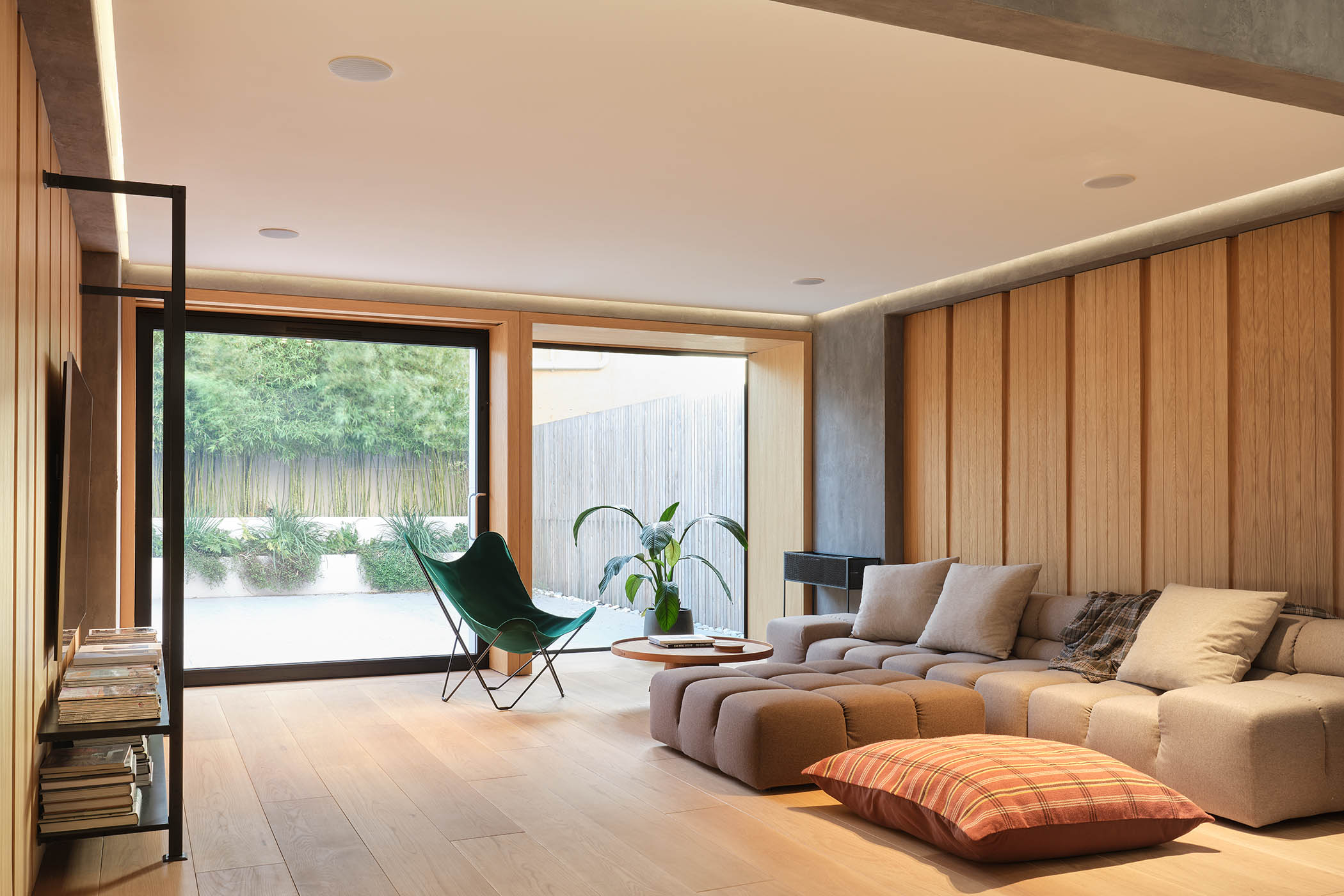
Aesthetically, the house is minimalist and almost unnervingly immaculate. There is zero clutter and only a few carefully selected pieces of furniture: a low-slung Tufty-Time sofa from B&B Italia and a pair of Vipp armchairs in the living room, and in the dining room an Imo oak bench from Pinch and a Heerenhuis dining table. Partly, this too is a reflection of his sons’ ages. When they were younger “the house was never this pristine,” Cassidy says. There were always indoor hockey and basketball games going on. “We ran it into the ground,” he laughs. Now, he’s given himself licence to impose his own taste.
Related articles:
But the pared-back look also reflects the role the home plays in their lives. “I have quite a stressful job at times,” Cassidy says. (He works in banking.) His kids, too, play a lot of sports and are “pushed pretty hard” at school, so when they are at home, they need it to be a place where they can “rest, decompress, switch off”. The lack of clutter, the clean lines, the limited palette of materials, all contribute to creating a peaceful atmosphere.
Aesthetically, the house is minimalist and almost unnervingly immaculate. There is zero clutter
Aesthetically, the house is minimalist and almost unnervingly immaculate. There is zero clutter
Cassidy came across ConForm’s work while researching the project and he felt the firm’s more minimalist style was close to his own. Early on, he showed Edgley a Pinterest board with years of built-up visual research and references. “It was a great way to fast-forward probably a dozen conversations,” Cassidy says.
When it came to the interiors, Edgley was focused on maintaining a “controlled palette of materials” that included the Italian stone Ceppo di Gré, white-painted brick and steel, dark grey concrete beams, and oak. “The timber brings it all together,” he says. “You feel the warmth and opulence of the oak, because of the rawness and coldness of the concrete and steel.”
Despite that consistency, different spaces have different atmospheres. In the downstairs living room, the walls are lined with oak, which risked pushing that warmth to its limits. (“You don’t want it to end up looking like a sauna,” says Cassidy.) To avoid this, a series of grooves were added. “That elevates it, makes it more contemporary, and draws your eye to the rhythm,” says Edgley.
Meanwhile, the first-floor workspace – which overlooks the kitchen – feels more industrial, with white-washed bricks and heavy grey concrete. “It has a raw feeling,” says Edgley, “almost as if you are outside.”
Cassidy and his sons moved back in post-renovation, in July 2024. They’ve lived in it now for around 18 months. Cassidy spent about seven years planning and saving for the work, and clearly now takes enormous pride in the outcome. “When you’re given something, you don’t appreciate it as much as when you really have to earn it and be patient. And I have for a long time,” he says. “As you can probably see, I put so much into it. Now I deserve to enjoy it, and now is a good time to enjoy it.”
Newsletters
Choose the newsletters you want to receive
View more
For information about how The Observer protects your data, read our Privacy Policy