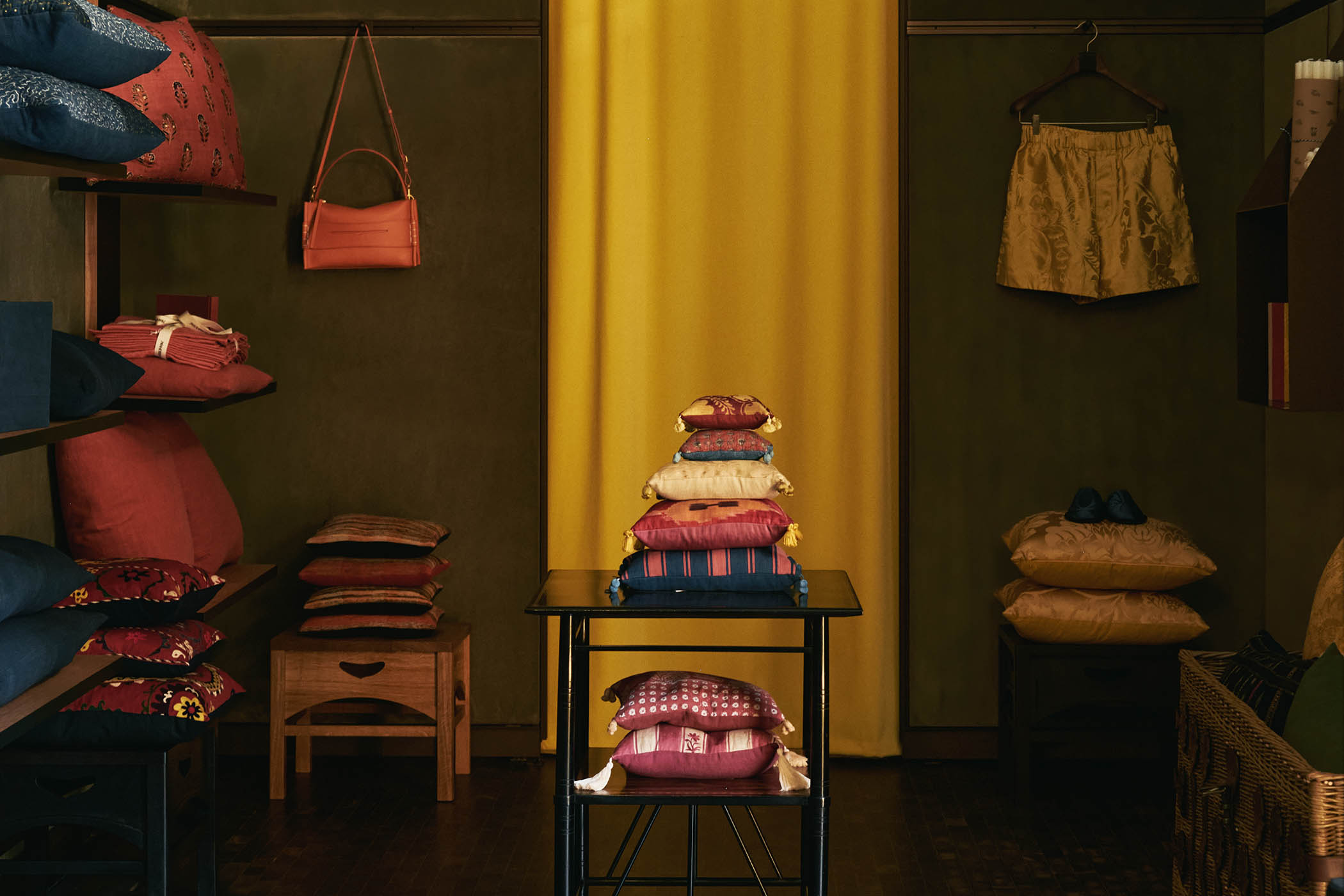


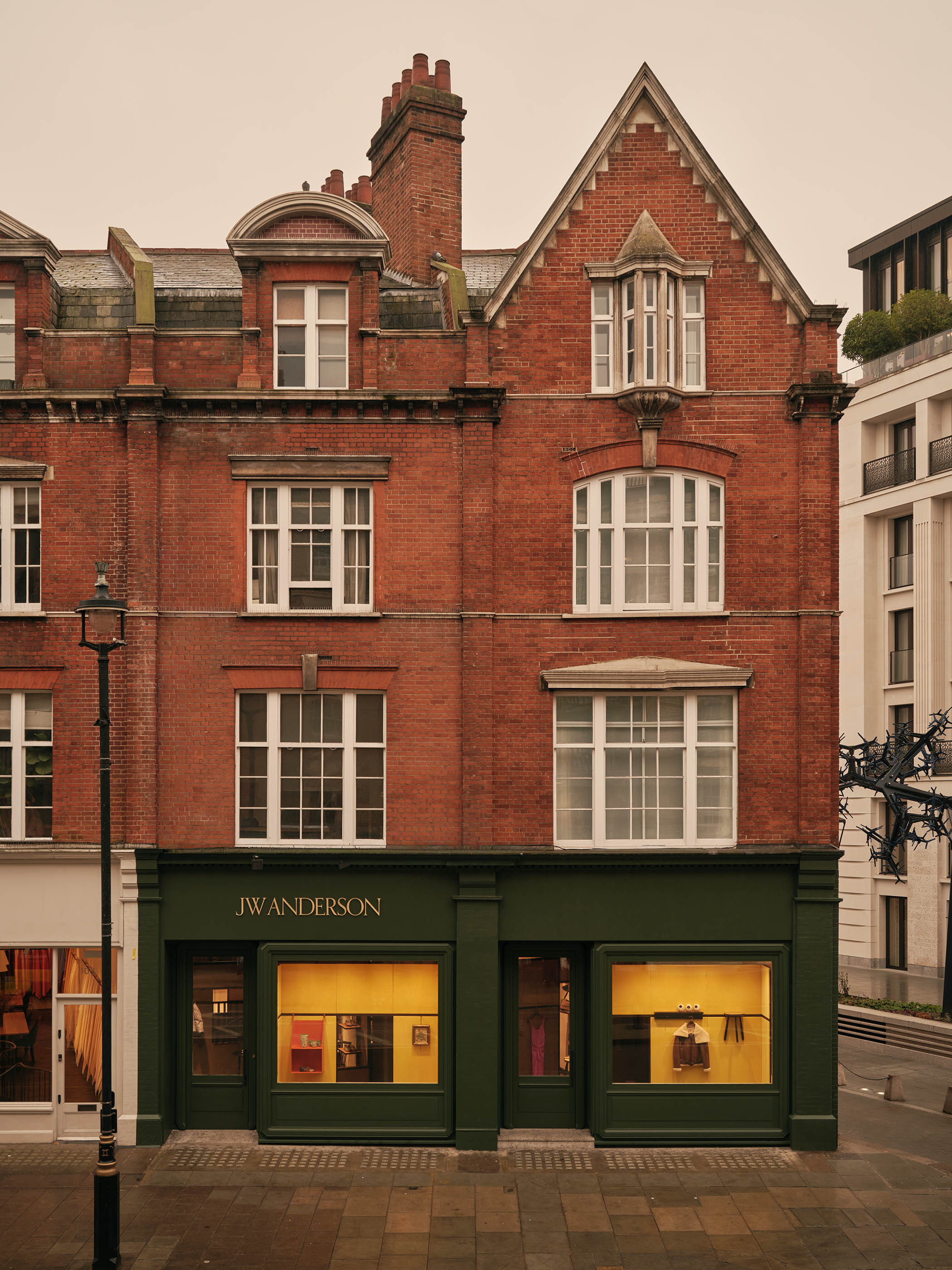
The interiors of JW Anderson’s new store on Pimlico Road, London, have the qualities of a Vermeer painting: luminous, peaceful, domestic – the interiors you’d expect in a tastefully appointed home, rather than a retail space.
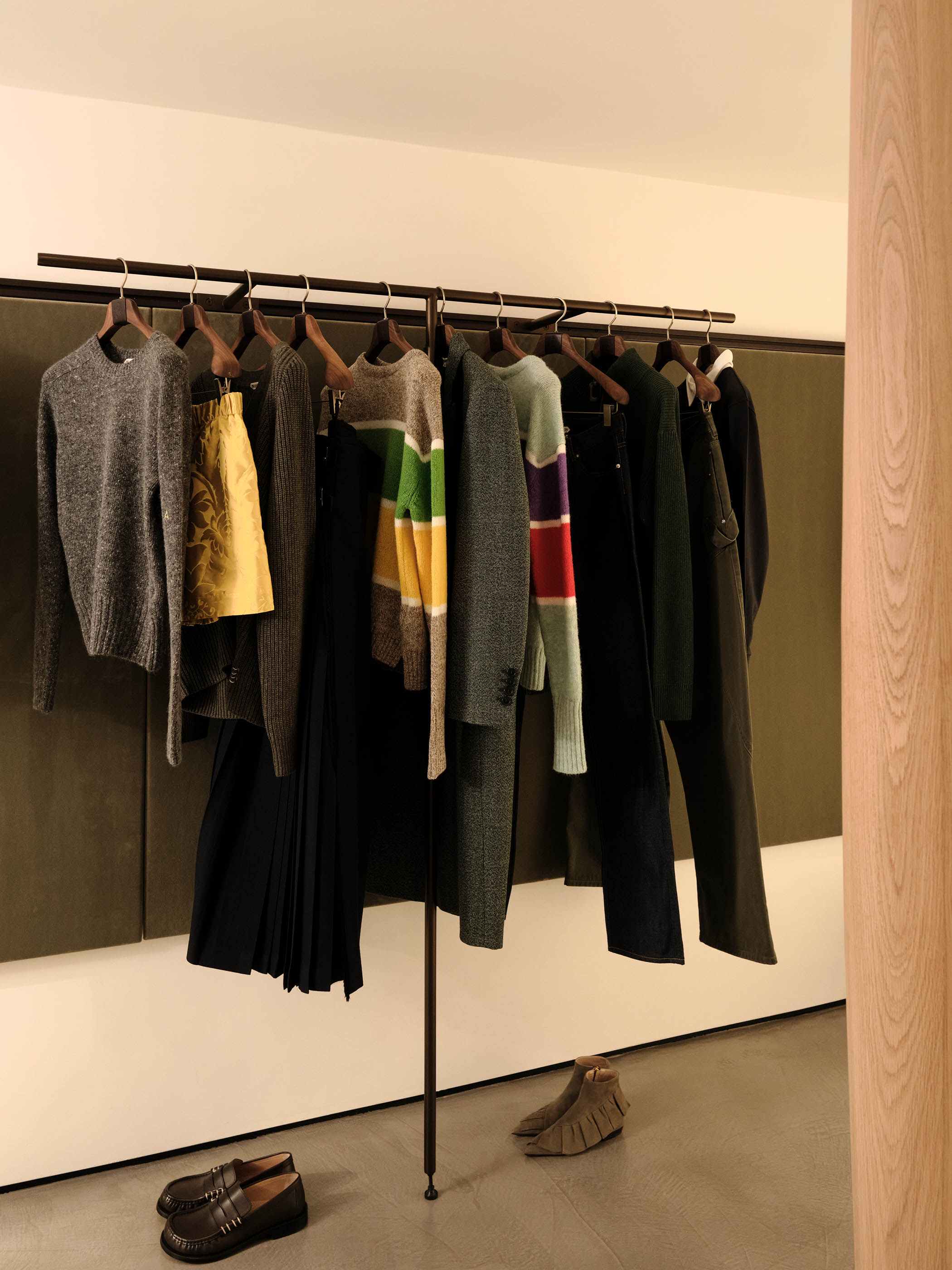
Shelves sit against a neutral backdrop. Plush milk-velvet lined panels nod to the work of Italian architect Carlo Scarpa. All around are exquisite objects available to buy: a peach paperweight in bronze designed by the film director Luca Guadagnino; roughly hewn ceramics by the Japanese artist Akiko Hirai. In one corner of the shop is a wall of reworked vintage gardening tools, and above is a re-edition of a Charles Rennie Mackintosh stool made in collaboration with Angus Ross, a woodworker who used Scottish oak sourced from his own woodland and finished it with Irish linen.
What does successful retail look like at the dawn of 2026? As a Business of Fashion and McKinsey State of Fashion report revealed recently, consumers want to connect more deeply with retail environments – they crave spaces in which to dwell and be inspired. Anderson’s eponymously named store is not the first shop to offer its visitors the feeling of an emporium. But it does deftly combine ready-to-wear clothes alongside furniture, art and collaborations with artisans, and sets the product against a contemporary, gallery-like backdrop.
“Everything in the space is there because it means something to me,” says Anderson, who is creative director at Dior. “It’s personal, almost like a curiosity shop. Each piece allows me to say: ‘I really love this, and I want you to know about it.’” To visit the store is to understand how Anderson likes to live and discover the objects in which he finds beauty. The space is a dialogue between thoughtful, handmade objects and his predilection for a spare, Shaker-style aesthetic.
Anderson once told a reporter that he “fell into” fashion; it was interiors that moved him most. Curation is a hackneyed retail cliché, but few manage to pull it off – clearly much thought has gone into the lighting and shelving system here, which is easily re-configured to best display objects of different scale.
Neon-yellow rollnecks are arranged next to Wedgwood Lucie Rie mugs and textiles by Polly Lyster, who has built an impressive collection of French hemp and Irish linen from which she makes cushions and lavender bags. Elsewhere is a Windsor chair by the carpenter Jason Mosseri, and a gouache on paper by Welsh artist Gwen John, who was mentored by Auguste Rodin.
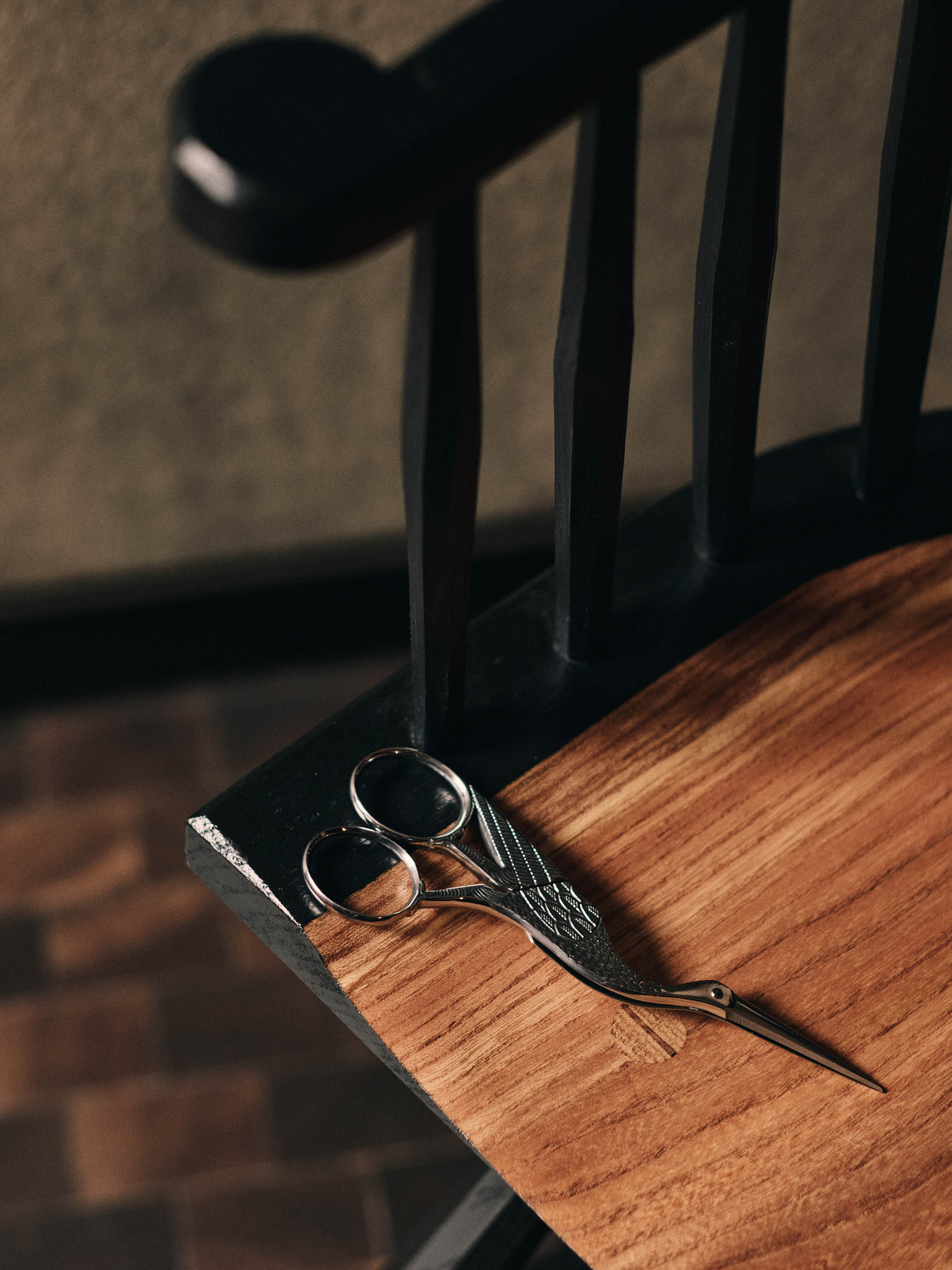
A tangible domestic leitmotif runs through the store: elevated versions of everyday objects that include Yard-O-Led fountain pens, intricately engraved stork- shaped scissors made by Sheffield maker Ernest Wright, and jars of small-batch honey from the Houghton Hall estate. Even the art on the walls – fruit by Robert Kulicke – offers quiet, intimate scenes.
Anderson worked on the shop with design studio Sanchez Benton, whose previous clients include the ICA, and together they referenced the interiors of Kettle’s Yard and Sir John Soane’s Museum. “Portraits,” as they call them, are created by dividing the space into sections and form intimate scenes.
Related articles:
“We wanted to install a frame system that was modular and not static, but which could easily be rearranged by the store team to display an ever-evolving range of objects,” says Sanchez Benton co-founder Tom Benton. “We also wanted to create a variety of spaces, so that there was some element of surprise and discovery as you walked into different areas.”
Light was important, too. “In a domestic space, there is a greater variety of lights, it’s layered,” says Anderson, who chose six wall sconces by the British artist Kira Freije to “add the beautiful warmth of candlelight.”
“There’s a strong focus on process and provenance, so people can understand not just what an object is but how it came to be,” Anderson says. “Craft feels fragile at the moment,” he adds, “and that creates a response. There’s a growing awareness that these skills can disappear if they’re not supported, and I think it’s shifting how people engage with what they buy.” As a rallying call to a more conscious – and pleasurable – way of consuming, look no further.
JW Anderson, 105-107, Pimlico Road, London SW1W 8PH (020 7186 8936; jwanderson.com)
Newsletters
Choose the newsletters you want to receive
View more
For information about how The Observer protects your data, read our Privacy Policy