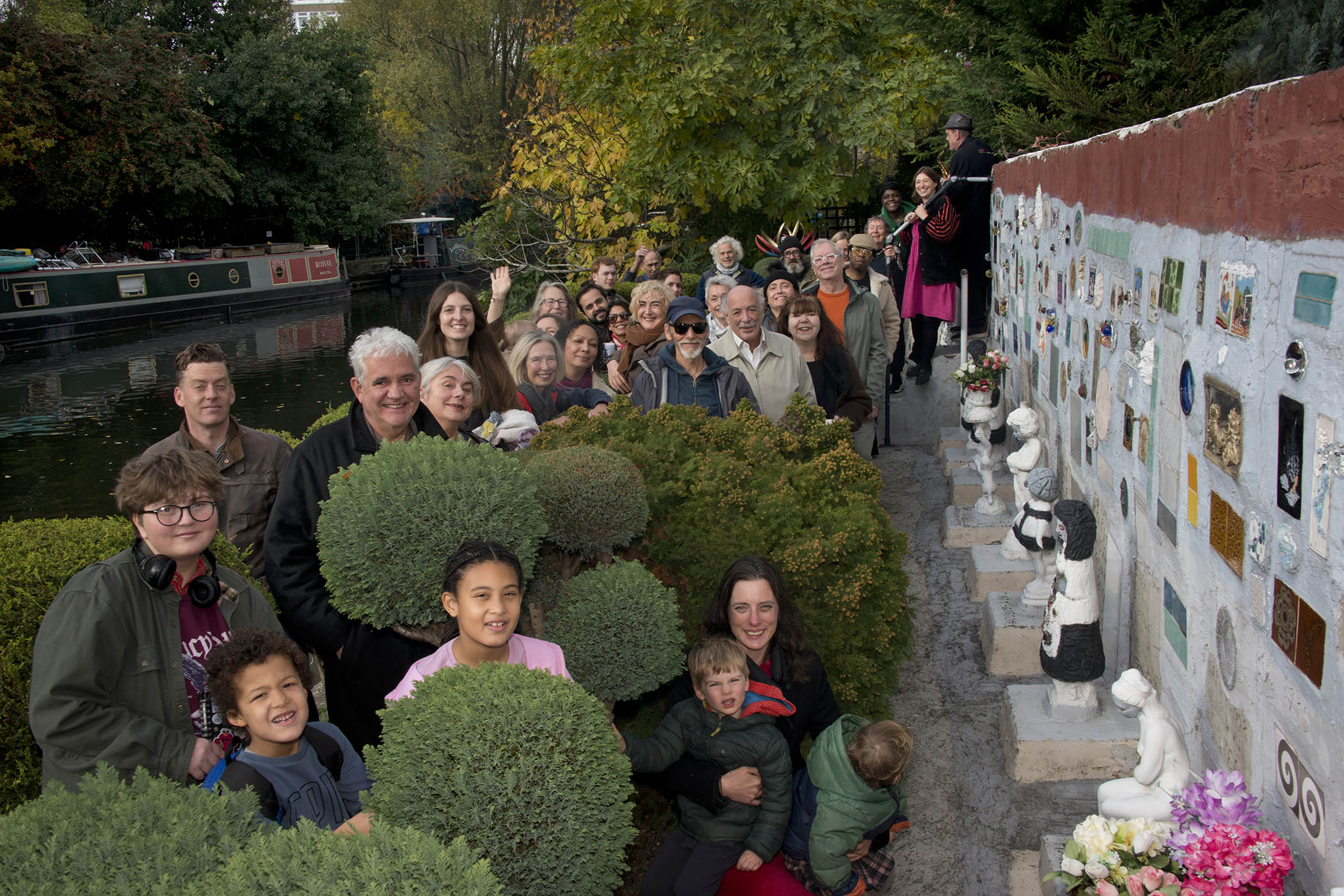

The remains of Gerry’s Pompeii occupy a narrow strip of land along the banks of the Grand Union canal in west London, a few hundred yards from Westbourne Park tube station. The skyline here is dominated by Trellick Tower, but Ernő Goldfinger’s 31-storey residential block cannot hope to compete with the enigma of the statue-lined garden that lies in its shadow.
Running alongside the canal is a plastered wall, about 30 metres long, extravagantly decorated with crystal doorknobs and faded plaques, prancing cherubs and shards of decorative tile in orange and blue. A battered old iPad, wedged tight into a chunk of plaster, is painted black to fill in as a makeshift ornament.
Guarding this rococo backdrop are 47 statues. Made from clay and concrete, these shin-high apparitions speak to a highly idiosyncratic vision of Anglo-Irish history. Richard Talbot, 1st Earl of Tyrconnell. Prince George of Denmark, husband to Queen Anne. The Duchess of Marlborough. Queen Henrietta Maria. Mary Tudor. A winningly coy Oliver Cromwell was once among their number. Their grey faces and lidless or red-rimmed eyes can be glimpsed from the footpath across the water.
Gerard Dalton, their creator and animating genius, had moved to London from Athlone in his native Ireland in 1959 aged 24. Paddington became home. For the next 60 years, Dalton lived on two parallel streets, Fermoy Road and, from 1983, a one-bedroom ground-floor council flat at 34A Hormead Road. On retiring in the mid-1990s, Dalton began secretly crafting his masterpiece on the scrubland behind this flat. His labours did not remain hidden for long, as neighbours began to clock the scale and breadth of Dalton’s vision. As the years passed, he began to move inside, covering every available inch of his flat in sculptures and hand-crafted replicas of palaces and castles, tower blocks and cathedrals, including Hampton Court and Buckingham Palace. “They’ll be astonished at what they find in my garden in years to come,” he told his neighbour, the environmentalist and artist Roc Sandford, in 2014. “It’ll be like Pompeii or something. Gerry’s Pompeii.”
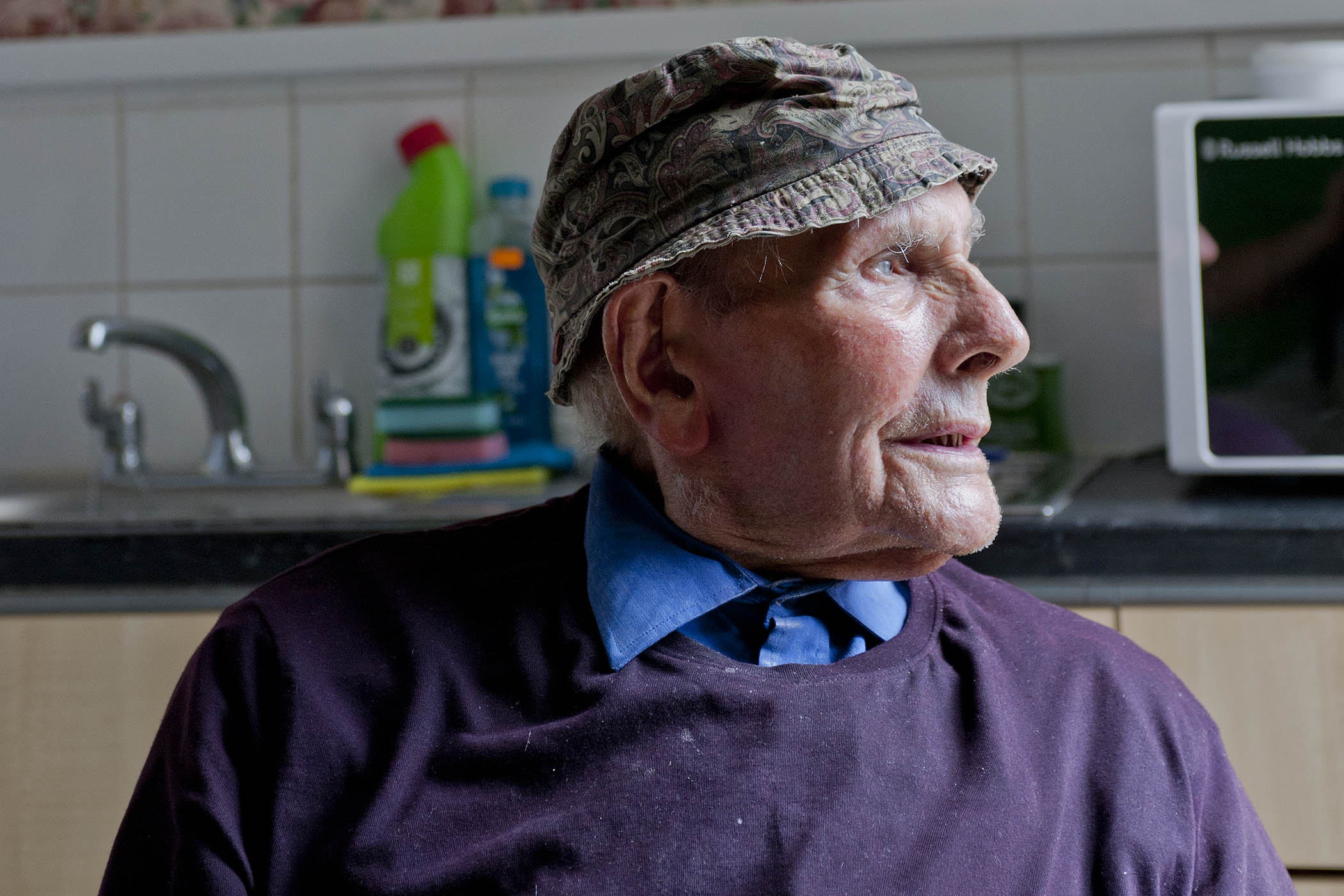
Gerard Dalton in his flat on London’s Hormead Road in 2019
By the time Dalton died in October 2019, aged 83, he had gradually become something both more and less than the beloved, enigmatic, sometimes infuriating local fixture he had been in life. He had become a myth. Jarvis Cocker declared Gerry’s Pompeii “a very important place”. The artist Richard Wentworth claimed that he had “seldom been so affected”. For Hans Ulrich Obrist, artistic director of the Serpentine gallery, it represented “an extraordinary gestamtkunstwerk [a total work of art]”.
Despite the depth of local feeling and the interventions of the great and good, however, the legacy of Gerry’s Pompeii has never quite been secured. When it became clear that Notting Hill Genesis, Dalton’s social housing landlord, intended to reclaim its property after his death, a spirited campaign was launched to buy the flat, with the full blessing of Dalton’s remaining family in Ireland. In 2020, however, that same family visited in the depths of lockdown to remove dozens of artefacts. Today, the plaster wall and canal-side statues are all that remain. The reasons for this sudden change of heart from the family have never been explained. Neither have Dalton’s motivations for devoting his life so totally to his art.
I first became acquainted with the wonders of Gerry’s Pompeii on an overcast Saturday afternoon in early May this year. Having met some friends in Islington, we’d snaked our way west on foot towards Maida Vale on the overcrowded Regent’s Canal towpath. As rain clouds loomed overhead, we took shelter at Angie’s, a venerable local Irish pub. One of my companions, however, insisted that we went a hundred yards further down the canal; there was something she wanted to show me.
Over the following days, I found it difficult to shake off that initial long-range encounter with Gerry’s Pompeii from across the water. For all of the story’s intrigue and implied jollity, the statues looked sinister from a distance. I felt compelled to know more.
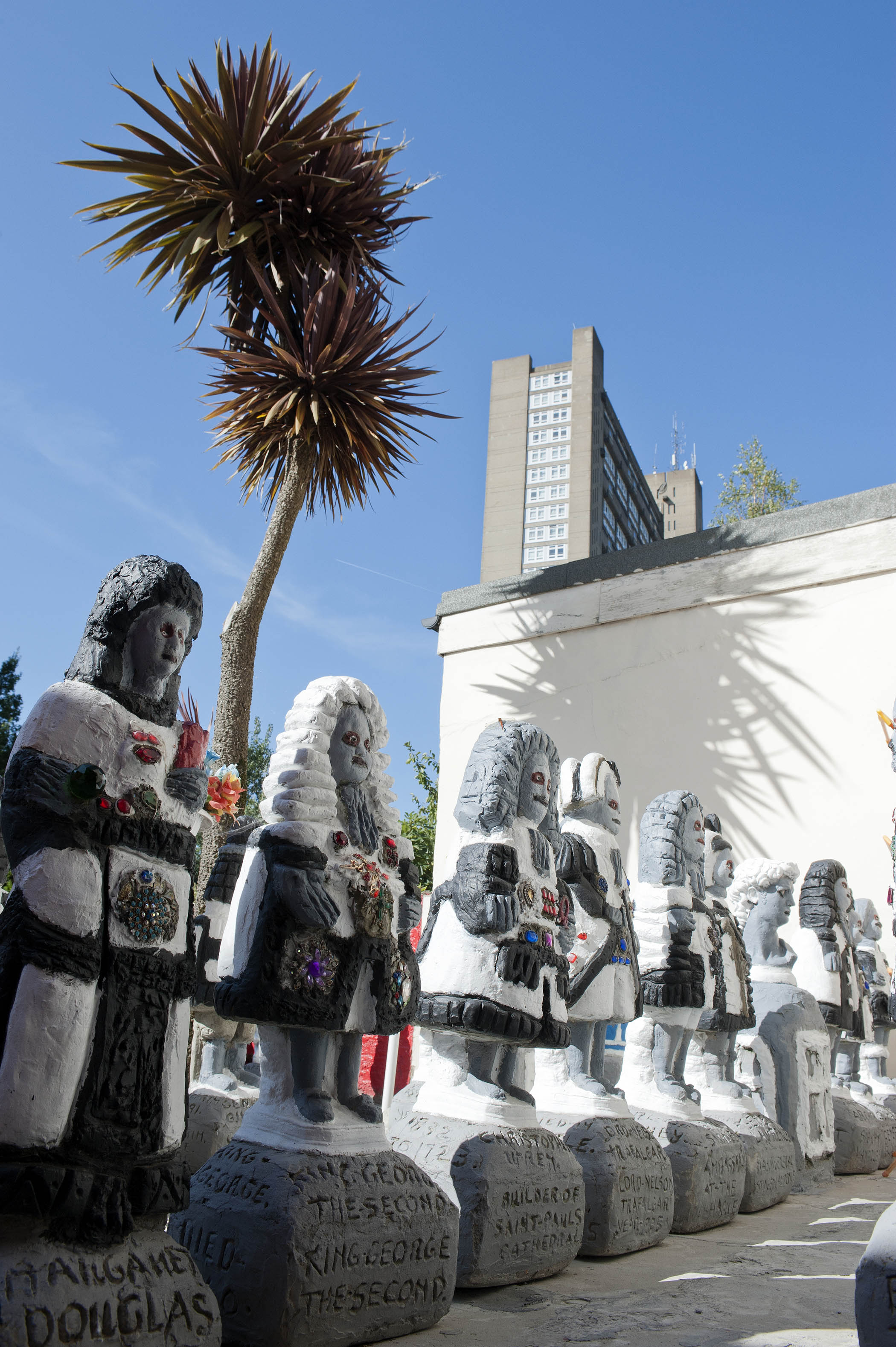
Some of Dalton’s creations in the shadow of the Trellick Tower
I first met Sasha Galitzine, director and curator of Gerry’s Pompeii, a fortnight later. The fast-talking 36-year-old occupies a unique place in the artwork’s story, as both its keenest advocate and most tireless disciple. She had come to it in the late-2010s, via an introduction from Sandford, a friend of her aunt.
“I think all he said was: ‘You have to come and meet my friend Gerry; he makes these amazing sculptures,’” she told me. On her first encounter with the work, Galitzine burst into tears. Gerry was used to that reaction. “[He] said: ‘You’re a bit overwhelmed, aren’t you.’”
Newsletters
Choose the newsletters you want to receive
View more
For information about how The Observer protects your data, read our Privacy Policy
Today, visits to Gerry’s Pompeii are only possible via appointment, through the neighbour’s back door. During that first trip in late spring, Galitzine and I were joined by Val, a diminutive, ponytailed Irishman in his eighties. A semi-retired sound engineer, he had long been aware of Dalton’s legacy. As we moved through the statues, he too became visibly emotional, pausing to stop and marvel with increasing solemnity at each new figure.
I could feel Galitzine waiting for my own conversion. It was something I didn’t feel I could fake even if, up close, the sculptures were as extraordinary as I’d expected. The voodoo doll Regency dandies and long forgotten aristocrats still provoked a touch of unease. Fishboy, a dandyish cherub clutching a wriggling trout to its bosom, was more to my liking, along with a downcast looking Hercules, his little grey face turned almost apologetically to the base of his plinth.
In the months since then, from the accounts of friends and neighbours, I have been piecing together the facts of Gerry Dalton’s life. Born in 1935, he was raised, along with his sister, in a family of small farmers in Athlone, near the banks of the River Shannon. As a boy his asthma was bad enough that he didn’t finish his formal education but the young Dalton was bookish; a slightly solitary boy, with little interest in working on the farm.
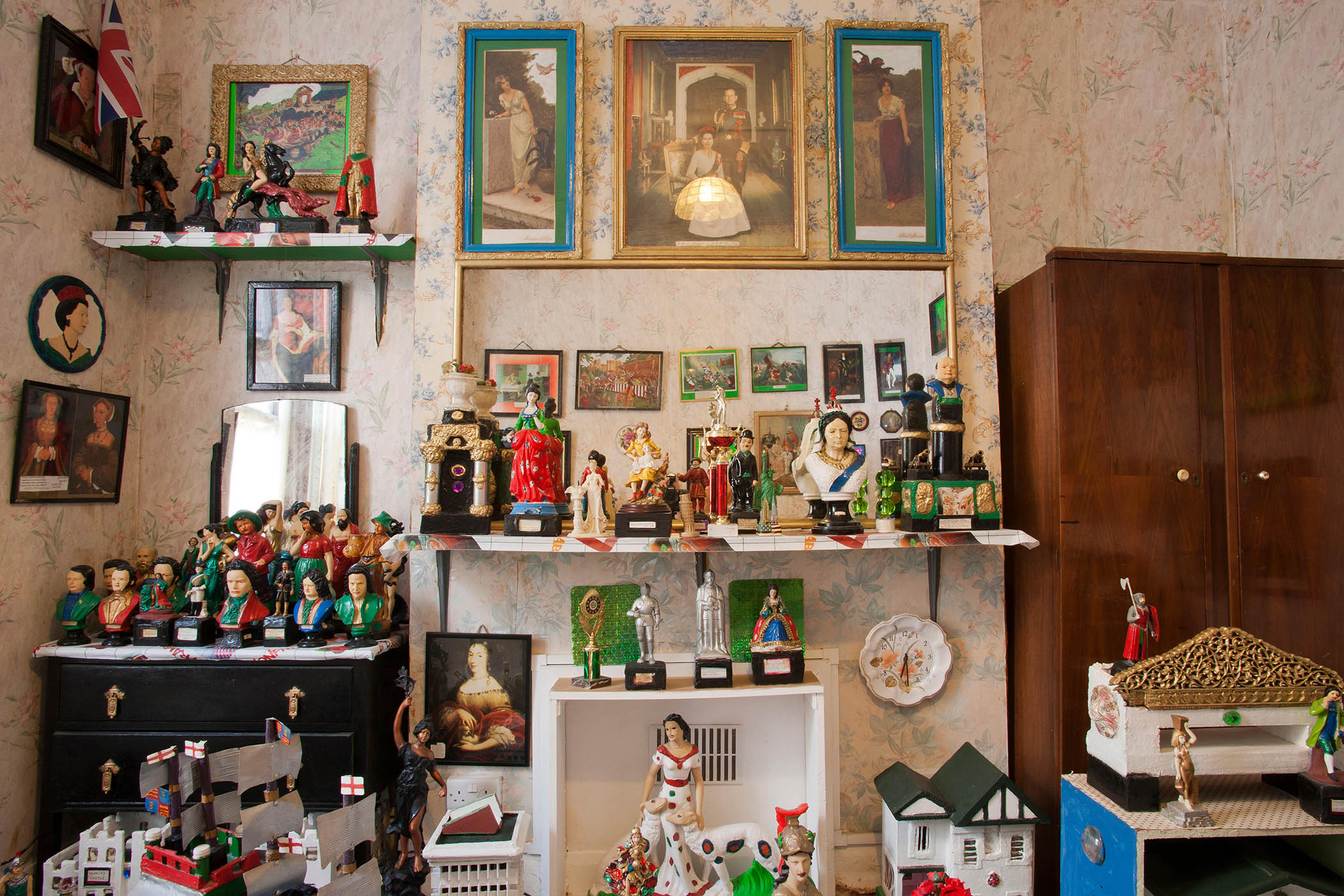
Though the art in Dalton’s garden could be seen from the opposite bank of the canal, few knew that he kept many other works inside
In late adolescence, he took a job as a gardener for a retired colonel named Harry Rice. The colonel and his wife delighted in cultivating Dalton’s love of myth and history, and became two of the formative figures of his life. The influence of their house and grounds, case studies in grand Irish Ascendancy style, were later to be refracted across much of Gerry’s Pompeii. On moving to London, Dalton worked as a night porter at Paddington station, in a west London aviation factory, and in the kitchen at the Institute of Directors on Pall Mall. Weekends were spent in intense self-directed study at the British Library or touring London’s great churches.
Some accounts mention a partner, or wife, called Nell, or Nelly, though none of his surviving friends or relatives can corroborate the story. To the residents of Hormead Road, Dalton, the elderly gentlemen who could be spotted sweeping the autumn leaves or carefully cleaning his front door, was a fully formed enigma.
Sandford is a gently patrician, white-haired man in his late sixties. He moved onto the street in 1997. “I’d get up early and see Gerry going out to get milk,” he told me. “He was a lovely warm man with a sense of humour. Eventually, he invited me in and showed me his front room.” Aside from the narrow hospital bed Dalton slept in, Sandford discovered a place in which every available corner was devoted to Gerry’s statues and models. “Hampton Court was under the stairs,” Sandford said. “His architecture reminded me of Gaudí in a way. It was very beautiful and moving. He showed me one room at a time. [Eventually] he took me out into the garden.”
Over the past six months, I have returned repeatedly to Hormead Road. But the work was only part of the fascination. Hormead Road, as its residents have seldom tired of telling me, is a highly unusual place. Tucked just off the disorder of Harrow Road and its blur of phone repair shops and fast food joints, it has a self-contained feeling, in part due to the looped nature of its geography. In the 1970s, its surrounding streets were the centre of the capital’s radical squatting movement. Traces of this radicalism remain.
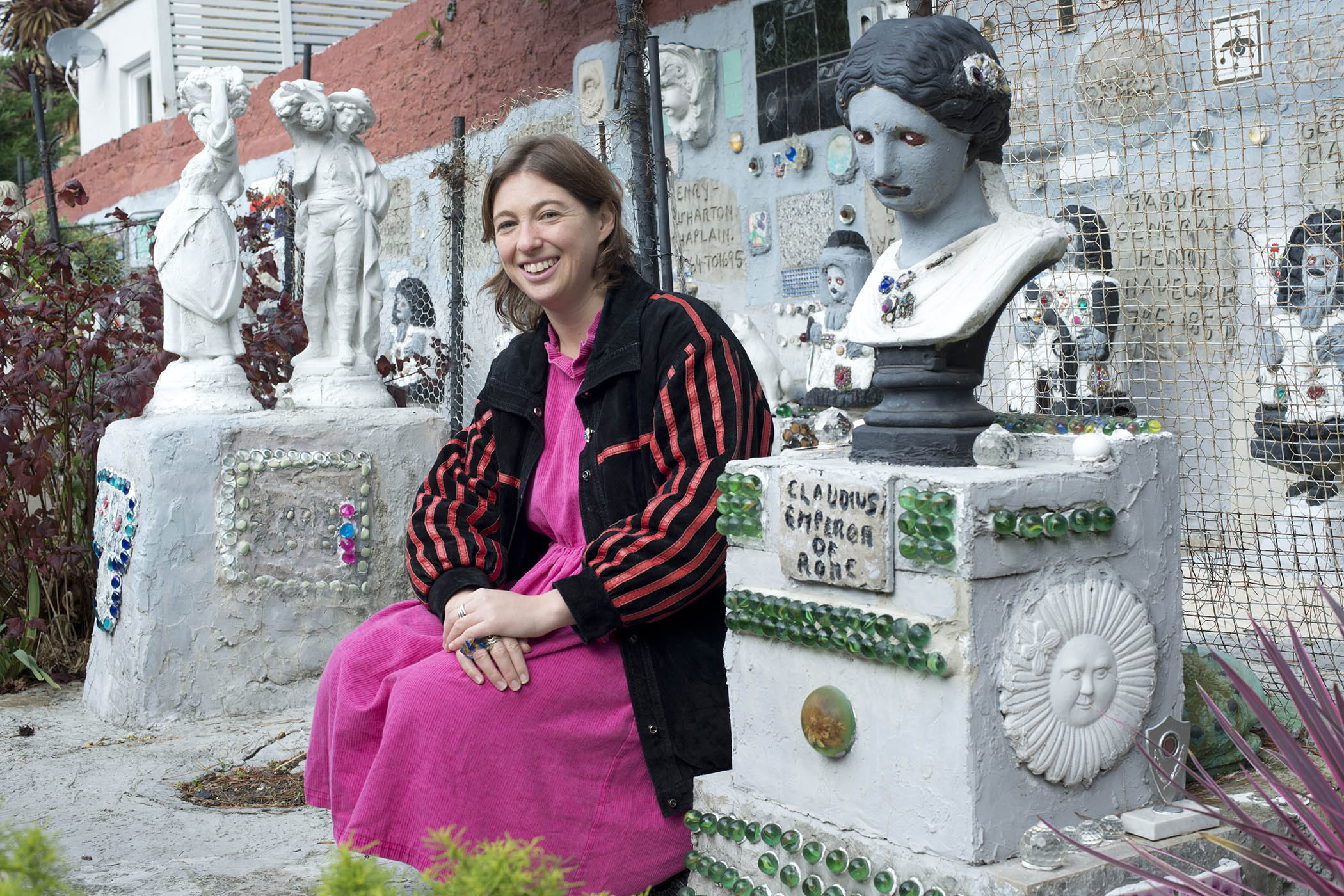
Sasha Galitzine, the director and curator of Gerry’s Pompeii
Hidden amid Hormead Road’s smart Victorian houses and council flats is a diverse cast of extraordinary characters. Millionaire eco-warriors and hyperactive dance teachers; retired aid workers and City bankers. Wine merchants and marine biologists. Two geriatric Italian sisters who still make the pilgrimage to their parents’ graves in Kensal Rise Cemetery every weekend. If such diversity is a cliche of London life, then it is rare to find it expressed with such self-conscious pride.
Gerry’s Pompeii, I came to discover, has brought all these disparate individuals together. For many of his neighbours, Dalton’s funeral was the first time they understood their own places in his tightly curated private world. The campaign to save their backyard sculpture garden gave them a shared focus. We live in increasingly polarised times, offered Sandford, as we sipped camomile tea in the kitchen of his home, the site of a former Paddington Conservative Association. “Gerry’s [has become] a model to get the community together,” Sandford told me. “And get the community working on things which aren’t harming the world”.
Earlier this year, I sat down at The Observer offices with Stella Scott, who made the film Gerry’s Pompeii in 2023. She began work on the project after Dalton’s death in 2019. At first, his flat had felt overwhelming. “You went into this shabby communal corridor with one of those lights that turns off after five seconds… into this space that was just so full of stuff,” she said. “It was only through filming that I realised how special it all was.”
The film follows the campaign to preserve Dalton’s flat after his death. As social housing, the property was due to revert back to the control of Notting Hill Genesis, the local housing association. The project to preserve the interior of Gerry’s Pompeii was spearheaded by Galitzine, who had become increasingly close to Dalton during his final years. “I knew she would really get his work,” Sandford told me. “He got ill quite quickly and died quickly. We went to see him in hospital and he said, ‘I’m done for, keep the garden.’ I took that as his instructions to Sasha [Galitzine] to be his curator. What I always say is that Gerry made Pompeii and Sasha gave it wings.”
You went into this shabby communal corridor into this space that was just so full of stuff
You went into this shabby communal corridor into this space that was just so full of stuff
In an obituary, Dalton’s Irish family describe their memories of their quiet, history buff relative, who would occasionally turn up to family functions bearing a pack of Rolos as a gift. “Uncle Gerard was a shy man,” his nephew John told the paper, “but he would open up to anyone who expressed an interest in his work.” What happened next appeared to have their enthusiastic consent.
The only way to preserve Pompeii, the residents group decided, would be to buy the flat in Hormead Road from the housing association for £550,000. A crowdfunder launched by Galitzine quickly gained the backing of celebrities and art world grandees ranging from Stephen Fry to Sir Charles Saumarez Smith, the former head of the Royal Academy, who dubbed Gerry’s Pompeii “a folk version of the National Gallery”.
Galitzine – an art curator of maximum-velocity sincerity and inscrutably posh origins – told me over coffee in the shadow of Trellick Tower that her campaign was “a way to build community using art as an excuse”. And build she has. Today, Gerry’s Pompeii is a registered charity, constantly programming local events and outreach projects.
By the time the UK entered the first Covid lockdown in March 2020, the online crowdfunder to save Gerry’s Pompeii had hit £300,000 in donations. It was an extraordinary achievement, though any jubilation was soon wiped out. During lockdown, it seems, members of Dalton’s Irish family travelled to 34A Hormead Road and cleaned out the entirety of the flat, along with many of the sculptures from the back garden. The flat is now occupied by an elderly couple: the canalside sculpture garden is all that now remains of Gerry’s Pompeii.
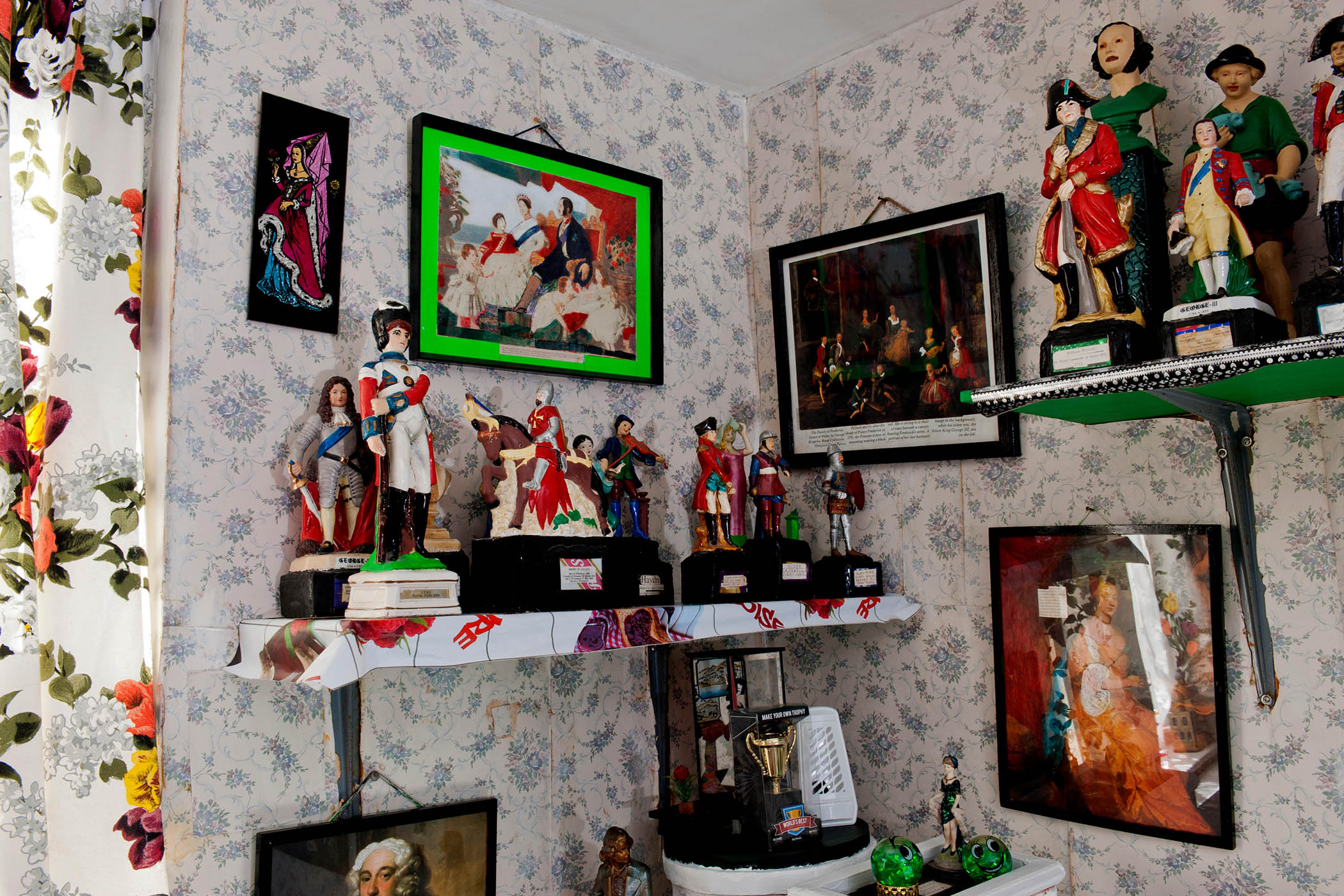
Some of the contents of Dalton’s flat in 2019 before it was cleared by his family the following year
It was fiendishly difficult to get Galitzine or anyone else from Hormead Road to speak on the subject of Dalton’s family. No one is sure precisely what triggered their change of heart. Some have suggested that the family were embarrassed by their relative’s legacy; others, that the campaign was prolonging their grief. “I wouldn’t even speculate,” one Hormead Road resident told me. “And I think you could do a lot of damage through sheer ignorance.”
I can’t help thinking that Dalton would have enjoyed the community that he and his sculptures created; all human life is there. During each visit to Hormead Road over the summer, I’ve been introduced to a new character, offering a fresh set of reminiscences of Dalton and his life’s work. In July, I visited John Nugent, a phlegmatic Glaswegian painter in his early sixties, at the art-lined ground floor council flat he has occupied for the best part of 40 years, just a few doors down from Gerry’s Pompeii. What did Nugent make of the community that formed around Gerry?
“Fucking hate the c***s,” he said. “I don’t feel part of it. I’ve always been outside. Never been part of any groups. Not my cup of tea as the English say. But I got involved with it because of Sasha.”
On a crisp Friday morning earlier this autumn, I visited Nick Hall and Alison Sage at their home on Hormead Road. The couple, a retired international charity worker and children’s book editor respectively, have lived on the street since 1986. They represent the more tolerant side of Hormead Road’s spirit. Not only is their back garden the only remaining access point to Gerry’s Pompeii but they had also been happy to cede their land to their next door neighbour’s creation during its earliest days.
He was a great artist. And if you’re a great artist, it’s very unfair if no one sees you
He was a great artist. And if you’re a great artist, it’s very unfair if no one sees you
In 1990, the couple spent several months living in Kenya, where Hall had taken up a job. During their absence, their house was occupied by Satoshi Kitamura, a revered Japanese children’s book illustrator. He and Gerry were to become unlikely companions during the latter’s early attempts at clearing the canalside. Awaking one morning to find Dalton merrily chucking assorted rubbish into the water, an astonished Kitamura politely asked if he could be of any assistance. “He helped [Gerry] get a skip. And that sort of opened up the space for him,” Hall explained.
“He treated Gerry with extreme deference and politeness on account of his being older,” Sage continued. “He would help him clear the ground.”
Why did they so readily agree to give away their garden?
“[Gerry] was a very powerful man,” Sage said. “A person you [couldn’t] easily say no to. When he said it would be fine for him to continue doing what he was doing, we said, ‘sure, of course’. There didn’t seem to be any other possible way of doing things.”
“We just said, ‘right, do it’,” Nick said. “I never went into his flat until a couple of years before he died. Even then, I didn’t see all of [his art], though we’d effectively donated that bit of land to him.”
When Sage first saw Gerry’s work, he had also said to her, “You’re overwhelmed aren’t you.” And it was extraordinary, says Sage. Between portraits of two generals in the kitchen was a mirror, “so he’d look up and see himself between these two great men of action”.
Was Gerry ever arrogant about his work?
“He was very shy about his art,” Sandford told me. “And he was very keen, when people did see it, to watch how they reacted. He was almost complacent when he saw you were completely moved.” As their friendship deepened, Sandford would tell Dalton that he was a great artist. “And he’d bat me away and laugh. But I think that affirmation was important to him. He was a great artist. And if you’re a great artist, it’s very unfair if no one sees you.”
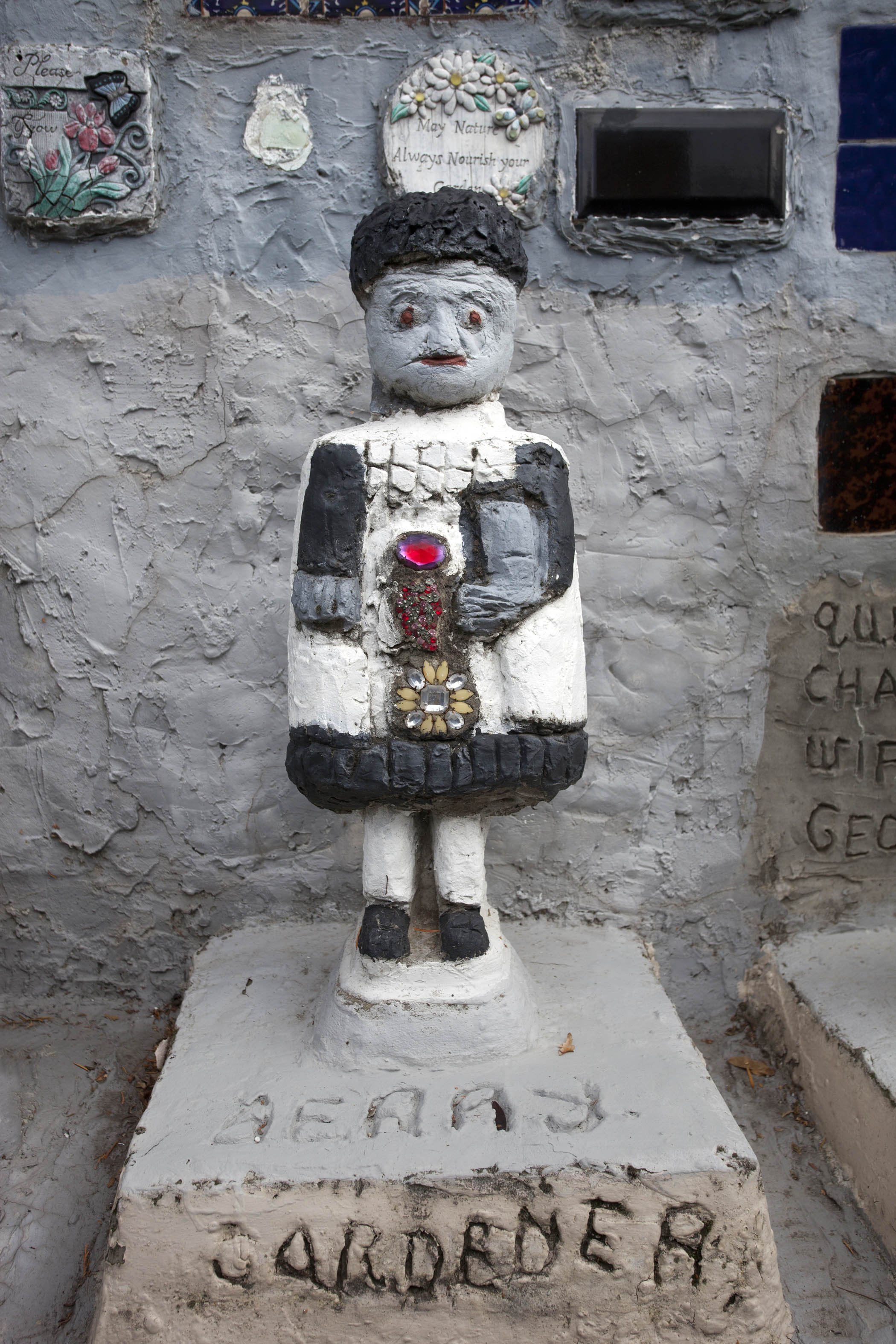
Statue with the inscription ‘Gerry. Gardener’
For months, I’d puzzled over the source of Dalton’s obsessions. I’d wondered if partial explanations could be found in the repressions of his childhood and the kindness of the old Anglo-Irish colonel and his wife who had nurtured his imagination. But whatever inspired him, it was not something the man himself had felt comfortable articulating in life. For Sandford – and others – the question of intention missed the essential point. “It went beyond that. It was a compulsion. Totally non-negotiable.”
Still, the spectre of Dalton’s family began to loom over my visits to Hormead Road. Would it be possible for Galitzine to put me in touch with them? Her tact was unwavering. She did not want to antagonise them, with so much of Dalton’s work still potentially in the balance. I respected her decision. My curiosity did not outweigh the potential risk that the work might be damaged or negate the chance they might one day be displayed to the public.
And, anyway, the bonds that the sculptures created now have a life of their own. On a dismally wet Sunday in late September, I travelled to Paddington from my home in south London. An event called Gerry’s Gongoozling was due to begin at 3pm under the roar of the A40 flyover. (A gongoozler is someone who enjoys watching canal activity.) Galitzine had spent four months organising the hour-long procession that would end at Gerry’s Pompeii. On arrival, I’d counted at least 300 people, young and old, trendy and strait-laced.
Entertainment included a samba band and jazz saxophonist, as well as a troupe of actors dressed as canal rats. Several barges had been repurposed to carry human sculptures dressed as Gerry’s creations. A performance artist popped in and out of proceedings with absurdist spoken-word poetry. It was hard not to think what Dalton, the retiring Irishman from a now vanished world, would have thought about the fresh hordes of people on their way to appreciate his greatness and confusion. My guess is that it is what he had imagined all along.
Photographs by Sophia Evans, Jill Mead