


When Göran Rosenberg first travelled from Sweden to Israel in 1962, he felt he was finally in the promised land. He went to school in Tel Aviv, took part in paramilitary training, hiked from Haifa to the Sea of Galilee. The son of Holocaust survivors, whose traumatised father never recovered from his experience of the camps and drowned himself in 1960, Rosenberg was in the country he believed was destined to be his home.
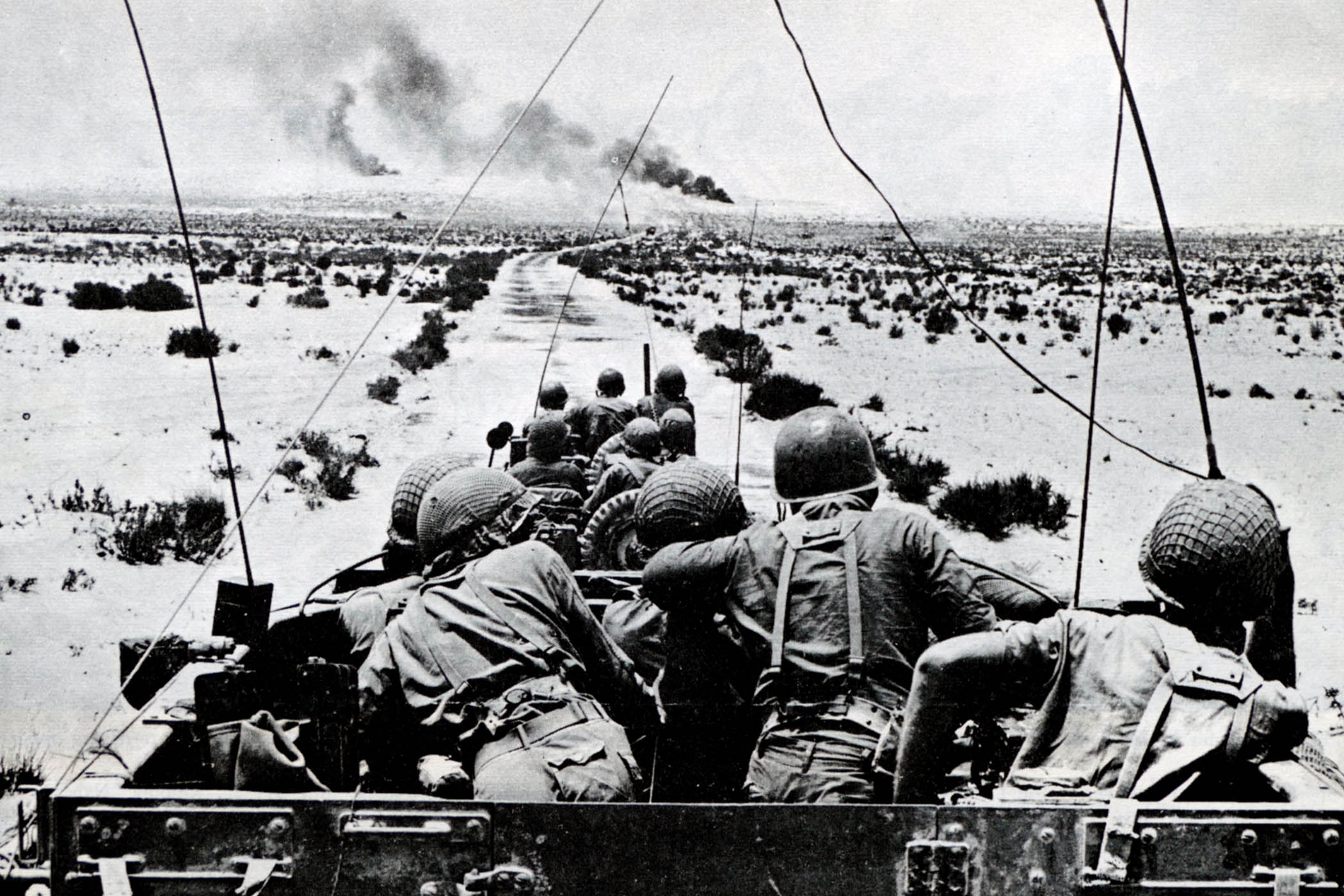
And why not? After all, he had been raised to believe Israel “was a blessing not only for the Jews but also for the Arabs, that we had taken nothing from anyone, conquered nothing that was not ours, cultivated nothing that was not waiting to be cultivated”. It was only on subsequent visits, after the six-day war of 1967 when Israel massively expanded its territories and chose to keep them, that he began to feel that “close beneath the land I had once rooted myself in and loved, lay a land filled with violence, injustice, and hatred”.
Rosenberg’s book was originally published in Sweden in 1996. This new version, which contains additional chapters planned prior to but written after the 7 October attacks, marks its first appearance in English (it is translated by the author – occasionally, it must be said, a little rockily). Entwined with Rosenberg’s own story are three historical areas of investigation: the origin and development of Zionism; its transition from a largely secular ideology to a messianic one; and the political path followed by Israel since its founding in 1948.
Over the course of the book, Rosenberg describes multiple Israels that might have been
Over the course of the book, Rosenberg describes multiple Israels that might have been
As Rosenberg describes, Zionism was a practical response to escaping a Europe that periodically became a murderous environment for Jews, long before the barbarous crime of the Holocaust. His problem lies not with the desire to escape, nor the land upon which Zionism set its sights, but the way it was prised from its owners. He describes in meticulous detail the discriminatory property laws used to deprive Palestinian families of their homes from the end of 1947 onwards, the foundation of a rigged system that has systematised the abuse of human rights for the last 80 years. It is enraging. And yet those who became refugees were luckier than the 250 men, women and children of the Palestinian village of Deir Yassin, whose massacre in 1948 presaged many more on both sides.
Historians and journalists sometimes draw a sharp distinction between David Ben-Gurion’s Labor party and the hardline Revisionist Zionism of Menachem Begin. Rosenberg sees a difference of approach, not outcomes. “What Labor Zionists preferred to do in silence,” he writes, “the zealous Revisionist Zionists wanted to shout out loud and do in the open.” Yet he considers the Oslo accords of the 1990s a real chance for peace, extinguished by the assassination of the Israeli prime minister Yitzhak Rabin in 1995. I’m not sure he’s right to do so. While the Oslo negotiations dragged on, settlers – mostly fanatical Zionists, subsidised by generous government grants – moved on to Palestinian land in larger numbers than ever before. In the Israeli historian Ilan Pappé’s view, the Oslo process was not “a genuine peace process”. Whatever it was, in 2000, Israel’s Labor prime minister Ehud Barak delivered its death blow, proclaiming that Israel “had no partner for peace”. In fact, it was doubtful that more than a vanishing minority of its politicians had ever wanted one.
A key point Rosenberg keeps returning to, despite finding it painful to contemplate, is that Israel’s path was not an inevitability. Over the course of the book he describes multiple Israels that might have been. But he writes too of the Hebrew expression “ein brera” (no choice). For Israelis it summarises the historical forces and geopolitical realities that have deprived them of the luxury to choose between peace or conflict, democracy or apartheid. “This,” he writes, “is certainly not true.” What is true, he believes, is that the present situation is not sustainable, and that “a policy for locking the Palestinians out will increasingly lock the Jews in”. It is a struggle in which everyone loses.
Israel: A Personal History by Göran Rosenberg is published by Penguin Modern Classics (£12.99). Order a copy from The Observer Shop for £11.69. Delivery charges may apply
Photograph by Universal History Archive via Getty Images
Newsletters
Choose the newsletters you want to receive
View more
For information about how The Observer protects your data, read our Privacy Policy
Related articles: