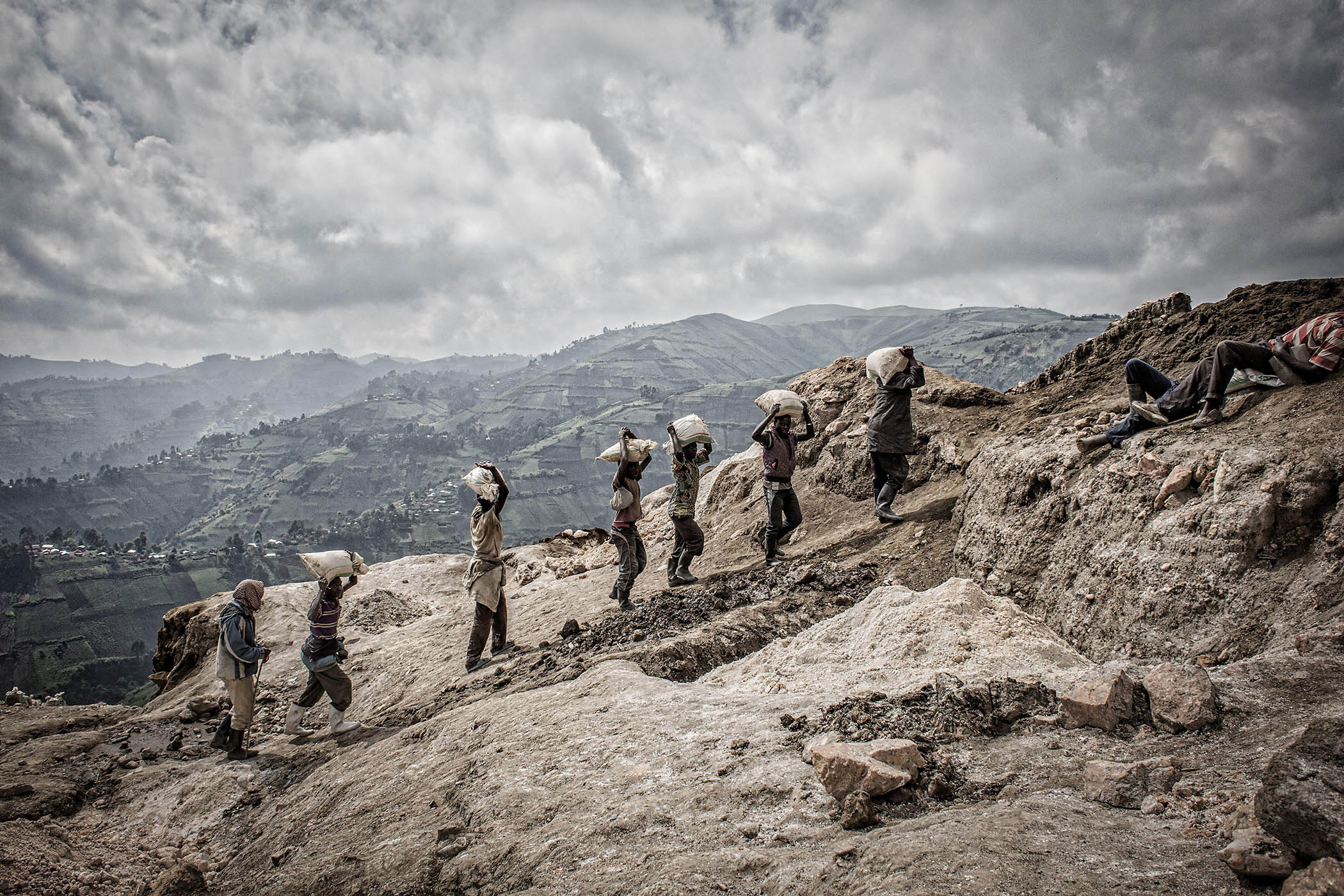



A landslide caused several mines to collapse in a rebel-held region of the Democratic Republic of the Congo last week, killing at least 200 people who were digging for a black metallic ore used in smartphones.
The Rubaya mines, where men, women and children dig for coltan, collapsed after heavy rains last Wednesday. Some of the victims were still buried beneath the mud on Friday, said Lumumba Kambere Muyisa, a spokesperson for the rebel-appointed governor of North Kivu province where the mines are located. Survivors were taken to the provincial capital, Goma, about 30 miles away, while artisanal mining at the site was temporarily suspended. The mines in the mineral-rich east have been a key area of conflict between the Congolese government and rebel groups for years.
After seizing the mines in 2024, M23 rebels imposed taxes on the trade and transport of coltan, generating at least $800,000 (£580,000) a month, according to a UN report. Coltan is the ore from which tantalum — a rare, heat-resistant metal used in the manufacture of smartphones, computers and aerospace components — is extracted. More than 15% of the global supply of tantalum comes from the Rubaya region.
The Rwanda-backed rebels expanded their offensive last year, seizing Goma in a major escalation of the conflict. US President Donald Trump intervened after Congolese president Felix Tshisekedi offered him access to the country’s mineral deposits in return for support against the rebels. At a summit in Washington late last year, the Rwandan and Congolese governments signed a peace deal that secures preferential access for the US to the region’s rare earth minerals.
Trump claimed he had ended another war, but fighting has continued.
The rebels were not party to the deal and have been taking part in a parallel mediation process led by Qatar, which involves direct talks with the Congolese government. Rwanda denies backing M23 despite mounting evidence to the contrary.
Meanwhile, African leaders are due in Washington this week to discuss possible minerals deals as part of US efforts to counter Chinese dominance over the supply and natural resources.
The US National Security Strategy published last year says the US should “transition from an aid-focused relationship with Africa to a trade- and investment-focused relationship”. The US should favour partnerships with “capable, reliable states committed to opening their markets to US goods and services”, it says.
Related articles:
Photograph by Erberto Zani/Alamy
Newsletters
Choose the newsletters you want to receive
View more
For information about how The Observer protects your data, read our Privacy Policy