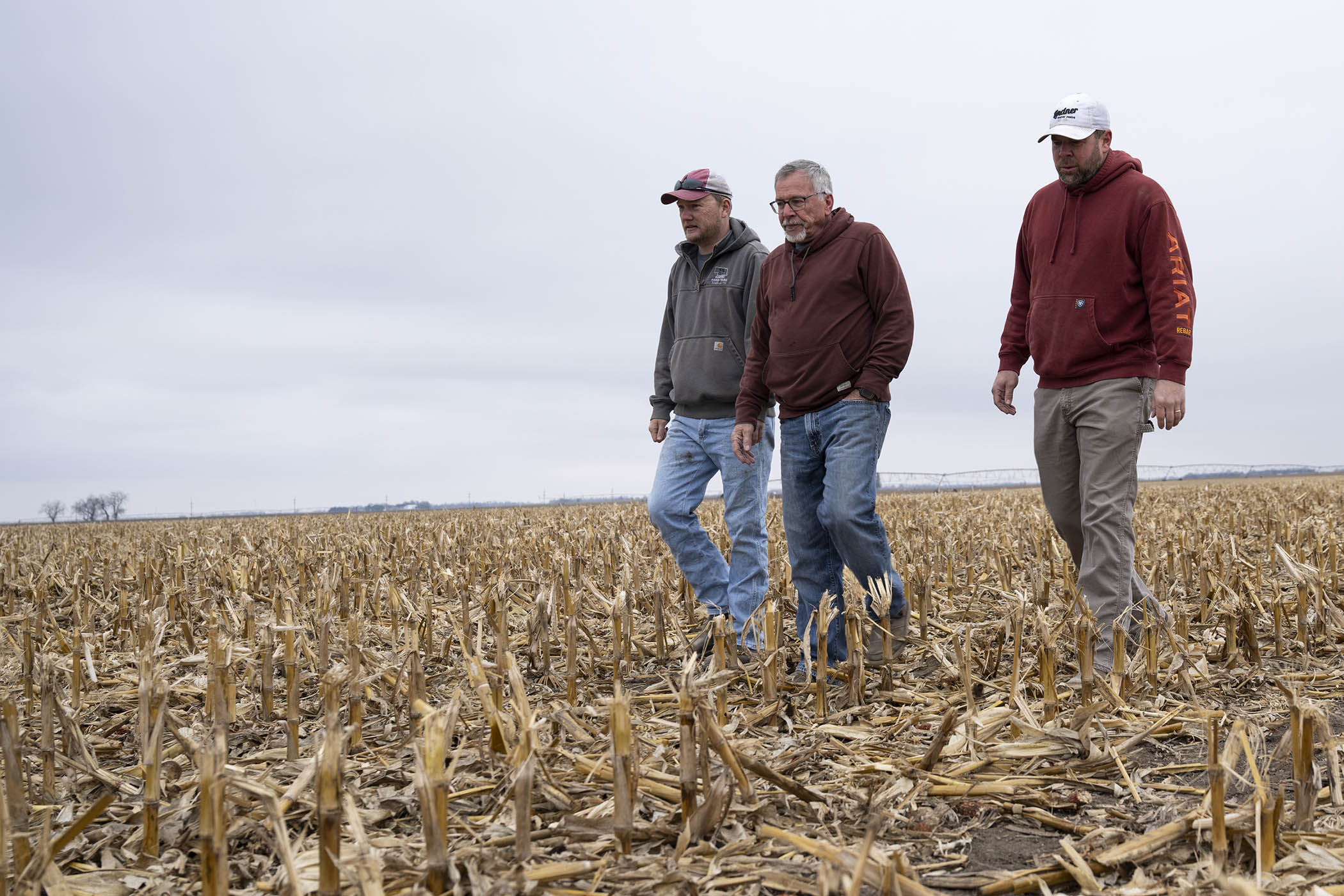


“Thereʼs always cycles in agriculture, right?” Bart Ruth said as his truck bounced down a gravel road between flat fields of corn and rye stubble, part covered in snow. “But there havenʼt been too many that were self-inflicted.”
He surveyed the land that has been in the family since the 1870s, a freezing wind slicing across the open plain. “If we’re not in a recession already, it’s certainly headed that way,” added Ruth, 66. “It’s been a rough, rough year. I donʼt think thereʼs anyone in the farming community thatʼs optimistic going into 2026.”
Across the US this year, farmers have seen costs soar and the price of their produce tumble as Donald Trump’s flagship tariffs sparked a trade war with China.
Ruth’s home state of Nebraska, one of the largest producers of corn and soybeans in America, has been among the hardest hit as Beijing turned to Argentina and Brazil in retaliation for Trump’s swingeing tariffs on Chinese imports.
American farmers, who voted en masse for Trump last year, are now warning of the worst economic crisis since the 1980s, when soaring interest rates and a slump in exports saw the price of crops and the value of farmland collapse. About 300,000 farmers defaulted on their loans and thousands were driven into bankruptcy.
‘We spent a lot of time building markets in China. Then, to be blunt, you piss it all away’
‘We spent a lot of time building markets in China. Then, to be blunt, you piss it all away’
Bart Ruth, farmer
In the office at his farm in Rising City, a village in eastern Nebraska, Ruth has a photo of himself and his wife with President George W Bush at a White House Christmas party in 2001, a memento of his years as president of the American Soybean Association. Ruth travelled to China many times to foster ties with local importers.
“We spent a hell lot of time in China building relationships, building those markets,” he said. “And then you basically piss it all away, to be blunt.”
A lifelong Republican, Ruth has turned his back on the GOP since Trump’s first run for president in 2016. Few of his neighbours followed suit. Trump won the surrounding Butler County by 60 points on his march back to the White House last year. In some rural counties across Nebraska, his share of the vote approached 90%.
Related articles:
Hopes that Trump would reward that loyalty and act swiftly to ease the pressure on farmers and rural communities after years of rising costs and dwindling profits were soon dashed. Instead, many here speak of a “perfect storm” as the president’s economic strategy deepened Nebraska’s troubles.
Trump’s tariff announcement prompted a boycott by China, the largest buyer of US soybeans. The levies on foreign imports have also driven up the cost of farming equipment and fertiliser.
Newsletters
Choose the newsletters you want to receive
View more
For information about how The Observer protects your data, read our Privacy Policy
Other Trump policies have contributed to the mounting pressure on the rural economy. An ICE - Immigration and Customs Enforcement - raid on a meat-packing plant in Omaha in June saw most of the workforce arrested and spread fear among undocumented immigrants, many who have been here for decades, who are critical to the local economy. Nebraska had 45,000 unfilled jobs in June.
Last month, Tyson Foods announced it was closing a slaughterhouse in Lexington, blaming a dwindling supply of cattle and mounting losses in the beef trade. More than 3,000 jobs will go just after Christmas.
These body blows have compounded the problem of an ageing and shrinking rural population. As corporations snap up land that has been held by families for generations, many now openly question if American farming is even a viable long-term industry for any but the “big ag” giants. More than half of all US farms are losing money.
“The warning signs are already here,” John Hansen, president of the Nebraska Farmers Union told The Observer. “Rural communities are barely hanging on. It’s not sustainable.”
After months of pleading from Republicans in rural states who are increasingly scared about a backlash from voters at next year’s midterm elections, which could see the party lose control of Congress, Trump last week unveiled a $12bn rescue package for farmers. Payouts are capped at $155,000 and only those earning less than $900,000 will be eligible.
“We love our farmers,” Trump said at the White House event to unveil the bailout. “And, as you know, the farmers like me.”
Some in Nebraska are sceptical. It has not gone unnoticed that the $12bn earmarked for US farmers is dwarfed by the $40bn sent by Trump in October to prop up the rightwing government of Argentinian president Javier Milei.
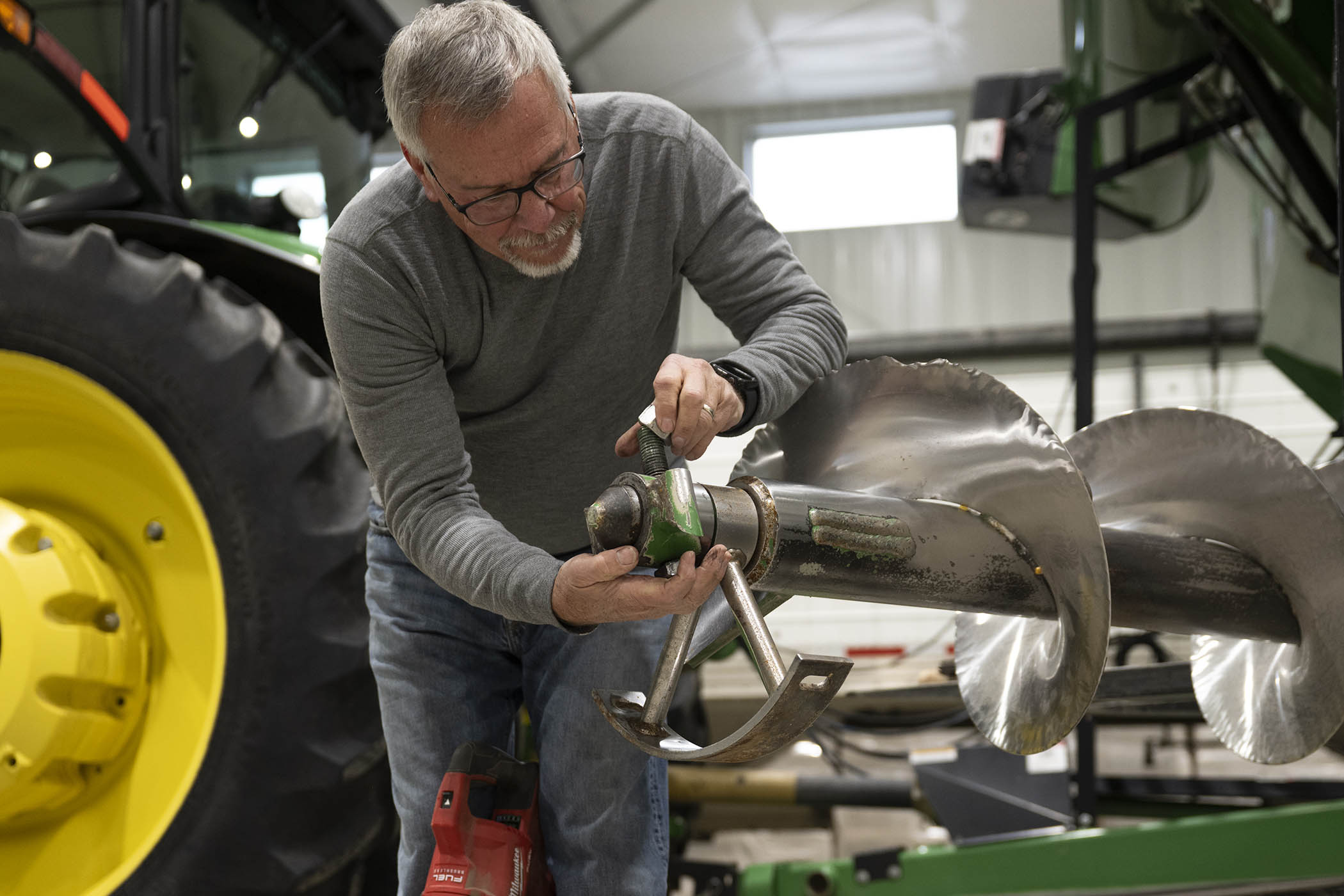
Bart Ruth, who farms land that has been in his family since the 1870s
“That was a tough pill to swallow,” said Ruth. “So while Argentina is taking our market, we’re helping them out. It just adds insult to injury.”
Since his first run for president in 2016, Trump has enjoyed near-total dominance of rural America, banishing Democratic support to the cities and suburbs. Although he campaigned last year on a promise to raise tariffs, Trump’s pledge to drive down inflation and take control of America’s borders and trade partnerships resonated in conservative rural districts. Most farmers backed his vow to crack down on illegal immigration, despite their own reliance on cheap migrant labour. Trump won 93% of rural counties, the most of any Republican presidential candidate this century and surpassing his own performance in 2016 and 2020.
At an agriculture expo in nearby Lincoln last week, Trump still had many defenders among the hundreds of farmers browsing the latest equipment and shaking their heads at the eye-watering $1m for a top-of-the-line combine harvester. Those soaring costs did not start with Trump, some argued.
“It’s been that way ever since Covid. Prices went sky high and just never came back,” said Steve Schulke, 65, a soybean farmer from Waverly. “I don’t know if I can blame that on the tariffs because it hasn’t changed.”
“I think to even the playing field you have to do this,” he added of Trump’s standoff with Beijing. “We’ve done business with China for years, but at any point they can turn around and say we don’t want those beans. They were holding a hammer over our heads.”
Trump rowed back from his threat to impose 100% tariffs on Chinese goods after meeting President Xi Jinping last month, securing an agreement that Beijing would resume imports of US soybeans. Despite the tentative truce between the world’s two largest economies, however, many Nebraska farmers fear that the damage done by the president’s trade brinkmanship could be irreparable.
“They’ve made a full investment into South America and South Africa so that they have more control of the entire cycle,” said Bill Armbrust, 68, who farms beef cattle and soybeans in Elkhorn, outside Omaha. “China will not, and never will be again, a major user of anything we grow.”
Armbrust dismisses the bailout as a bid to gloss over a year of economic chaos and shore up support in rural districts before the midterms.
“Nothing has been done on the promises made, but what we have seen is chaos put into the entire system with nothing coming of it,” said Armbrust. “We may be looking at a tremendous recession in rural America.”
There is dismay at the criticism levelled at farmers on social media as calls for a bailout have mounted throughout the year. “You voted for this,” is a frequent attack among Democrats still infuriated by the overwhelming support for Trump in rural districts last year, despite his campaign pledge to impose massive tariffs on America’s closest trade partners. Nebraska has not voted Democratic in a presidential election for 60 years.
“People say, ‘Well, Donald Trump campaigned on this.’ I think people who voted for him never fully understood what this would do to the entire economy,” said Ben Steffen, 63, a friend of Armbrust who owns a farm in Humboldt.
Armbrust and Steffen argue that the farming crisis should alarm all Americans, as all but big corporations are priced out of the industry and family-owned farms go to the wall. Trump’s tariffs are only the latest hammer blow in a generational decline, as successive governments have allowed rural communities to be hollowed out. Major retailers have put local stores out of business. The local bank is now owned by a Wall Street giant.
“When I was milking cows in 1985 there were 30 dairies in my county. Now there’s one,” Armbrust said. “You’re going to have more and more consolidation and more wealth in this country flowing to the top 1%. If we don’t do something about this, we’re gonna have people with torches and pitchforks going to the castle.”
Over lunch in a Rising City bar, Ruth and his son, Geoff, are swapping gossip about local farmers who called it quits and the hedge funds snapping up land across the county. There is disdain for Trump’s assessment last week of his own economic stewardship as “A-plus, plus, plus, plus, plus” and his insistence that concerns about the cost of living are a “hoax” and a “con job”.
“It’s been really hectic, not knowing if the price of beans is gonna crash in the next hour because of some stupid tweet,” said Geoff, 42, who has taken over running the farm. “Most people thought that there was some masterplan and there certainly hasn’t been.”
More economic shocks are coming. Trump’s cuts to food stamps and healthcare benefits will be keenly felt in rural America. The president’s crusade against renewable energy threatens a growing source of electricity and jobs. Even the rising use of weight-loss drugs like Ozempic could have a huge impact on American agriculture over the next decade.
“If you didn’t absolutely love doing this, you wouldn’t do it,” said Geoff. “Because there’s a lot of days you’re up at four or five in the morning and you don’t get back until 10 o’clock at night. And at the end of the day, you’re like, ‘Pretty sure I didn’t make a single dollar today.’”
Photographs by Kathy Plunkett for The Observer