


In late 2024, a year into his tenure as chief executive of BP, Murray Auchincloss sat down with advisers and began hatching a plan for a strategy reset, to be launched at an investor day in New York in the new year.
After the abrupt departure of his predecessor Bernard Looney in September 2023, for failing to fully disclose relationships with colleagues, interim boss Auchincloss was under pressure from shareholders to steady the tanker and boost BP’s ailing share price.
A source close to Auchincloss warned him: “If you don’t do something pretty quick, you’re going to have activists in there, because the strategy has failed and you need to change it pretty fast.”
Sure enough, days before the planned event, news broke that activist investor Elliott Management had taken a near 5% stake in the company. To complicate matters further, Auchincloss had undergone a major medical procedure the month before. BP was forced to delay the investor day and relocate the event to London. Shares dropped 3% on the morning the change was announced.
Auchincloss put in a stalwart performance on the day, repeatedly vowing to “fundamentally reset” the company. But it was too late. The process to find his replacement had already started.
Elliott Management continued to make demands, and there was a feeling that Auchincloss was not acting with enough urgency. A former BP employee compared it with the response of Disney chief executive Bob Iger to activists: “When [Nelson] Peltz went after Disney, Iger said: ‘OK, you want to go after me – I’m going to beat you at your game. For everything you think I should be doing, I want to do more of it faster.’ There was not that approach from Murray.”
Sources close to the matter say that Helge Lund, BP’s chair at the time and an advocate for its pivot to renewable energy under Looney, had urged Auchincloss to delay the reset, partly because “he had such a personal stake” in the previous strategy. It was a delay that would prove costly: by Christmas 2025, both men had stepped down.
BP is now a shadow of its former self: the company is worth £67bn – almost half the valuation of rival Shell. As well as Looney, Auchincloss and Lund, BP has suffered a number of other senior departures, including Giulia Chierchia, who was hired by Looney to oversee sustainability; Ivanka Mamic, its chief sustainability officer, who left to join Rolls-Royce this month; and chief economist Spencer Dale.
Related articles:
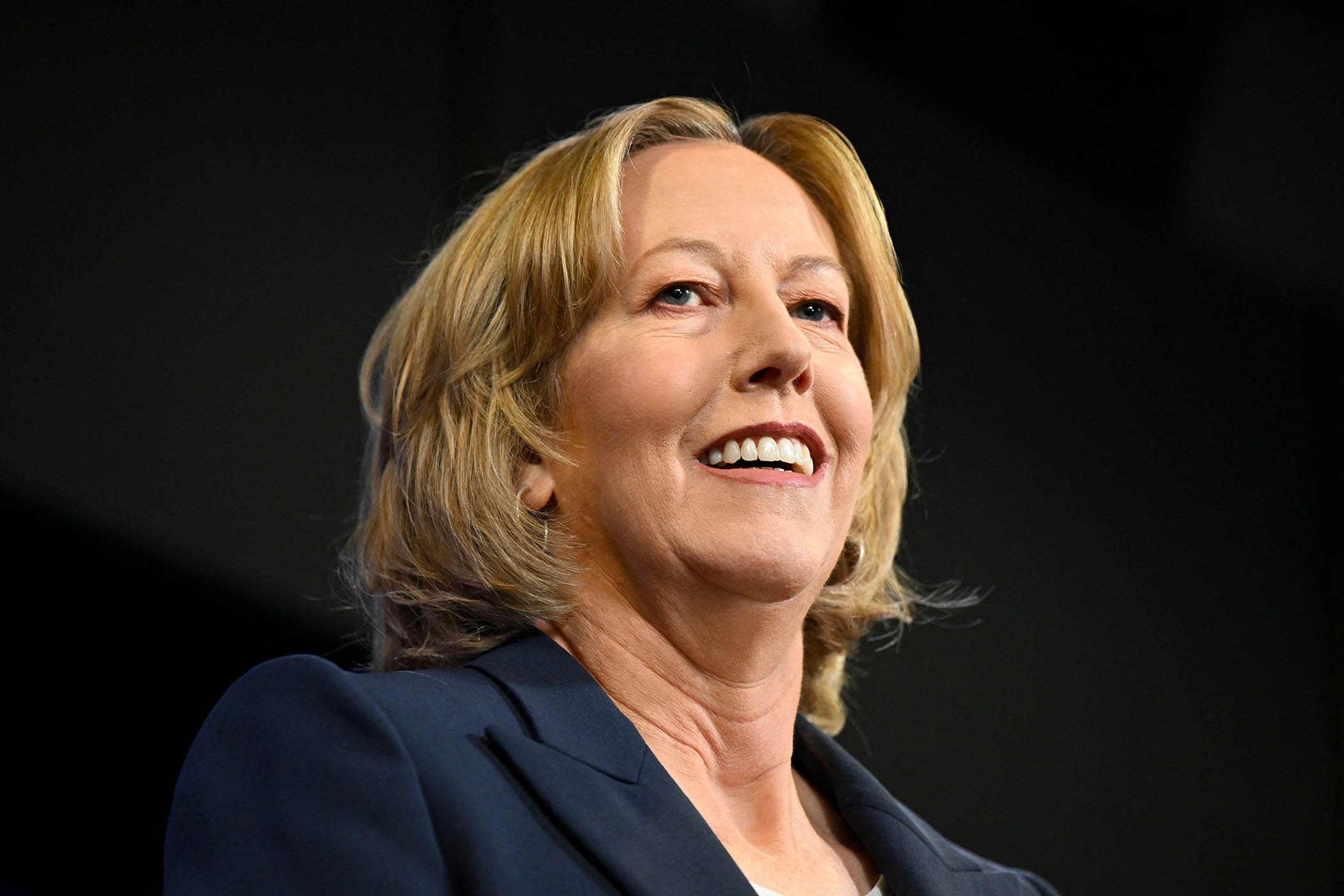
BP faces a high-stakes decision on whether to bid for business in Venezuela, without a chief executive. In April, that job will be filled by Meg O’Neill, who has led the Australian oil and gas producer Woodside Energy since 2021. An MIT graduate, with more than two decades’ experience at Exxon, she will be BP’s first female chief executive.
She is gay, living with her wife and daughter, and championing the need for gay visibility in the industry. In Australia, where climate activists targeted her home for a peaceful protest, she has brusquely dismissed those who take the view that fossil fuels are harmful without appreciating the effects of their own consumption.
Newsletters
Choose the newsletters you want to receive
View more
For information about how The Observer protects your data, read our Privacy Policy
Crossbench peer John Browne, who was chief executive of BP in its dealmaking pomp, described O’Neill as “determined”. She will need every ounce of that determination.
Sources say she will be well aided in the turnaround by another outsider, Albert Manifold, whose experience is in the business of supplying building materials as chief executive of Dublin’s CRH. Among its products are the fixings that hold the spectacular curved facade of the Burj Khalifa in Dubai.
Manifold succeeded Lund as chair of BP’s board last October. The same month, Lund left his role at Novo Nordisk, maker of the Wegovy weight-loss drug, where he was also chair of the board. Lund and other board members came under pressure from the company’s controlling shareholder, the Novo Nordisk Foundation, which wanted a big shake-up. Lund could not be reached for comment.
Manifold was impatient. In the summer before he arrived as chair, he began pushing for a review of BP’s sprawling empire and its costs. Under him, CRH had shifted its main listing from London to the US, which generated the lion’s share of its earnings and where he identified the best prospects for future growth.
Paul Drechsler, a former president of the Confederation of British Industry, said: “CRH is one of very few European companies to have made a huge success of building a US business.” Drechsler added that Manifold had led an intensely competitive business. “He really gets costs and overheads.”
Manifold oversaw Auchincloss’s rapid departure and the hiring of O’Neill. “Murray was seen as having been too much a part of the ‘Bernard blueprint’ and therefore not credible to pivot back strongly enough to what was needed to survive,” said a former employee. Another said that Auchincloss’s health had become an increasing concern.
It was soon clear that Manifold was going to be hands-on. He wasted no time in getting the company to trim what he saw as redundant. BP plans to divest $20bn in assets by next year, freeing cash to boost oil and gas exploration, and was halfway to its target by Christmas, including a $6bn agreement to sell a 65% stake in Castrol, the motor lubricants business. But shrinking alone will not deliver salvation.
A source who spoke with Manifold said a board shake-up could be next on the agenda. They said that, under Lund, the board was felt to have become “lightweight” and “pliant”, and they expected Manifold to hire “some different expertise and personalities”. Melody Meyer has been a non-executive director at BP for more than eight years, while several others, including Tushar Morzaria and Karen Ann Richardson, have been in post for at least five years.
Under Lund, the board was felt to have become ‘pliant and lightweight’. A shake-up is on the cards
Under Lund, the board was felt to have become ‘pliant and lightweight’. A shake-up is on the cards
Manifold is also reportedly concerned by BP’s net debt pile, which stood at about $26bn in the third quarter of 2025. The company piled up billions of dollars in liabilities after the Deepwater Horizon disaster in 2010, when an explosion on an oil rig killed 11 crew members and spilled the equivalent of up to 5m barrels of oil into the Gulf of Mexico (rebranded as the Gulf of America by Donald Trump).
And in 2022, after Vladimir Putin’s full-scale invasion of Ukraine, it pulled out of its lucrative business involvement in Russia. Other oil companies had operations in the country, but BP’s ties were deeper than any of them, with a 20% stake in state oil company Rosneft.
O’Neill will take control of BP at an equally turbulent time for the oil industry. The US intervention in Venezuela opens up the dizzying prospect of extracting the world’s largest oil reserves, but tapping them comes at a prohibitive cost: Rystad Energy analysts estimated last week in a note to clients that $53bn in investment would be needed over the next 15 years simply to keep Venezuela’s crude production at 1.1m barrels a day, let alone boost it. That is aside from the political risk. US energy companies have been thrust into the spotlight by Trump, but – if they take the plunge – will now have to deal with a socialist government, in a country where the state took control of foreign companies’ oil concessions in a negotiated transfer in 1976.
With its fingers burned by being forced to abandon business interests in Russia, the industry will, analysts say, be wary of another overseas entanglement
Both the need to keep returning cash to shareholders and this year’s lower oil prices mean there is less capital for investment, reducing the new BP chief executive’s room for manoeuvre. Meanwhile, the break-even price of oil production is rising. Energy consultancy Enverus has estimated that in the US, the world’s biggest oil producer, the cost of supply will rise from about $70 a barrel to nearly $95 a barrel by the middle of the next decade, as the search for new sources of oil heads to more speculative locations.Pressure to seek growth may spur a bold move at BP, such as reducing share buybacks and taking a short-term hit to the share price in pursuit of long-term growth.
Three years ago, the International Energy Agency (IEA) predicted that demand for fossil fuels would peak by 2030. The future looks much more uncertain now the political consensus on net zero has fractured and climate crisis scepticism sits at the heart of the US government. In its latest update, the IEA’s World Energy Outlook includes a “current policies” scenario in which demand for oil rises steadily through coming decades rather than tail off by the end of this one.
The prospect of much higher fossil fuel use brings with it potentially disastrous consequences for some of the world’s most vulnerable countries. For BP, and other oil producers, it points to a scenario in which they stick to what they know best – exploring for and pumping hydrocarbons.
The challenge will be to keep costs low and margins high enough to stay profitable, even if the political weather turns against the oil industry once again. At BP, there is a personal challenge too: whether the powerful personalities of its chair and chief executive will work in tandem. “Boards are not higher forms of management,” one industry insider said.
But Manifold’s confidence in O’Neill’s appointment was evident in his endorsement of her, speaking of his confidence in the new chief executive’s “ability to shape this great company for its next phase of growth”.
BP declined to comment.
Is Venezuela univestable?
Exxon CEO Darren Woods thinks so. In a meeting in which Trump urged oil firms to invest $100bn in the country, he said he wanted to see major changes before any involvement. So what are the challenges?
Size of reserves
Venezuela has the largest oil reserves in the world at over 300bn barrels. But there’s been some speculation about how much of that is proven. Between 2007 and 2012 figures were revised dramatically upward, prompting concerns about the political aims of the Chávez regime to pump the numbers.
Quality
Much of the retrievable oil in the Orinoco basin is heavy sour crude. Equipment erodes quickly and extraction is costly. The product is viscous and full of bitumen – one executive said it could pave roads.
Political instability
The sector is subject to rampant theft, and the military has taken an active role in state-run oil firm Petróleos de Venezuela SA. Oil executives meeting with Trump have asked how the White House plans to ensure employees and equipment sent into remote areas stay safe.