
Photograph by Tom Pilston
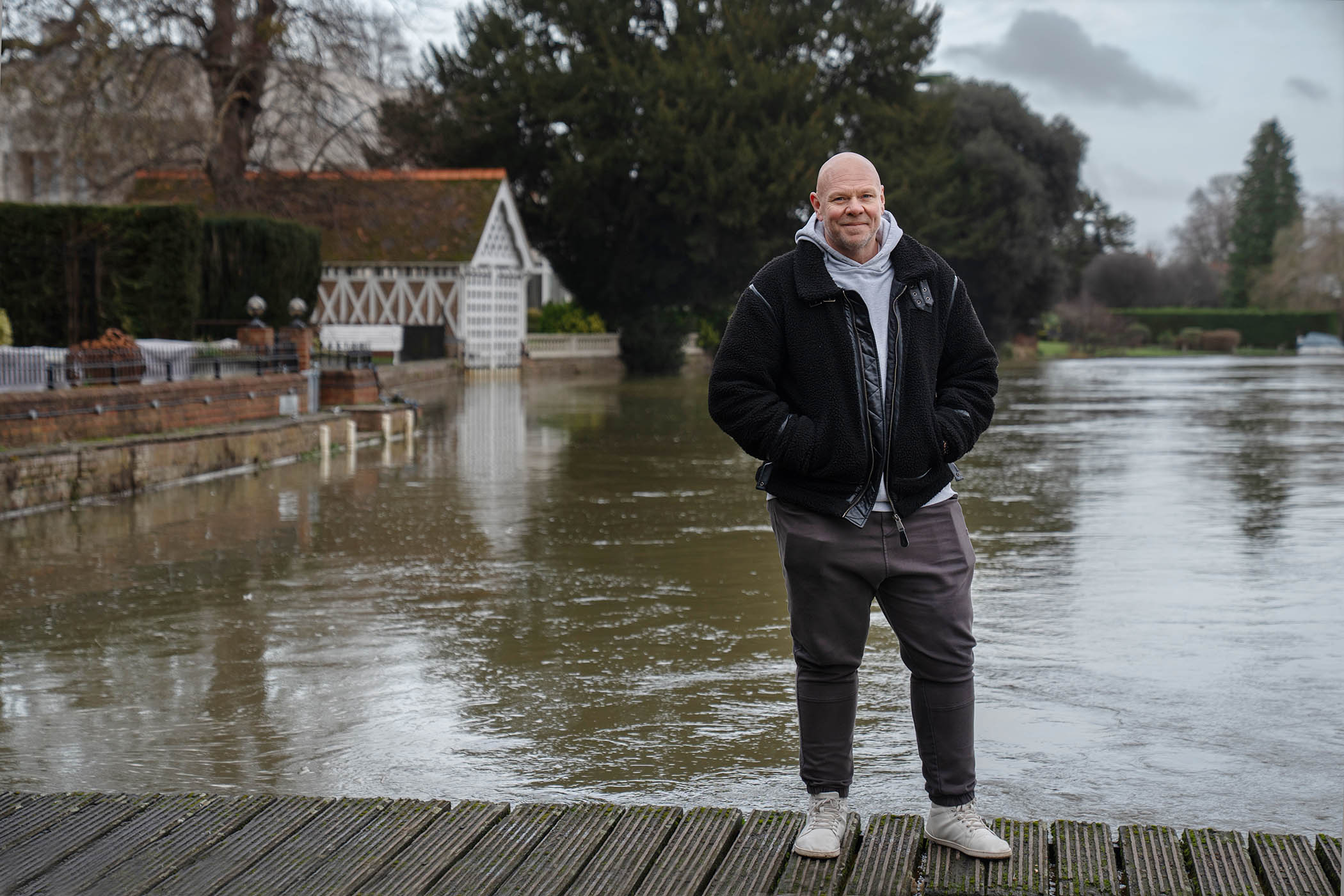
Most mornings, when Tom Kerridge finishes a session at the gym, he grabs a coffee as a reward from a cafe in a corner of Marlow, Buckinghamshire, that is far from typically quaint. Breeze-block buildings and tarmacked parking bays line the street. Then, on his way to the kitchen at the Hand & Flowers, the pretty Michelin-starred pub he has made famous, he winds his way through an industrial estate. “The longer I live here, the more I realise what a great town Marlow is, with a really communal energy,” he tells me, as we stop to look up at a red kite wheeling above a redbrick warehouse.
“We moved here for the pub 20 years ago now. My wife, Beth, and I had been looking at running a place in Crouch End, where we were living, but it all fell through. Then we spotted a picture of the Hand on the Greene King website and we knew it was right. It was a tenancy, which means that you buy all the contents and then, if you can make it work after you’ve paid for everything, any profit is yours. It was a huge cost for a couple in their early 30s, but we already liked the area.”
Today, his walk to the pub might be enjoyed in celebratory mood. After all, since having its ear bent by Kerridge, the government on Tuesday announced a 15% reduction on business rates for pubs and music venues in England, followed by a two-year freeze.
At my pub the Butcher’s Tap, the business rates have gone from £50,000 to £125,000
At my pub the Butcher’s Tap, the business rates have gone from £50,000 to £125,000
But the renowned chef is not at all satisfied. “I do feel positive about the fact that I now have a line of communication into government,” he says in measured tones, “but I am incredibly negative and downbeat, and also slightly perplexed, about the fact that there is still such a lack of understanding of the hospitality industry.”
The key conversations happened at a pre-Christmas drinks do at Labour peer Waheed Alli’s, where Kerridge buttonholed Peter Kyle, the secretary of state for business and trade. “It was a social soiree and I battered him about it all, though it was possibly the wrong place to do it. He said he’d get back to me in the new year. I thought it was just another tick-box exercise – of him saying he had listened to me – but in January, I found I was sitting in his Whitehall office as he showed me how the new rates would affect my business. He had worked out all the figures.”
The chef is a Labour supporter who has attended the party conference, but he is clearly an equal opportunities nagger on the subject of his industry, because he had a go at the last government too. “I try to push doors open, irrespective of who is in power. The more you scratch beneath the surface, you understand that, no matter which political party or secretary of state, you are talking to, they all want to do the best for their sector, although they have different ways of doing it, and different priorities.”
Kerridge says he pointed out to Kyle that the proposals were “unsustainable”. “Most businesses now are operating at about 110% costs, which means they have to make a 10% return on revenue just to break even. So they are all being priced out of business.”
Related articles:
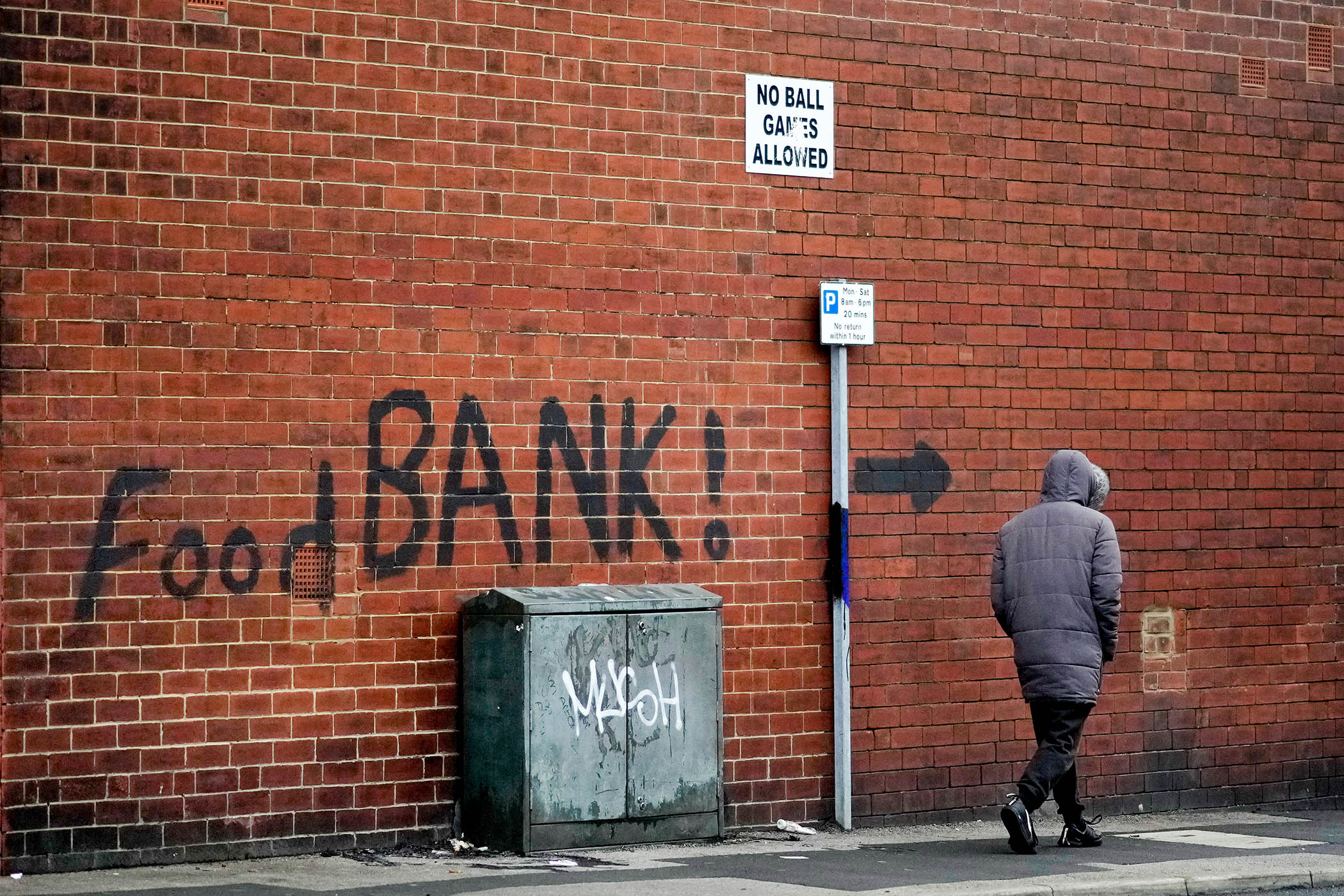
The small sports pub we are passing suddenly becomes a case in point. “It won’t work for a little pub like that, where the landlord probably lives upstairs and maybe earns 30 grand a year. It does chips and burgers and has football on the telly, but these people will be working 60, 70 perhaps even 80 hours a week and yet it still won’t work. At one of my other pubs in Marlow, the Butcher’s Tap, the business rates have gone up from £50,000 to £125,000 so, all of sudden, you are losing money.”
Just before we turn into an alley that leads to the riverbank, a woman in a serving apron runs out of a nearby sandwich bar, crying “Hey, Tom!” and holding out a pen for an autograph. “I’ve seen you go by a few times, but this is the first time I have caught your attention,” she says. Kerridge’s television appearances on the Great British Menu and his series Saving Britain’s Pubs have made him more than just a culinary landmark in Marlow. A sturdy, blue-eyed cherub – if a cherub can be 6ft 2in tall – he is greeted everywhere with waves and handshakes.
Newsletters
Choose the newsletters you want to receive
View more
For information about how The Observer protects your data, read our Privacy Policy
He grew up in Gloucester, attending a boys’ comprehensive in the middle of a council estate. “Most people ended up in some form of vocational training, or taking a job on the trading estate. Very few went on to higher education,” he says. Kerridge puts his own motivation and zest for life down to his need to have something fresh to focus on. “I cram in as much as I can. It is probably slight neurodiversity, a bit of ADHD [attention deficit hyperactivity disorder].
“Basically, it’s a conversation in my head that is never done. Many chefs are like that. I tend to say yes to everything and, as my wife would agree, I don’t often think of consequences. If there’s a chance that something will work, I’ll do it. But it’s funny, having been through my addiction issues with alcohol, gambling has never appealed to me.”
Kerridge also acknowledges the impact of his childhood on his character. “My mum and dad split up when I was 11 and my dad wasn’t there much even before that. Then he passed away when I was 18, so you understand that was a strong experience to go through. It builds resilience.”
These are the ingredients that make him a doughty campaigner, as Kyle discovered. “The bonus of my conversations with him was that he was then able to tell Rachel Reeves what I had said. It gave him ammunition. That meant they had to revisit it all and talk about the issues. I got a phone call from the Treasury on the morning of the announcement explaining it to me, because they probably knew that the telly and the radio would be giving me a shout, to see what I thought of it.”
Kerridge welcomes the reduction in business rates and he values his contact with ministers, but he feels the Treasury has only taken in half the argument. “They genuinely don’t have an understanding of how hospitality works. And I can't quite get why the government sees such a difference between pubs and restaurants and hotels. I know the rates are calculated in different ways, since pubs are done on revenue and turnover, while restaurants and hotels are calculated on a mixture of revenue and square footage, but that just shows you that the business rates system is not fit for purpose.”
A view of the fast-flowing river and the wide weir opens up in front of us and we stare across at the facade of the Compleat Angler, that other well-known Marlow hostelry. On one side, an amateur watercolour artist is bending over a little easel, trying to capture the Thames in full spate.
High water laps at the lawns and pampas grass of the posh homes that line the bank and some of the wooden summer houses look seriously imperilled. It makes a suitably apocalyptic backcloth for Kerridge’s passionate denouncement of the puny life raft that he feels the government has launched to try to save the hospitality trade.
I ask whether he thinks pubs should be protected as key cultural features, in the way that the French mandate that each town should have access to freshly baked baguettes. Kerridge is not so sure. “It is a lovely way of looking at it but, actually, hospitality is much bigger than that. We’ve just been to a great coffee shop that is a hub for people and is just as important. So is a burger bar at a business hotel, or the popcorn counter at a cinema. They all have costs and staffing needs.”
He fears a grim “race to the bottom” as expenses escalate. It would mean a loss of skills, he warns, and the seeking out of cheaper, processed food products. Or, worse still, all pub owners will just throw in the towel. “That will really suck the life out of high streets. You need that vibrancy. The moment that all disappears, there will be a huge knock-on effect across the country.”
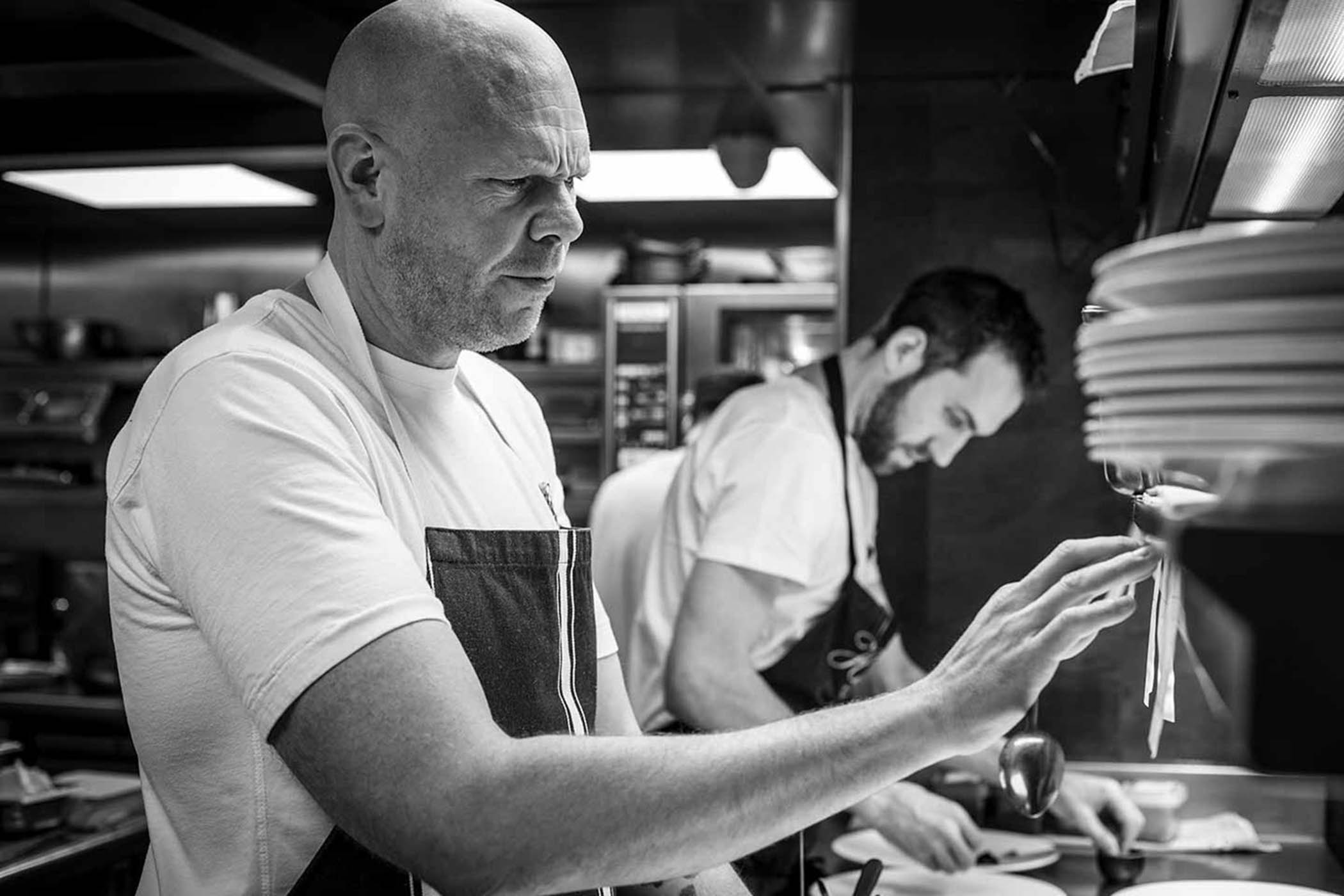
The Hand & Flowers, where we finish our walk, is happily thriving still, the dining room full. By the warmth of a woodburner, I am treated to a special Kerridge sausage roll with mustard. It’s delicious. Lucky for Kerridge, I think, as I remember the way the late, great Observer columnist Rachel Cooke once marked down Rick Stein severely after she had interviewed him in Padstow and claimed she was not offered so much as a sprat to eat. Not true here.
Looking up at a beam, I see a few little models of Mr Bibendum, aka the Michelin man, in a discreet nod to the two prestigious stars the pub has been awarded.
The success of this place, the chef tells me, is partly down to his long-serving colleagues, some of whom have worked with him for most of the 20 years he has run it. The mix of staff is a tenet of his faith in this “all-embracing” industry. “The beautiful thing about hospitality is that it’s the most inclusive place, irrespective of race, religion and sexuality, or of economic and educational background. It often attracts waifs and strays – those people that don’t fit into a conventional office environment.
“But if you have a good work ethic, you can do well. Importantly, hospitality is one of the first spaces young adults work after school, or before going to university. They are dropped into this amazing, varied world and that’s a really grounding experience. We must not lose that.”
Might there be scope now for expanding his Marlow empire further, like Stein has in Padstow? “Marlow has been very kind to us, but three sites is most definitely enough. Some people moan about our success, of course, and say things in town are my fault, but it is small-mindedness and it just bounces off me.”
Will his crusading spirit ever take him into full-time politics, I wonder. No, Kerridge says: he couldn’t leave the kitchen. “I have thought about it, but I’m not interested in the small stuff, and the more I’ve been involved with politics, I realise how thankless it is, so I have a huge respect for politicians. But there is no comparison with being a cook, where I can just follow my own creative passion.”
He could possibly, he admits, be persuaded into an advisory role, particularly if the government sets up a proper ministry for his industry – something he believes is sorely needed.
He is used to dividing his time between his television appearances, cooking and campaigning. “In the early days, I thought about food all the time, but now I have so many hats, food is just one of them. If I had to choose, though, I would rather be in the kitchen at the Hand, talking about new dishes and what we could change.
“We have just worked out a new terrine that’s a play on a French farmhouse paté, but it is not right yet. It is coarse pork in a cider marinade with chicken. That’s essentially what work is for me: love of food.”