

And so they filed in. Up the hill, London stretches out behind them, through the big double doors, they go. These were not like the crowds that had swarmed to the peak two weeks previously for the darts – boisterous and drunk. Now even the slightest creak on the stairs of the temporary seating is met with a look of annoyance shot down the aisle. On the W3 bus that takes you from Finsbury Park to Alexandra Palace, a man points out to his grown-up son the site of where his old snooker club used to be.
The decline of the snooker hall in modern Britain is often cited as the reason behind the fall in interest in the sport. From its heyday in the 1980s – the 1985 World Championship final between Steve Davis and Dennis Taylor had more than 18 million Brits watching on – it has become a somewhat niche interest. Mention that you enjoy snooker and you are likely to be met with a somewhat quizzical look.
In many ways, it is antithetical to what modern sport is expected to be. The resurgence of darts – another 80s sport that looked to have been forgotten – makes sense within our world of short attention spans and quick content. As the Masters took place, the world was being captivated by the One Point Slam taking place in Melbourne at the Australian Open; tennis distilled into its shortest possible format.
Snooker by contrast is slow, ponderous, dull. It is more akin to the theatre for the way you have to sit in silence in the dark for hours. Paying attention is crucial in order not to miss the moment that could define the frame or the match. By the time the final comes around, a ticket will not even guarantee seeing the outcome with the match spread over multiple sessions.
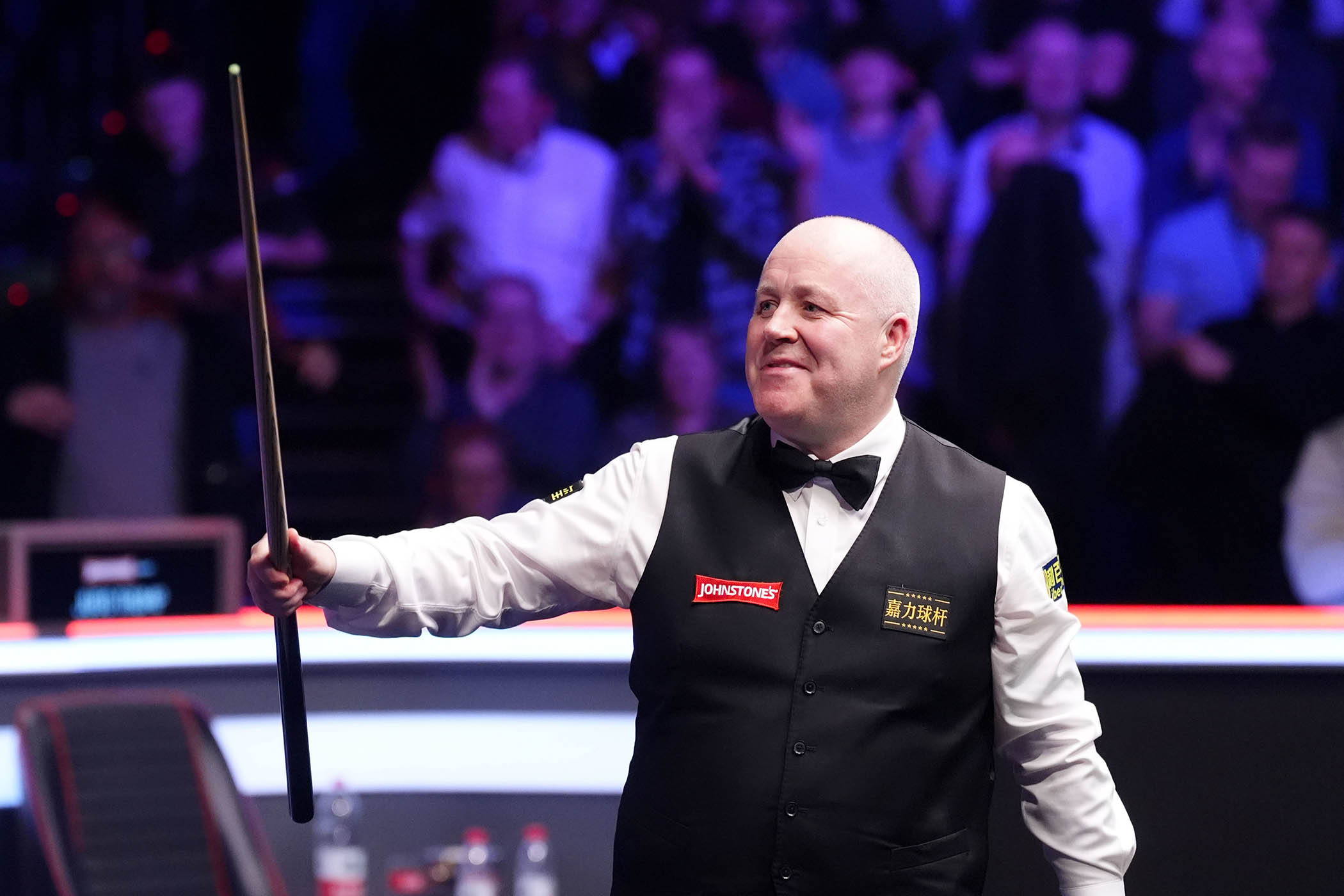
You need not worry about your attention drifting when the sport is as pulsating as yesterday’s semi-final between Judd Trump and John Higgins. Trump, having raced to a 3-0 lead, looked well on course to ease his way into a third Masters final. Higgins had other ideas, pulling two frames back as the match descended into the snooker equivalent of a slugfest, each player nicking frames off the other for supremacy. Such was the narrowness in quality between the two players, at one point in the eighth frame both players had recorded exactly 447 tournament pots each – before Trump won the frame by a single point. But Higgins – the wily wizard of Wishaw – rattled off three straight frames to overcome Trump and seal his spot in the final. The multiple fist-pumps as he secured the win showed how much it meant to him.
Higgins must wonder why there should be a clamour for the sport to ‘change’. He reached the final of the Masters in his first appearance at the tournament in 1995, and he’s back there now, 31 years on. In a disorientating, time-bending way, the 2010s were the only decade Higgins didn’t reach a final – he’s now reached it twice in the 2020s.
The expectation coming into this year was that this might be where Chinese dominance takes hold. The sport has grown significantly in popularity in Asia ever since Ding Junhui’s 2005 UK Championship win. China now boasts an estimated 50 million amateur players, and TV audiences for some matches have exceeded 200 million viewers. The Masters takes the top 16 ranked players, and this year a record five Chinese participants made the cut.
The stillness is something that is not often found in modern life, and it feels almost meditative
The stillness is something that is not often found in modern life, and it feels almost meditative
The first round got off to a flying start for China, as Wu Yize knocked out last year’s winner Shaun Murphy, before Xiao Gudong dispatched Mark Selby, who had only recently won the UK Championship. That guaranteed a Chinese player in the semi-finals, while Zhao Xintong, last year’s World Champion, also progressed. Yet Xintong faded against Higgins in the quarter-finals, with his safety shots leaving the door open even when his break building looked impressive.
Related articles:
If the first round had been marked out by its ubiquitous scorelines, as every match ended 6-2, the quarter-finals could not have differed more in showing the true variety of the sport. Wu Yize showed no mercy to Xiao Gudong, despite the elder player having cooked him a delicious looking dinner of steak and eggs the night before, beating him 6-0. Judd Trump and Mark Allen’s match was one for the purists as was made clear when the opening frame kicked off with a long safety battle. Higgins took the final frame decider against Xintong before Kyren Wilson and Neil Robertson duked it out late into the night on Friday, with Wilson eventually prevailing.
With the semi-finalists ranging in age then between the 22-year-old Yize and the 50-year-old Higgins – Higgins won his first ranking final close to a decade before Yize was even born – part of what makes snooker so unique is how the age range is so extensive. Players like Higgins are continuing at the top for far longer than they used to as the sport has professionalised in a similar way to darts. The four-time World Champion had a gym built at home in order to keep fit. Beaten quarter-finalist Neil Robertson has spoken publicly about his use of a sports psychologist to help return him to the top of the game after a fall down the rankings.
Newsletters
Choose the newsletters you want to receive
View more
For information about how The Observer protects your data, read our Privacy Policy
Yet without younger British players breaking through, public interest in the sport will wane. Looking for a British player under the age of 30 requires scrolling down to number 33 in the rankings. The 24-year-old Jackson Page has only ever made one ranking final.
As a hush fell over Alexandra Palace this week, it is easy to understand the magic of the sport. The stillness is something that is not often found in modern life, and it feels almost meditative. One for the purists on the surface, the personalities and stories contained within it are as compelling as any sport. Snooker might just need to get better at telling them, given any young person is increasingly unlikely to stumble into the snooker hall to pick up a cue. Either that or wellness TikTok needs to discover it as a way to switch off from the world. Something like that anyway.
Photograph by Adam Davy/PA Wire