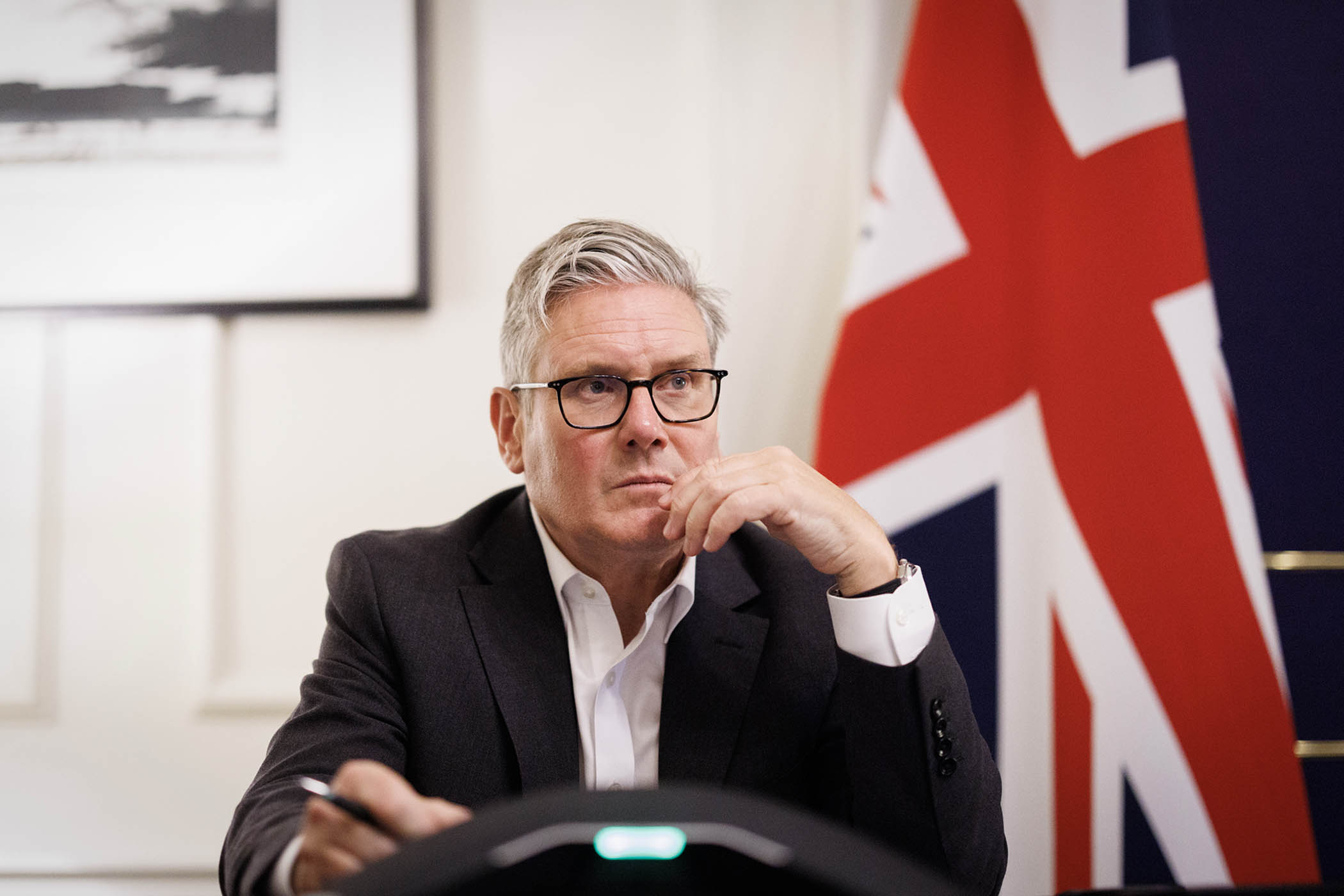

Keir Starmer arrived in Downing Street promising to end what he called the chaos – the self-dealing, the neglect of the public sector and the instinctive promotion of party over country that had characterised much of the previous three governments. He has failed, not for want of good intentions but for want of guiding principles persuasive enough to call his own MPs to order.
The moment of truth arrived in the last week of June. More than 100 MPs rebelled against welfare reforms on which the rest of his agenda depended if they were to be affordable. Not only has his authority failed to recover, it continues to atrophy as contenders to replace him manoeuvre for support. It’s hard now to find a significant figure in Westminster who believes Starmer will see out 2026 in No 10. At the same time, a consensus has formed that he has proved inept at politics and uninspiring as a leader, while Nigel Farage has trounced him on both fronts and is a likely future prime minister as a result. But these two ideas – Farage as Pied Piper, Starmer as out-of-time snare drum – miss the real story.
The paradox of Starmer, less than a third of the way through what could still be a five-year parliament, is that he has so much power on paper and so little in practice. The key point about his big majority turns out to have been its small margins. Hundreds of Labour MPs fear for their seats, and whoever succeeds their leader will face the same questions. Do they know what they want to do with power? Do they have an argument to sell it to the public? Do they have a strategy to deliver?
Without a compelling central idea, nothing else matters. Starmer could have offered one based on Labour’s past and the progressive present. He could have insisted, in Blairite vein, that Labour on his watch would build the future, not merely patch up the present. That it would do so by drawing on new liberal conceptions of deregulation, such as those championed in the US by Derek Thompson and Ezra Klein in their book Abundance. That he would sell his vision with laser-like focus on what matters to voters, like the focus on affordability that won Zohran Mamdani the mayoralty of New York and which Lina Khan, the former chair of the Federal Trade Commission, is now turning into practical ideas for driving down rent and utility bills.
A decade on from Brexit, the British people know that the politics of people like Farage are seductive, but costly
Starmer needed to turn lofty manifesto language into popular, progressive politics. He needed to set out, first, how he would tackle Britain’s housing and energy price crises. That could have unlocked a formidable response to Faragism: it costs too much. Farage does not want to be outflanked by the left on welfare, but on present evidence he won’t be able to pay for it either. The Institute for Fiscal Studies says his pledge to raise the lowest income tax threshold to £20,000 would cost £50-£80bn. Alan Manning of the LSE points out that Farage’s proposals to deter small-boat migration is costly because it would require US-style surveillance of migrant populations and deportation deals with countries negotiating from a position of strength. Nor does it help Reform that Brexit is costing at least £100bn a year.
Related articles:
A decade on from Brexit, the British people know that the politics of people like Farage are seductive, but costly. They offer not just a toxic nostalgia, but an uneconomic one; they promise a return to a better yesterday, but serve up an unaffordable tomorrow. From immigration to energy to the EU customs union, the right is not just wrong – it is expensive. Starmer could be saying all this, but isn’t. He still hasn’t made a truly eye-catching case for a new Labour government, or taken apart Reform’s flimsy and cruel alternative on the facts. The lesson of the welfare debacle is not that he has a personality problem or even a politics problem. It is that he is insufficiently interested in policy.
It is pointless to believe that Starmer is going to discover retail charisma in 2026. Nor is a reorganisation of the political staff the answer. Starmer himself needs a policy agenda, rooted in a coherent view of Britain, expressed in a detailed programme of reform and investment, an argument to persuade the public, and a plan to win the politics of the day. The climbdown over welfare was the defining failure of Starmer’s 2025. If he doesn’t learn the lessons of it, he won’t be PM at the end of 2026.
Photograph by Simon Dawson / No 10 Downing Street