
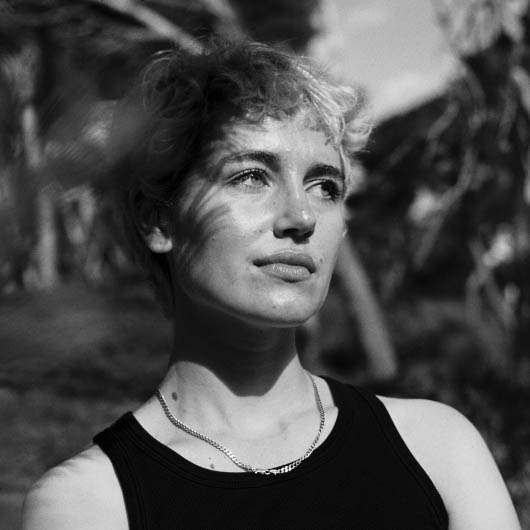

Deep northeast London, beyond the outer limits of London’s Lime-bike kingdom, in a high-ceilinged location house next door to a photography studio for babies, the actor Emma Corrin was standing on a kitchen counter gesturing with a plastic orange-and-yellow tea set. Nothing in the kitchen seemed to work. Nothing at all, in fact. Mostly the site is used for photoshoots, like this one, so it can get away with being only an approximation of a liveable space, in this case a decadent, 1970s, slightly porny home. Here was a circular bed bedecked with white fluffy pillows that could spin 360, à la Austin Powers; there was an experimentally shaped crème bath whose plug, we noticed, was on a raised ledge: if filled, it would never drain.
All morning Corrin played the sun around which we orbited – the photographer, the gaffer, the hair and makeup artists, the fashion editor, the social media content producers, various assistants and myself, all of us uncertain what to do with ourselves whenever Corrin disappeared briefly to change from one look to another. Corrin struck me as razor-focused and eminently professional, which is also how they have been described on set. Michael Grandage, the director of My Policeman, in which Corrin starred alongside the popstar Harry Styles, has said of them, “I’ve never seen anyone drop in like that when the camera went on.” The actor Hugh Jackman has described Corrin’s “ability to so subtly change – to turn on a dime”. I witnessed this at the shoot, too: Corrin’s look now hard and sharp, now gentle and romantic, now almost goofy as they break into a smile.
Corrin has very blue, very perceptive eyes. Between shots, their gaze zipped back and forth between the rest of us, so as to follow our various conversations. Afterwards, when we reconvened at the foot of a hill streaked with late afternoon sun, Corrin in a North Face puffer jacket and dark-blue trackie bottoms, they told me they were “really sad” to have missed out on what looked like one particularly amusing story. I relayed it to them now. “So good,” they nodded. “This is exactly what I thought.”

Military shirt and leather jeans, both by Aaron Esh; shoes by Manolo Blahnik; and earrings by Cartier
I am the latest in a string of interviewers to select a park as the location in which to interview Corrin. It’s suggestive of how we read them from the sidelines: intuiting some kind of split or tension between the version of them confined to a set and the one found in nature, in motion, under a big sky. Corrin was raised in Tunbridge Wells, Kent, alongside two brothers with whom they are still close. Their mother was a speech therapist; their father a businessman. Of their childhood, Corrin told me they were “always outside, always up a tree, always imagining the end of the world…”
“The end of the world?” I asked.
“Not in a dramatic sense,” they told me: in the key of adventure. Corrin always kept a go-bag full of supplies, “everything I needed to run”. They sensed there was “something out there. Not that I ever went and found out what it was. But I sat there in my garden being like, ‘Wow, I’m ready.’”
That yearning to reach beyond the boundaries of their home metabolised in their teenage years into a profound ambition to become an actor, a career in which one’s ability to imagine might be shared with and so validated by an audience. Their dream was always more about theatre-acting acting than screen acting. Corrin attended a private all-girls school with an excellent drama department, and even then they recognised that what they were doing on stage was no less than “bringing something to life”, which through them would momentarily become “completely real.”
Corrin is now miles away from the kid sitting in their garden in Tunbridge Wells preparing for something to happen. They turned 30 a few weeks ago, and have already racked up an astonishing number of career milestones. In their mid-20s they played the young Princess Diana in the fourth season of the monstrously successful The Crown, for which they received a Golden Globe in 2021. It was The Crown that shot Corrin into the public consciousness, and their level of fame hasn’t really abated since. What followed was a number of leading roles in theatre – Orlando, in a 2022 West End adaptation of Virginia Woolf’s fantastical biography; Nina in Chekhov’s The Seagull at the Barbican last year – and film and TV: in My Policeman, a buttoned-up drama set mostly in the 1950s; as Lady Chatterley in Lady Chatterley’s Lover; in a supporting role in David Egger’s adaptation of Nosferatu; as Elizabeth Bennet in the upcoming TV remake of Pride and Prejudice; in the 2023 TV show A Murder at the End of the World.
Related articles:
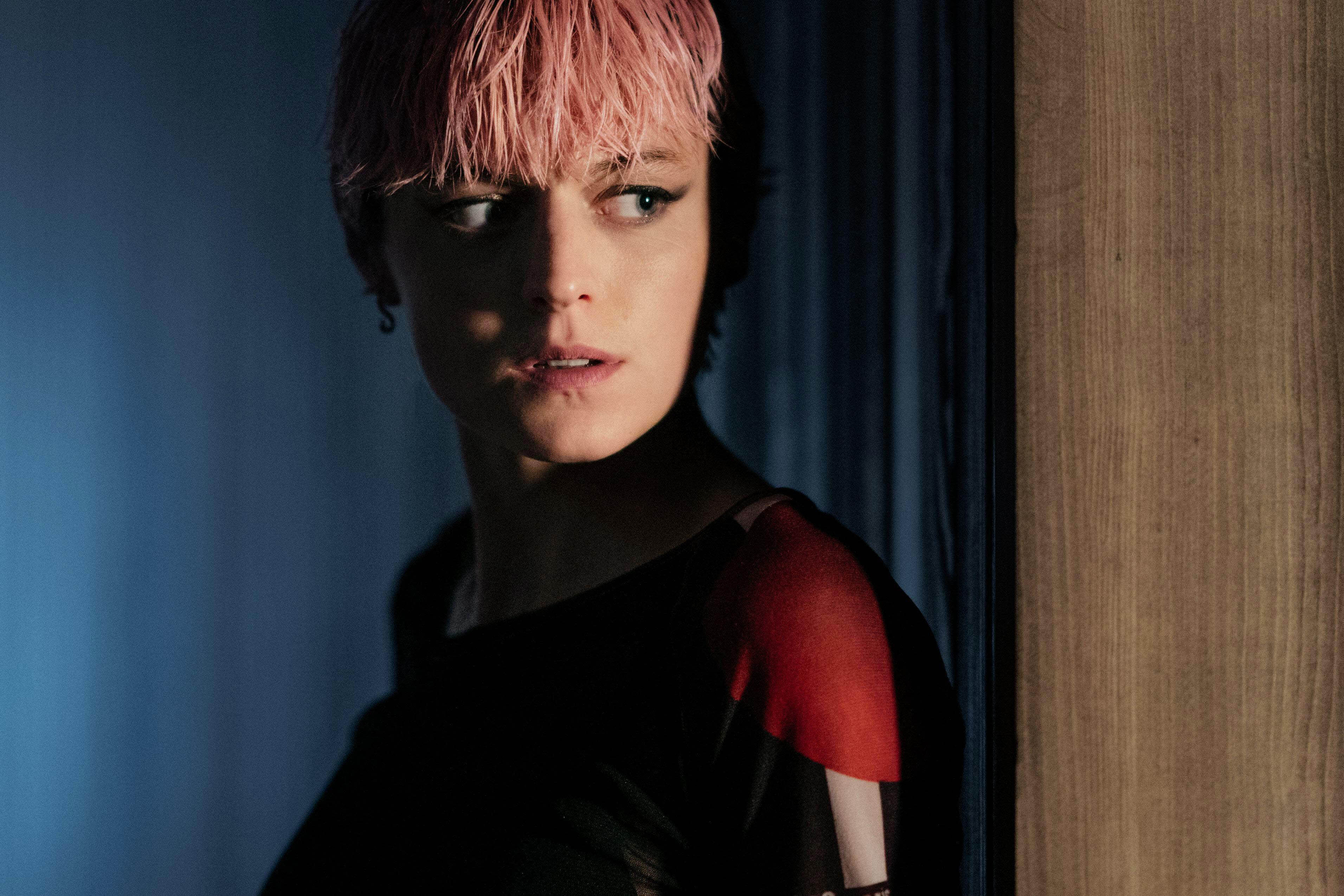
Corrin as amateur detective Darby Hart in A Murder at the End of the World (2023)
The last is my favourite of their roles. Darby Hart is a vulnerable, introverted young American whose character arc is split across two timelines. There’s adolescent Darby on a crime-solving road-trip across the desert-regions of Utah. And there’s present-day Darby, now a successful true-crime novelist, who has somehow ended up at a billionaire tech lord’s conference at the “end of the world”: middle-of-nowhere, whited-out Iceland. The part allowed Corrin to show their range: to play someone now hopeful and romantic, out in the wild; now lonely and jaded, stuck in a flashy Icelandic hotel. Of all of Corrin’s characters, Darby is the one who feels closest to themselves, they told me, particularly within the scenes in which they were on the road. “It felt like that kind of adventure you yearn for when you’re young,” Corrin told me. “I can solve the world’s problems, I can make a difference.”
Corrin is about to start shooting an A24 horror film. In the meantime, they’re promoting their latest project, 100 Nights of Hero, British director Julia Jackman’s debut based on a graphic novel of the same name, which is itself a reworking of the Middle Eastern assemblage of folktales, One Thousand and One Nights. Corrin plays Hero, the maidservant to Cherry, a noblewoman with whom she is secretly in love, in an alternate-reality medieval world with three moons and interventionist gods. Hero is our Scheherazade, distracting the male protagonist from his attempts to seduce Cherry by recounting for them an apparently never-ending story.
In real life, too, Corrin is an excellent storyteller. At the park, with their black cockapoo, Spencer, in tow, we ran into two of my friends, and I introduced them.
“Have we met?” one of them asked innocently. “I think I recognise you.”
Corrin demurred politely.
“I’m interviewing them,” I explained.
There was a pause. Then my other friend motioned to a flock of rooks pecking at the hard ground on the other side of the hill.
“They must have found something,” he said.
“You know how they have amazing memories, and if you slight them, they’ll remember you?” Corrin offered, before launching into a surreal story befitting of their role in 100 Nights of Hero. “Last summer, over by the bandstand, they started dive-bombing me. All these people were sitting around and I was being dive-bombed. It was the most terrifying thing ever. They were going for Spencer as well, so I was holding him, sprinting across the grass, being dive-bombed by crows. And then a few days later, I thought, ‘Maybe I’ll try again.’ Same thing happened.”
“But how did you slight them?” I asked.
“I think I must have looked like someone else,” Corrin said. “As far as I know I’m very nice to rooks.”
And with that we left my friends and continued on our way up towards the brow of the hill.
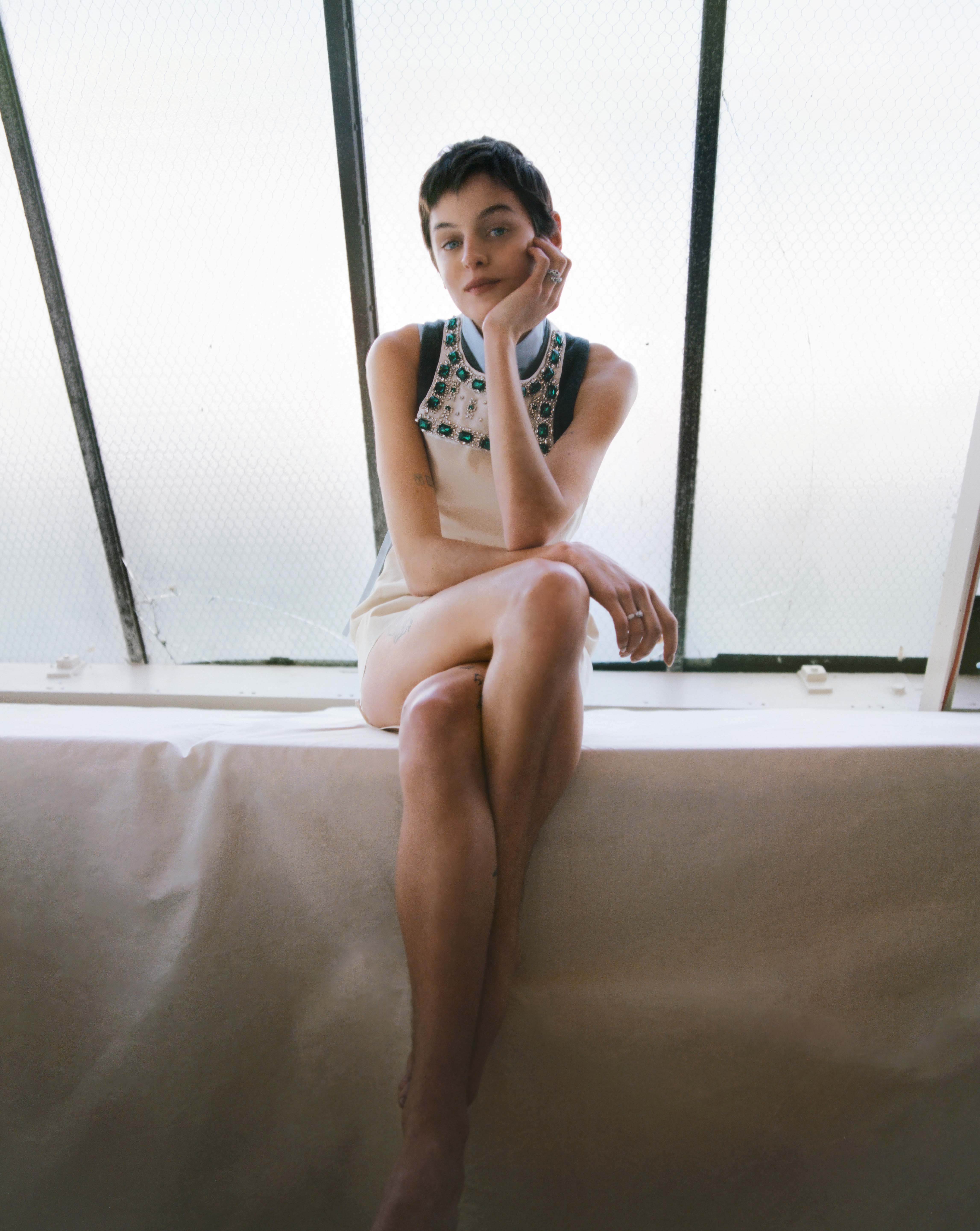
As we went, Corrin discussed their teenage years. As a child, they were very much a tomboy – they told their mother they only wanted to wear clothes for boys. But they didn’t find the transition to an all-girls environment for secondary school “especially jarring”. “Everyone’s talking about bras,” they said, “and you’re like, ‘cool’. I didn’t really think about it in a critical way.”
The school was a boarding school, but they remained a day pupil until sixth form, when they decided they’d rather not continue with the hour bus-commute each morning and evening. “It gave me a sense of independence,” they said.
I asked Corrin if they were in relationships at secondary school.
“No. God, no,” they replied, very quickly. “I started dating after I left…” (They are currently in a relationship with the actor Zachary Hart, who was also in The Seagull.)
I wondered how friends at boarding school would have described them then.
“Oh my God. How would they describe me? I was chaos.” They paused, then undercut the statement with a quick, “a little bit.” Their “chaos” was not a teenage rebellion, as I had anticipated, but an excess of energy they were unsure how to channel. “I was the one who got the report, like, ‘Really enthusiastic’, meaning: doesn’t shut up. I think I was just so keen to please.”
I asked in what ways Corrin has changed since school.
“I think I’m much more introverted than I was,” they said. At school, “you have all your friends around you, and we were in a very safe environment. You could be as explosively expressive as you want to be when you’re a kid, in the best way. You’re allowed to figure out all those parts of yourself. We didn’t have to worry about what we looked like or what we were. We just got on with it – rolled out of our beds, were whoever we were that day.”
I told them I thought that was rare: to hear someone of our generation describe secondary school as an environment liberated enough to feel comfortable exploring your identity, not constrained by peer pressure into conforming. I asked if Corrin’s movement towards introversion was related to their sudden fame.
“I think it probably can’t be a coincidence,” they said.
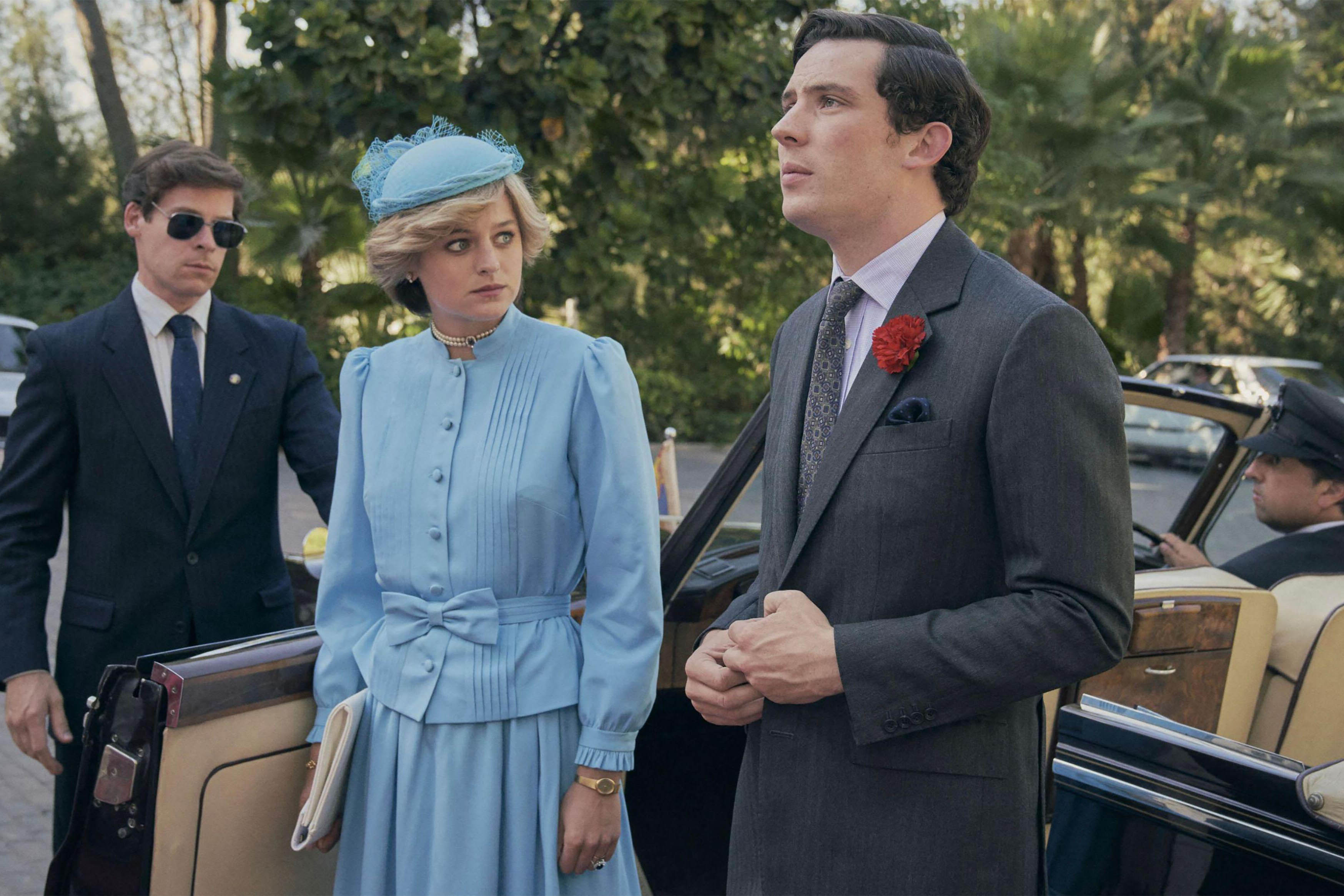
As Diana, Princess of Wales in The Crown with Josh O'Connor as Prince Charles (2020)
Corrin is now closer to the age Princess Diana was when she died (36) than she was when she married Prince Charles (20). I wondered how they look back on that role in retrospect.
“With such fondness,” Corrin said. “With such fondness.” But it feels such a long time ago to them now. Corrin recently watched a clip from The Crown. “‘Who is that?’” they thought. “I was looking at myself being, like, ‘That’s a completely…’” they trailed off. “It felt both so familiar and so distant, that person, you know?”
“In what way ‘distant’?” I asked.
“Just-grown. But in a way, I was, like, ‘God, I want to be that fresh. Take me back!’”
Corrin and I reached the peak of the hill, where rows of benches were arranged in a semi-circle, turning the city below into a stage. Every bench was occupied except one, for which we made a beeline. Spencer leapt up on to it and settled first in between us, then snugly on Corrin’s lap. Now we were stationary, Corrin’s answers became slower and more reflective. I would ask something and they would look out at the misty panorama beyond us, chewing on the zip of their puffer, before turning back to answer me, at which point their whole face would be rendered golden by the setting sun behind.
Corrin’s life now more closely resembles Diana’s. As Diana was pursued by the press, so, if you Google Corrin, will you find reams of unsolicited paparazzi shots. “The more you’re in those situations, the more you empathise with people who are in those situations – how invasive it is, how just protecting your life and yourself is so important. But at the same time there were so many other factors for her, given the family she was in… I think the kind of fame actors have is very different to the fame the royal family has.”
This difference is one they localised as duty.
“Is there any duty as an actor?” I asked.
“I think there’s a duty between the actor and their work,” they said. “And then there’s the duty that I guess sometimes you are made to feel, or end up feeling, between yourself and the public. And with social media and everything, I think that’s become harder and harder.”
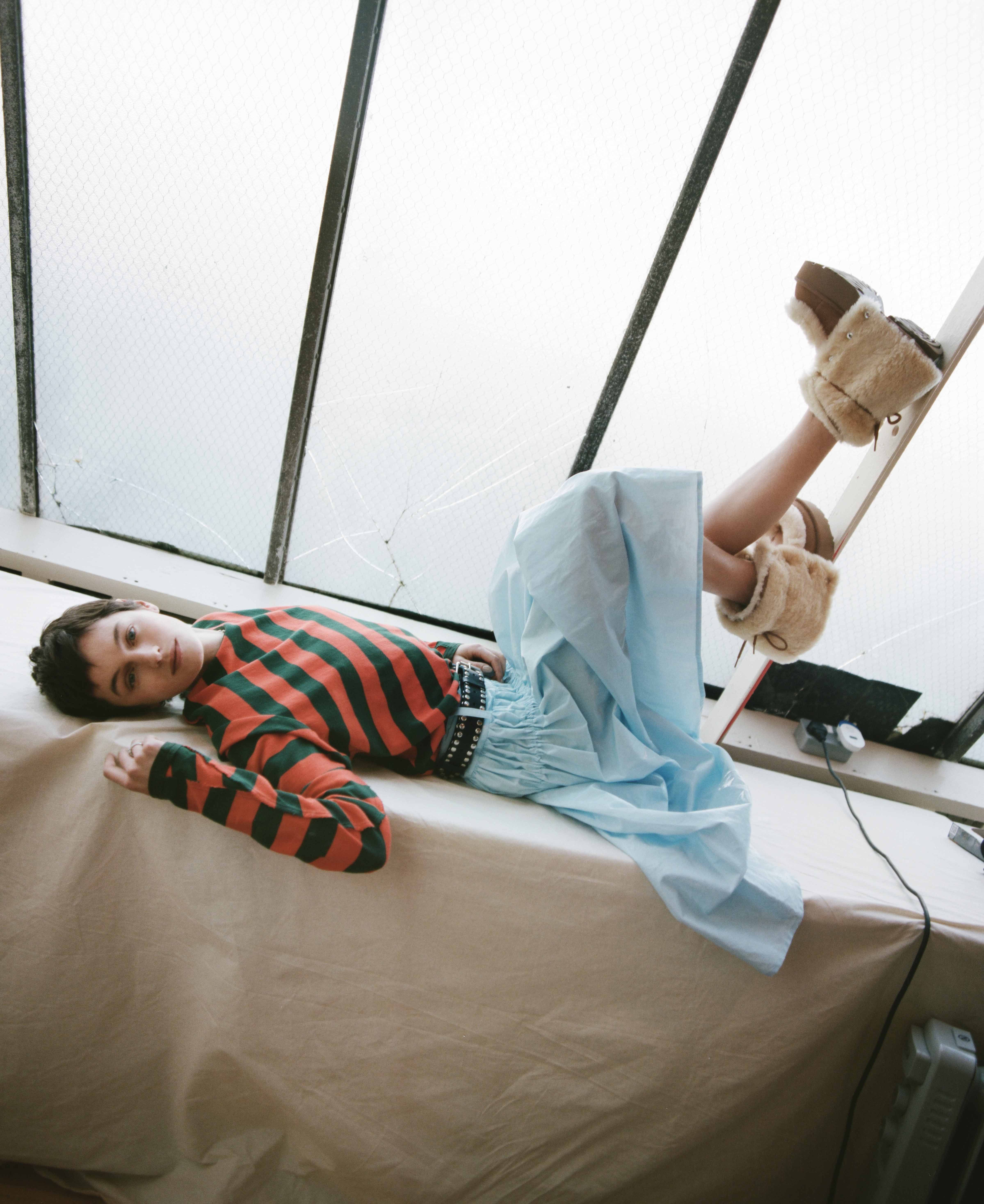
Top, skirt and belt and Uggs, all by Talia Byre; necklace and rings by Cartier
Corrin recently deleted their Instagram account, and I wondered how it had been.
“Amazing,” they said. “I actually cannot believe how little I’ve missed it.”
In an interview from 2024, Corrin stated that, though they wanted to imagine a world in which they could leave social media, “For a lot of people, particularly younger than me, it is their salvation. It’s a real way of connecting with people. Especially with some of the topics people follow me for, specifically around gender.” There is that obligation of “duty” again, which, in this case, seems to be conflated with an obligation of visibility.
Corrin came out publicly as queer and non-binary in 2021 – by changing their pronouns on Instagram, obviously. But it feels as if we have now entered a very distinct cultural moment, in terms of both our broader societal relationship to social media, and the ethics around declaring one’s gender identity or sexuality online. On the one hand, there is far more awareness about the damaging, flattening, distracting effects of social media on our lives – that it is not a neutral tool at all; tech titans are profiting off our impulse to share. On the other hand, it’s no longer taken for granted (or seen as a moral obligation) that a celebrity must declaim, with absolute certainty and definitiveness, their identity and their sexuality to the rest of the world.
“I’m really glad that when I came out, and when I was figuring that out, I spoke about it publicly,” Corrin told me. “At the same time, you do just serve yourself up, and your identity is sort of not your own any more. And identity shifts. Even if it’s not big shifts, it shifts all the time. And if you’ve spoken about it once, you’re like, ‘Well, then, I have to keep updating people, otherwise people are out of the loop.’ And that’s a cycle no one can keep up with.”
Corrin took Spencer’s head between their hands and ruffled his ears before continuing.
“Maybe what we need more of is the space to accept and welcome these shifts. And not have to demand from people that they know exactly who they are at any given moment,” they said.
We looked down at Spencer resting in Corrin’s lap. “Shall we walk a bit?” they asked.
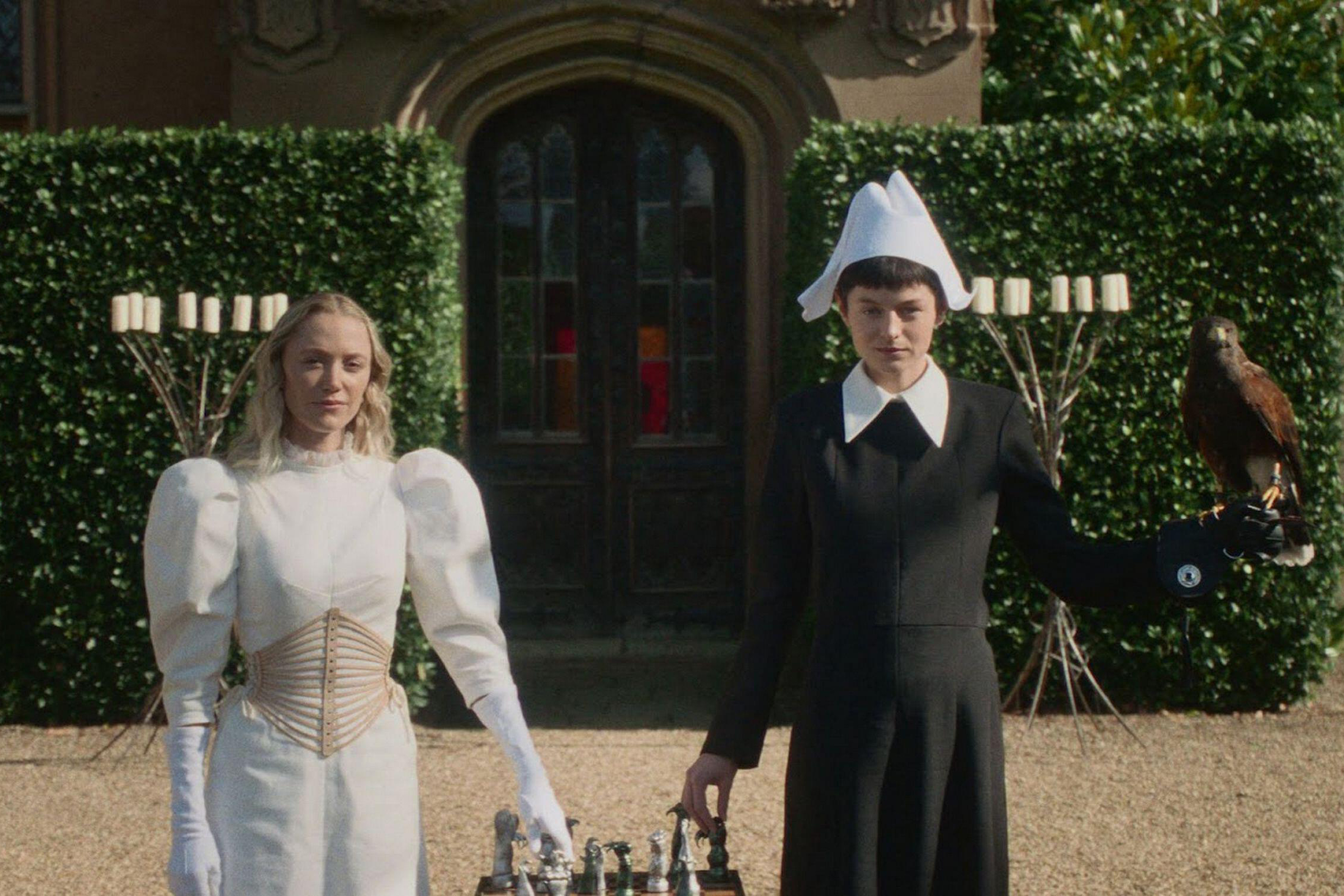
Corrin as Hero, maidservant to Maika Monroe’s Cherry in 100 Nights a Hero (2026)
It was getting colder, the sun now dipping down behind the houses and, like us, it seemed everyone was making their way slowly towards the park exits.
“Do you feel you’ve made it?” I asked them.
They answered “no” without hesitation. “I don’t know if anyone ever feels like that.”
“Do you have a career milestone where you’d be, ‘Now, I’ve made it’?
“I don’t think so,” they said. “When I got Diana, at that point in my life when I hadn’t done much at all, that was a moment of like, this is massive. And it did change my life. And it changed my career.” Now it’s “about making the right choices, making sure I have a really healthy balance of life and work – making sure I’m enjoying it, and making sure no one’s dictating it but me, which is also something I’ve had to learn.” This has been a big shift for Corrin recently. “I think when you’re in your 20s, you’re so ambitious,” they said. “And it is your whole thing: ‘I need to put myself so firmly into the place that I want to be work-wise’. And then once you’re there, or even if you’re not, you get to a point where you look around and you’re like, ‘Wait, this isn’t actually making you happy,’ or there’s so much more that I actually care about.”
The other day, Corrin found a rejection letter from Rada. The basement at their childhood home had flooded, and down there they found a box of old stuff. Everything in it was mouldy – “black mould vibes,” Corrin said – “but this rejection letter was, very cinematically, completely pristine.” They had an image of the letter on their phone and read it to me: “I wish you every success in pursuing an acting career in the future,” it ends.
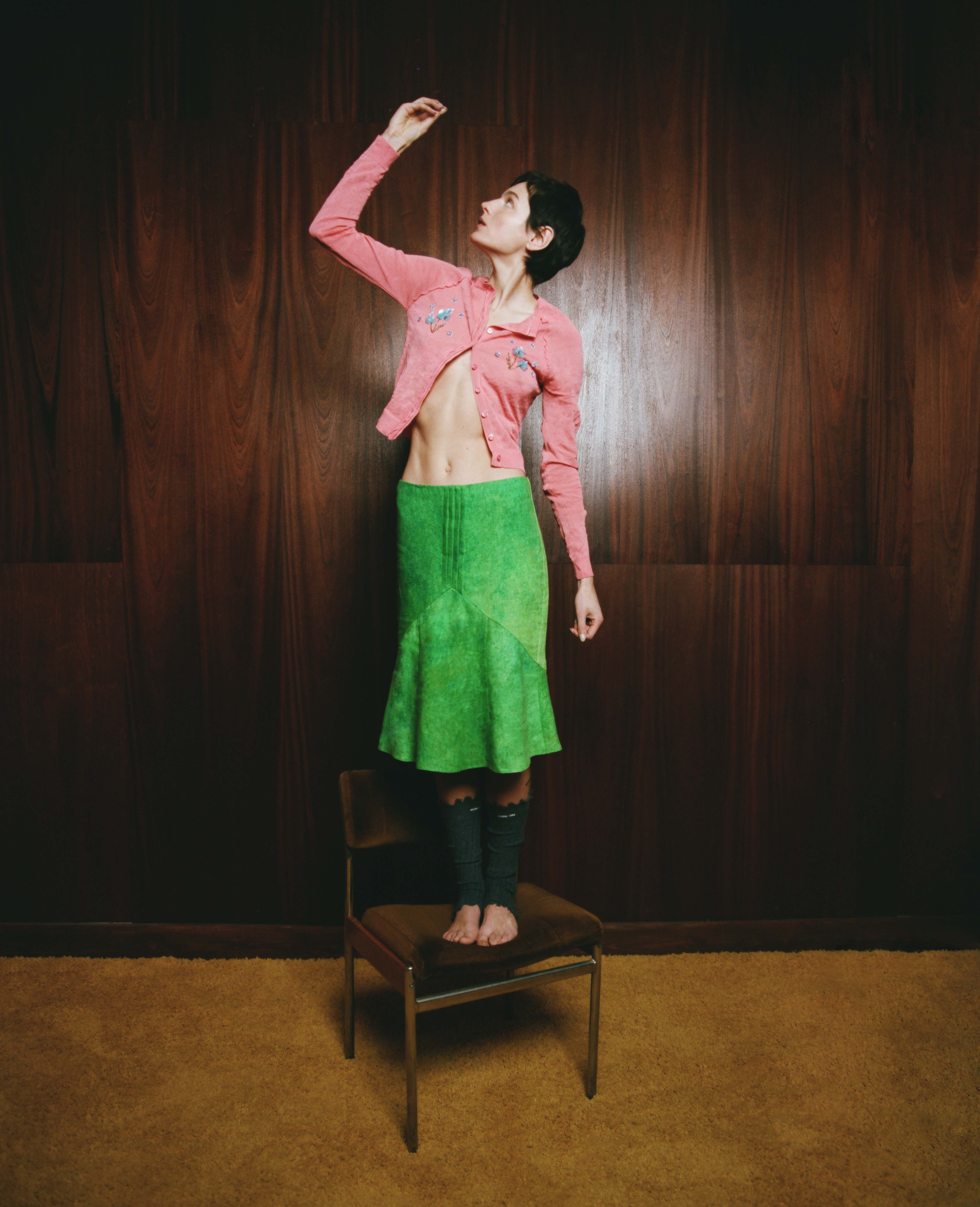
Beaded cardigan, skirt and socks, all Shushu/Tong
For two years in a row, Corrin was rejected by every drama school they applied to. “It was absolutely crushing. I remember sitting on my bed and being absolutely crushed.”
“But no part of you thought, ‘I give up’?” I asked.
“No, no part of me.”
Instead of drama school, Corrin enrolled at Bristol University, but their heart wasn’t in it. They hadn’t applied for student housing in time and ended up living in this “weird off-campus place.” And they weren’t much of a fresher’s week person, or a big drinker, so they ended up feeling quite isolated. “I didn’t really know what it was to be depressed or anxious or feel as if I was in a place where I wasn’t happy,” they said. They also didn’t realise they could just leave.
Corrin later received a call from an old school teacher, who suggested they apply to Cambridge. Corrin wasn’t “wildly academic” at school, they told me, but their grades had come out better than expected, and the teacher suggested Cambridge, because a lot of actors got their start there. “I was like, ‘Are you kidding?’” Corrin recalled. But their teacher explained there are some courses there that are “really easy to get on to.” And so Corrin ended up at Cambridge studying education.

Corrin loved it. They lived and breathed theatre, acting in 19 plays in just three years, and doing the bare minimum university work. They still live with a lot of people they met through theatre while at Cambridge, which is perhaps what differentiates Corrin from many of the other famous actors their age. They’ve lived with the same friends in the same flat for 6 years now, a three-bed whose number of residents goes up to about six, depending on whether other friends or people’s partners are staying over. It’s chaos. They haven’t had a shower curtain for four months, they said, “so every day the bathroom is a swamp”.
It keeps them grounded. “Being away a lot, then coming back and immediately slotting into the person you are within the context that you are known best is amazing,” they said. “I think it’s easy to get isolated in this industry,” because “the experiences can be quite isolating.” I thought again of Corrin up on the kitchen counter straining to hear an ordinary story I was being told at the back of the set. It must feel like a relief to go home and not be treated differently by your peers for the strange and simple reason that you have become a celebrity; because that’s where your ambition, and luck, and skill, and a whole concatenation of factors, has somehow led you.
I left Corrin to walk Spencer the last bit of the way home to their flat, where they’ve been watching The Wire with one of their many housemates. “This only really happens once in your life, that you live with people in this way,” they said. Corrin has the rest of their life to live alone, or with a partner. “I don’t think I’m gonna look back and think, God, I wish I did this sooner,” they said. “You know, I’ll probably be like, ‘God, I wish… I wish I was still there.”
100 Nights of Hero is now in cinemas across the UK
Top image: jacket, top, pants and ballerina Crocs, all by Simone Rocha; necklace by Cartier
Creative: Helen Seamons
Makeup: GinaKane at Caren using Chantecaille
Hair: Daniel Martin using Sam McKnight
Fashion assistant: Sam Deaman
Photography assistant: Damien Hockey
Newsletters
Choose the newsletters you want to receive
View more
For information about how The Observer protects your data, read our Privacy Policy