

It feels timely to share that I had an epiphany of my own not so long ago, and that was the shift in how I approach the new year. Previously, January’s arrival would bring a glum hum, one I would do anything I could to avoid. If work and funds allowed, I would run away to escape the grey and gloom in a spice- and sun-filled country. While that still sounds pretty glorious, I have started to find comfort in these quieter, shorter days, and my own home.
After the chaos and excess of December, I welcome bowl food on the sofa, catching up on culture (telly) and a significantly less-packed diary. I finally understand the need to reset and I don’t mean in the faddy diet sense of the word. I am not of the “New year, new me” camp. More: “New year, same me, but also let’s take a moment.” And with that comes a craving for familiar comfort. For me (and many of you, I imagine) that means Italian food. It fascinates me how one country has produced so many dishes that non-natives seek solace in. Because, let’s be honest, when all else fails there is always pasta in the cupboard.
“Big cooking” Italian dishes, such as lasagne, have had a bit of a resurgence lately. They’re on menus all over the country. There are even supperclubs solely revolving around these hearty classics. I occasionally like to sweat away behind a stove for a fully traditional lasagne, but I really like making it simpler and less laborious. Especially after a month of festive entertaining and being tied to the hob.
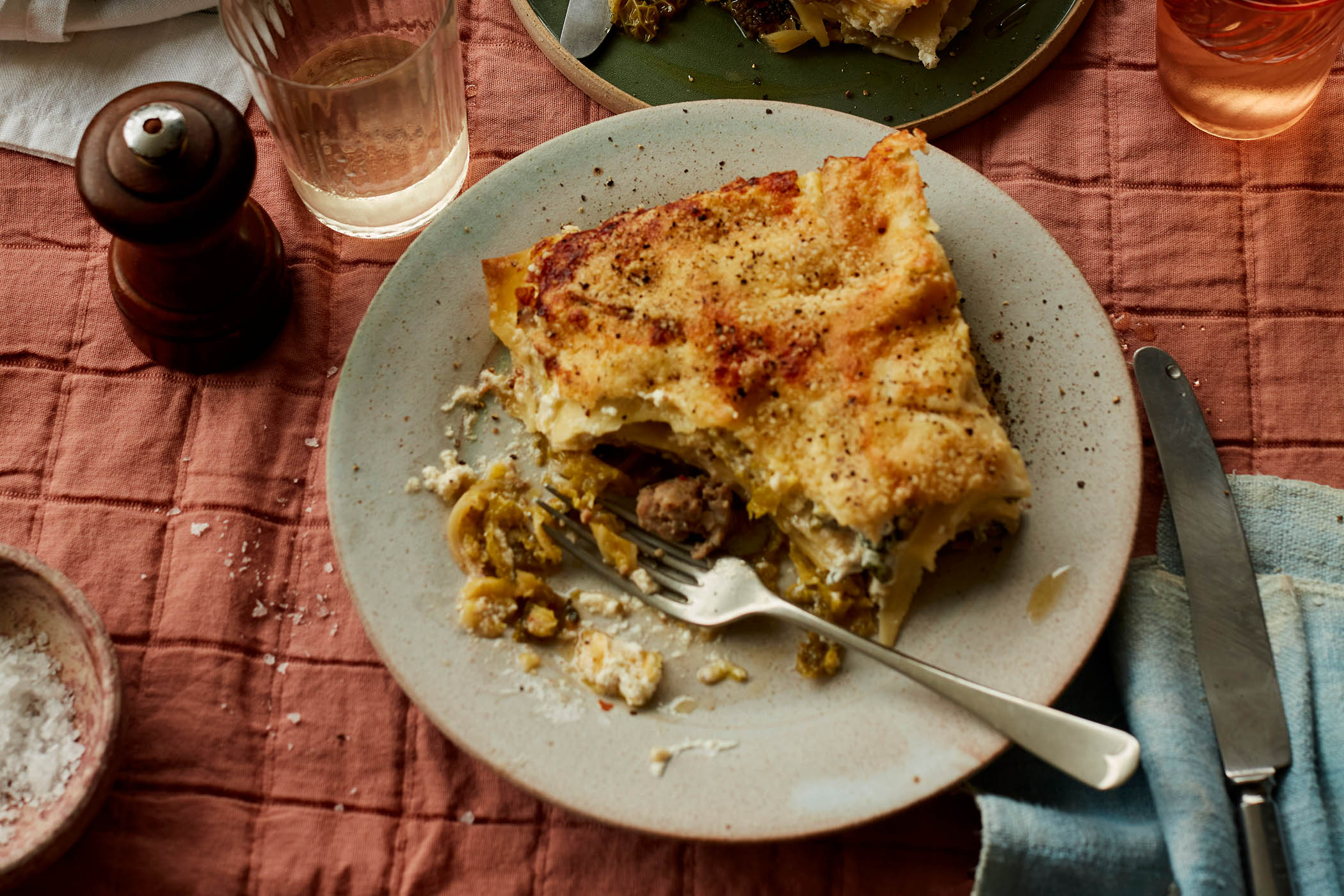
This sausage and cabbage version is straightforward yet decadent, and uses one of my most favourite (and often unloved) winter vegetables: the humble savoy cabbage. It is packed with flavour and would only require a peppery or bitter leaf salad on the side, if that.
Ribollita is also something I lean into during the colder months; a perfect vessel for the woody, hardy vegetables that abound around now. This green version is a celebration of all the joy that is in my vegetable drawer at the moment. Neither recipe is particularly fast, but they are both low-effort and very high reward. And that is exactly what I need.
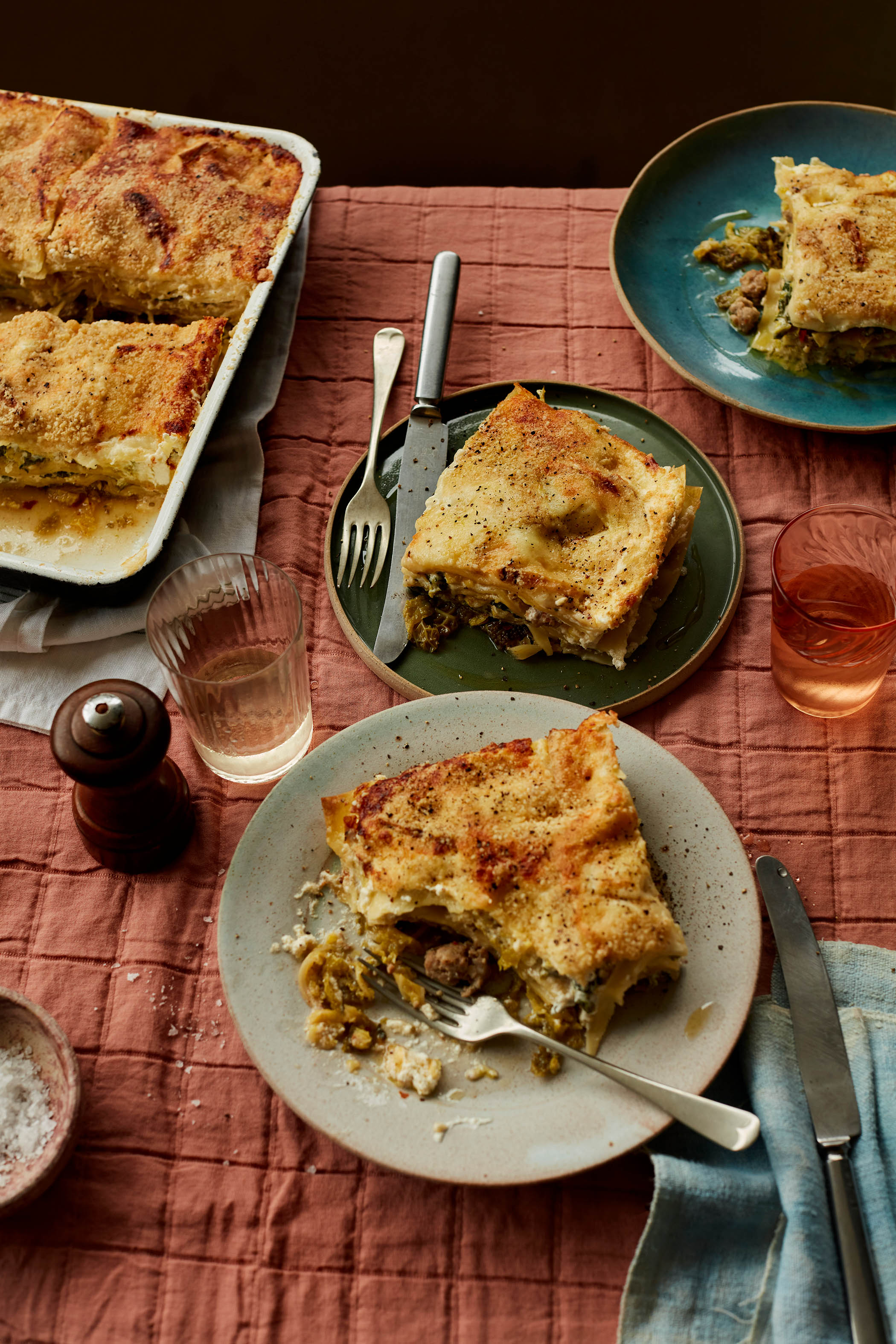
Cabbage, sausage and taleggio lasagne
Serves 4–6. Ready in 90 minutes
This wintery version of the much loved classic is much simpler, but just as comforting. No need to stand over a collection of chaotically bubbling pans. This recipe has sausage meat that’s been braised with shredded savoy cabbage, fennel and chilli, that’s then layered with taleggio and peppery mascarpone. An oozy, cheesy warming dinner.
Related articles:
olive oil a little
sausages 6, good-quality pork
savoy cabbage 1, small (500-600g)
garlic cloves 4, peeled and finely sliced
ground fennel seeds 1 heaped tsp
dried red chilli flakes ½ tsp
chicken stock 600ml
sea salt and black pepper
mascarpone 250g
ricotta 200g
whole milk 175ml
taleggio 200g
fresh lasagne sheets 12 (200g)
parmesan 25g, finely grated
Preheat your oven to 200C/gas mark 6. Place a large, deep frying pan over a medium heat and drizzle in a few tablespoons of olive oil. Squeeze in the sausage meat, discarding the skins, and break it up with a wooden spoon as you do. Fry the sausage meat for around 10 minutes, until it has browned all over.
While it is frying, trim the cabbage, halve and remove most of the core, then finely shred the leaves. When the sausage is cooked, stir in the sliced garlic cloves, ground fennel seeds and dried red chilli flakes and fry for 1 minute.
Add the shredded cabbage and stir in. Add the chicken stock, season well, bring to the boil, then cover the pan and simmer for 15 minutes. Remove the lid and simmer for a further 5 minutes.
While the savoy cabbage is cooking, beat together the mascarpone and ricotta in a bowl until smooth. Season well, then beat in the whole milk to create a white sauce. Slice the taleggio as best you can.
To layer the lasagne, evenly spoon a third of the savoy and sausage mixture into the base of a 30 x 20cm tray or ovenproof dish. Cover with a third of the lasagne sheets, then spoon over a third of the ricotta sauce. Evenly lay over a third of the sliced taleggio. Repeat two more times, end up with a white sauce and taleggio layer.
Finish by sprinkling over the finely grated parmesan. Drizzle with a little olive oil and pop the tray in the oven for 35-40 minutes, until bubbling and deeply golden all over. Leave the lasagne to rest for at least 5 minutes before serving.
Kale, leek and guanciale ribollita
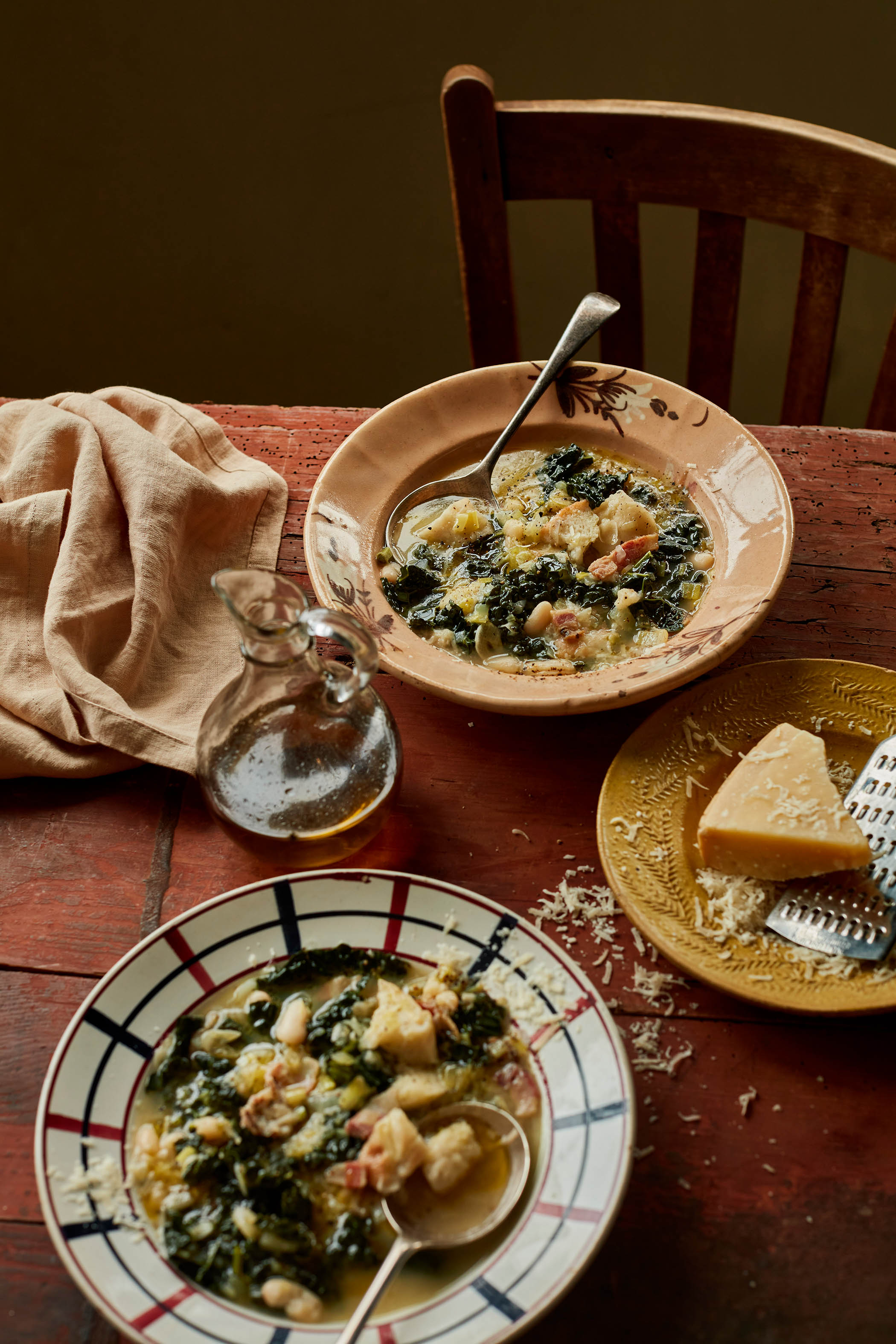
Serves 4-6. Ready in 1 hour and 20 minutes.
Traditionally falling under the umbrella of Tuscan cucina povera (peasant-style cooking), ribollita translates as “reboiled”, referring to its history of being made in large quantities and reboiled over the following days. This green version focuses on the sticky slow-cooked leeks and kale in the base, but it’s such a versatile recipe that you can use whatever greens you have to hand. While not imperative, I do like to use jarred beans if I can, as opposed to the tinned variety. They’re just that bit more tender and help give the soup a creamy, luxurious finish.
olive oil 1 tbsp, plus a little to serve
guanciale 100g, chopped
garlic cloves 2, peeled and finely chopped
onions 2, peeled and finely chopped
celery 3 sticks, finely chopped
leeks 3, trimmed and finely sliced
basil ½ bunch, leaves picked and stalks finely chopped
sea salt and black pepper
cannellini beans 1 x 600g jar (or 2 x 400g tins)
chicken or veg stock 1.6 litres
cavolo nero 200g
stale ciabatta 100g
parmesan 30g, finely grated
Place a large saucepan or casserole over a medium-high heat and add 1 tbsp of olive oil. Add the chopped guanciale and fry for 5 minutes, until starting to brown.
Add the garlic, onions, celery, leeks and basil stalks. Season with salt and pepper, then reduce the heat a little and sauté the vegetables for around 30 minutes, until they have softened and are sticky.
Add the cannellini beans (and their liquid) to the pan along with the stock and bring to the boil. (If you have the rind of a piece of parmesan, add that in too, it’ll add incredible flavour.)
Strip the cavolo nero leaves from the stalks and roughly chop. Add to the pan, bring to the boil, then reduce the heat. Cover the pan and simmer for 20 minutes. When the soup is ready, taste and adjust the seasoning. Tear the ciabatta into bite-sized pieces, stir into the soup and remove the pan from the heat. Leave it to rest for 10 minutes, then tear in the basil leaves. Serve with a drizzle of olive oil, and finely grated parmesan over the top.
Newsletters
Choose the newsletters you want to receive
View more
For information about how The Observer protects your data, read our Privacy Policy