
Dried beans by Karla Zazueta
Growing up in Mexico, Monday was bean day. A big pot simmering gently on the stove, filling the house with a comforting smell that marked the beginning of the week. It’s a tradition I maintain in my London life, usually dried pinto or black beans from the cupboard. They’re my favourites to cook with. Many people are a little scared of cooking dried beans from scratch. The idea of soaking them overnight before then cooking for hours can feel like too much effort, so dried beans easily become one of the most forgotten ingredients in the pantry.
But the key to cooking dried beans is not to season them at all while they cook. Salt can toughen the skins and slow the process, so I always season later. When they’re ready, I’ll eat a bowl straight from the pot with plenty of the cooking liquid (frijoles de la olla) and that’s my Monday lunch. I garnish it simply, with chopped onion, coriander, queso fresco or another crumbly cheese (feta works well) and fresh jalapeños. It’s deeply nourishing, and instantly makes me feel at home.
Once cooled, I freeze the remaining beans in portions to become the base for countless meals, including the refried bean tostadas and enfrijoladas that follow, proof that a forgotten pantry staple can be transformed into something comforting, practical and full of flavour.
To cook the beans
I don’t soak my beans overnight. Instead I soak them for no more than 30 minutes, then discard that water. I cover them with fresh water, add a peeled onion cut in half, garlic cloves and dried epazote, a Mexican herb that gives beans a distinctive, earthy flavour. (If you can’t find epazote, bay leaves work well.) Once the beans come to the boil, I lower the heat, cover the pot and let them simmer gently for about an hour or until tender, checking halfway through to make sure they haven’t run out of water.

No need to soak the beans overnight… tostadas de frijoles negros refritos
Tostadas de frijoles negros refritos
Serves 8. Ready in 25 minutes.
Related articles:
A crispy corn tortilla topped with smooth black refried beans, fresh avocado, crunchy lettuce and soft manouri cheese. These are ready in no time and perfect for a quick lunch.
The refried beans in this recipe use the cooked beans as prepared above, including the cooking water and cooked garlic and onion. If you would prefer to use tinned beans, sauté 20g of chopped onion and 1 garlic clove in a frying pan first, and add these instead.
12cm corn tortillas 8
cold-pressed rapeseed oil 1 tbsp
salt 1/2 tsp
iceberg lettuce 1/2, finely shredded
avocado 1, diced
manouri cheese 100g, diced
spicy salsa parmesan 20g, finely grated
For the refried beans (see recipe intro):
cold-pressed rapeseed oil 3 tbsp
cooked black beans 350g
bean cooking liquid 100ml
cooked onion 1/2
cooked garlic cloves 2
flaky sea salt 1 tsp
Heat the oven to 180C fan/gas mark 6. Brush the tortillas with oil, sprinkle with salt, and bake on a tray for 15 minutes, turning halfway, until crisp and golden. Prepare your garnishes so they’re ready for assembly.
For the beans, heat the oil in a saucepan over a medium heat, add the beans, cooking liquid, onion, garlic and salt. Bring to a gentle boil for 3 minutes, remove from heat and blend with a hand blender until smooth.
Spread 2 heaped tbsp of beans on each tostada. Top with lettuce, avocado, manouri, tomato and a drizzle of salsa. Finish with grated parmesan.
Enfrijoladas de frijoles negros
Serves 8. Ready in 15 minutes.
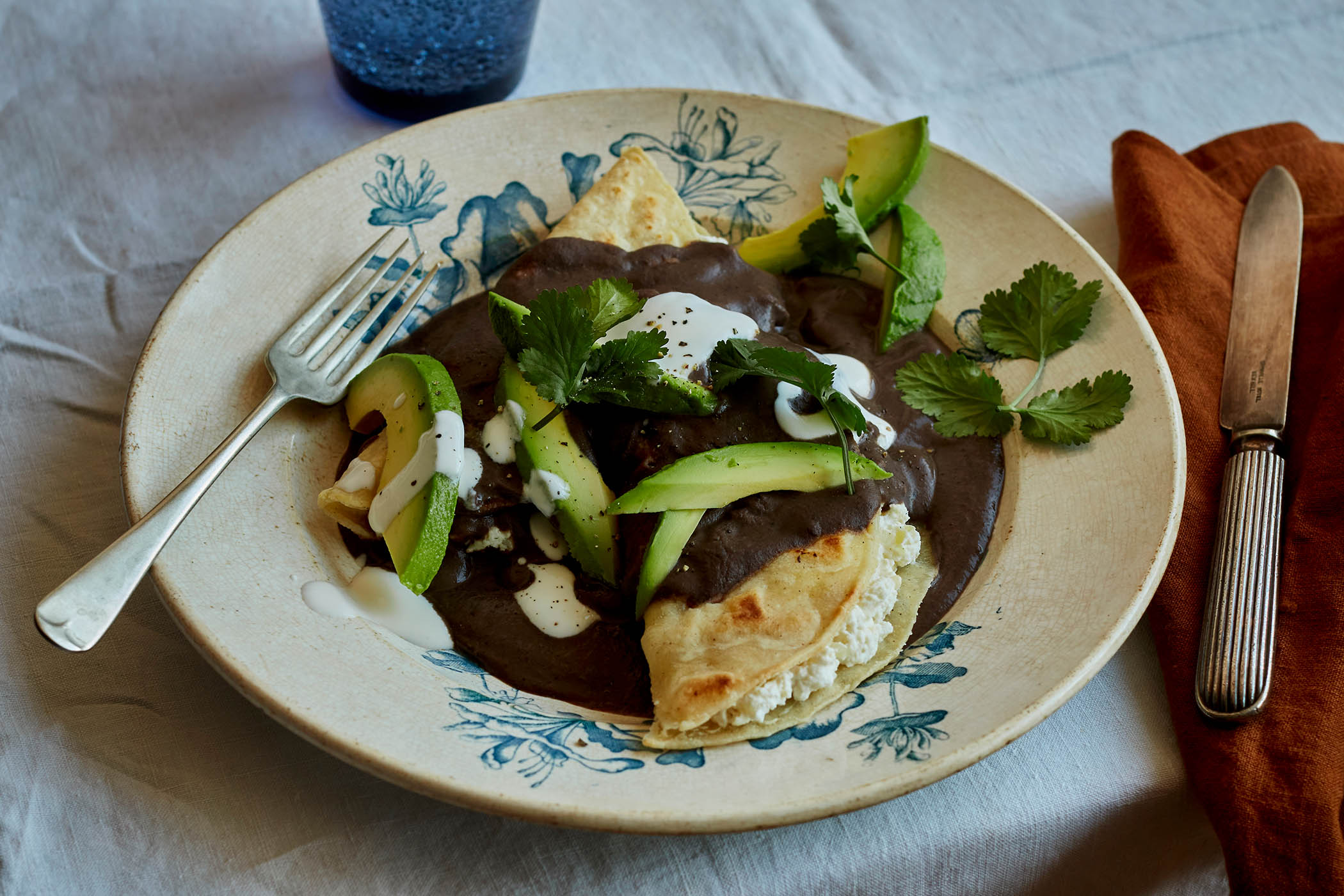
Slightly fried corn tortillas folded, stuffed with a creamy ricotta filling and smothered in a smoky black bean sauce. These enfrijoladas make a comforting meal for lunch or dinner and are a perfect way to use up cooked beans from your freezer.
corn tortillas 8, 12cm size
cold-pressed rapeseed oil 50ml
avocado 1 small, sliced
coriander leaves to serve
For the ricotta filling:
cold-pressed rapeseed oil 1/2 tsp
onion 30g, finely chopped
ricotta 150gsalt 1/2 tsp
For the bean sauce:
cold-pressed rapeseed oil 3 tbsp
onion 20g, finely chopped
garlic 1 clove, minced
black beans 350g, cooked
bean cooking liquid 250ml
chipotle paste 1 tsp
flaky sea salt 1 tsp
For the crema:
sour cream 150g
milk 2 tbsp
salt a pinch
To make the ricotta filling, heat the oil in a small frying pan over a medium heat and cook the onion gently, lowering the heat after a minute, until soft and lightly golden. Remove from the heat and mix into the ricotta with the salt. Set aside.
Make the crema: mix the sour cream with the milk to loosen, season with a pinch of salt and set aside.
For the bean sauce, heat the oil in a medium saucepan over a medium heat. Add the onion and cook for a minute, then add the garlic and cook for another minute. Add the beans, cooking liquid and chipotle paste, season with the salt and bring to a gentle boil. Remove from the heat and blend until smooth. Pass through a sieve for a silky texture, then transfer to a small saucepan and keep warm over a low heat.
Heat the oven to 150C/gas mark 2 and place the ricotta filling inside to warm. Make sure all components are ready before frying the tortillas.
Heat the oil in a frying pan over a medium heat. Fry the tortillas one at a time for a few seconds on each side until softened and lightly blistered. Transfer to kitchen paper to drain.
To assemble, place about 1 tbsp of warm ricotta filling on one half of each tortilla, spoon over a little bean sauce and fold in half.
To serve, spoon some warm bean sauce on to each plate and place 2 folded tortillas on top. Ladle over more bean sauce until fully covered. Finish with the crema, avocado and coriander. Serve with rice, if you like.
If the bean sauce thickens, loosen with a little hot water and adjust the seasoning. It should be fluid enough to coat the tortillas generously.
Glass noodles by Kaneda Pen
My childhood story is that of an immigrant family trying to get on their feet. We were poor in a poor neighbourhood. However, my mum’s store cupboards have always been a treasure trove. Varieties of soy sauce, deployed tactically when the gaffer (Mum) needed an advantage; empty Nescafé jars, a new home for MSG; dried seafood, pungent like two-day worn socks. And noodles. Always noodles.
The variety I’m championing here are mung-bean vermicelli, more commonly known as glass noodles (though there are other varieties of glass noodle made with sweet potato).
Mum’s repertoire fostered my long-standing fascination with these noodles – whether in a cold noodle salad, or her spring rolls. I learned that differing combinations and applications of heat and moisture will yield different yet altogether pleasing results. Sometimes meltingly soft. Other times spongy with a pleasing chew. In all forms, as with any elite noodle, a great flavour carrier.
These recipes are an ode to Mum’s store cupboards and her skill in managing the needs of a husband and six kids. They employ dried goods built and packaged to last the ages, plus the addition of water and time to reconstitute and bring extra life to your dishes. Well-timed hits of savouriness that match effortless with spoonfuls of rice.
If you don’t have any of the ingredients, don’t worry. For example, Maggi liquid seasoning can be used instead of Golden Mountain seasoning (and failing that, use only light soy sauce for the recipe). Dried shrimp is worth having on hand – it’s a tasty addition when making green mango or green papaya salads, or you might consider adding them to your base broths for noodle soups.
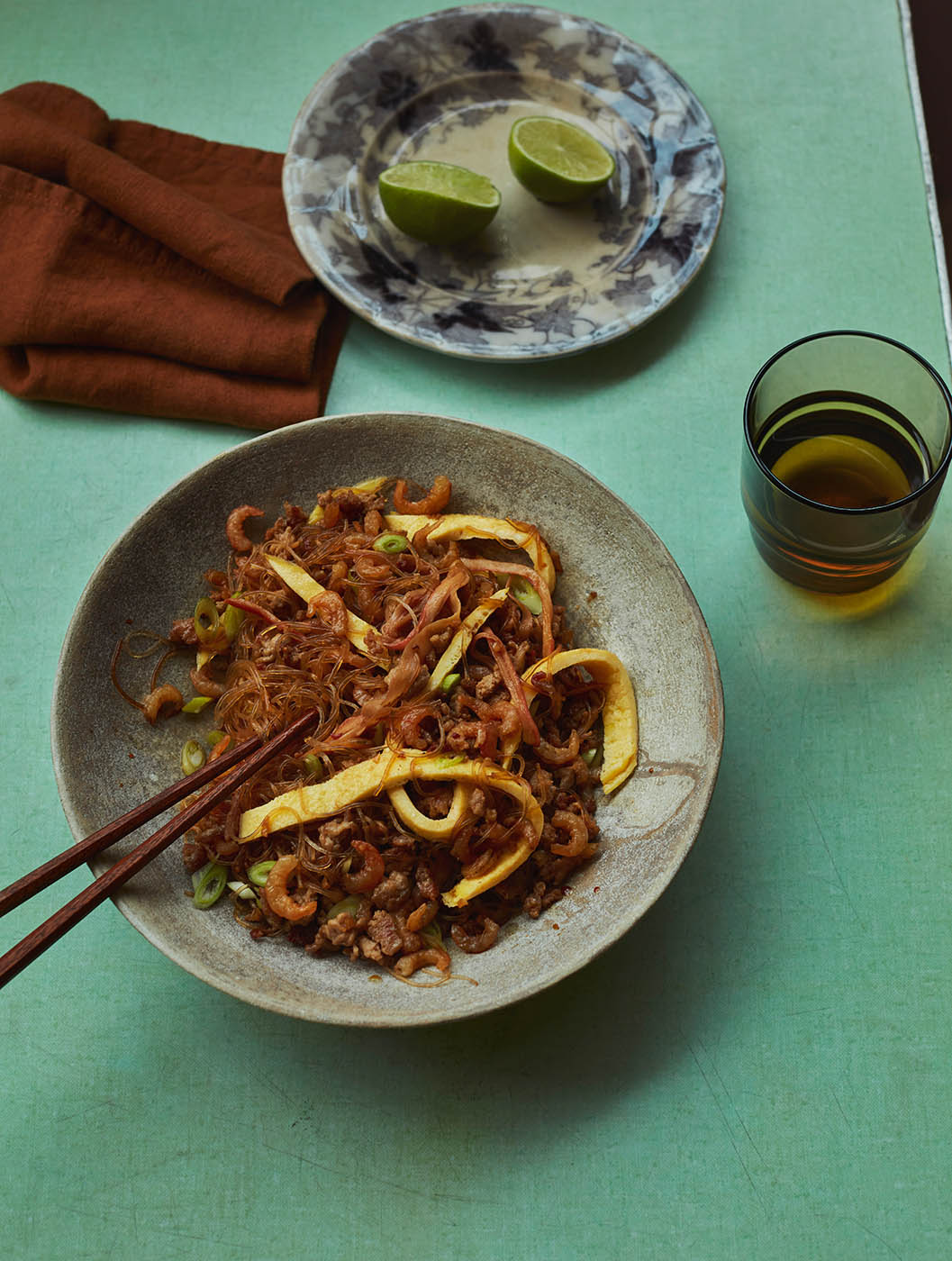
Dried mushrooms can work instead of the seafood: stir-fried glass noodles with pork mince, egg and dried shrimp
Stir-fried glass noodles with pork mince, egg and dried shrimp
Serves 4-5. Ready in 30 minutes, plus soaking time.
Once all items that require soaking are ready, this recipe takes less than 30 minutes. Can’t get your hands on the dried seafood? Try using a combination of dried mushrooms instead.
mung bean vermicelli 150g
dried shrimp 50g
dried squid 30g
eggs 2, medium
light soy sauce 3 tbsp
fish sauce 2 tbsp
caster sugar 1 tbsp
black pepper 1/2 tsp
vegetable oil 2 tbsp
pork mince 250g
garlic 2 large cloves, finely chopped
spring onions 3
jasmine rice to serve (optional)
lime wedges to serve (optional)
Place the vermicelli in cold water until the noodles have the flexibility of string and are soft enough for your thumbnail to cut through. Drain the noodles and cut with scissors, dividing the length into thirds.
In separate containers, place the dried shrimp and squid into cold water. Allow 1 hour for them to rehydrate. Drain both. Cut the dried squid into thin slices.
Whisk the eggs and fry a thin omelette in a pan. Do not season the egg mixture as there will be enough salt from the other ingredients. Slice the omelette into 1cm-wide strands.
Combine the light soy sauce, fish sauce, sugar and black pepper. This will be your stir-fry sauce.
Heat the vegetable oil in a wok or sauté pan over a high heat. Stir-fry the pork mince, adding in the garlic and dried shrimp part-way through cooking. Once the pork mince is cooked, add in the stir-fry sauce and 30 seconds later add the dried shrimp.
Next add the noodles, ensuring they move around the pan vigorously. They will cook in less than a minute. Take off the heat and then finish with the sliced omelette and finely sliced spring onions. Enjoy on their own or with steamed jasmine rice. A squeeze of lime will cut through the richness.
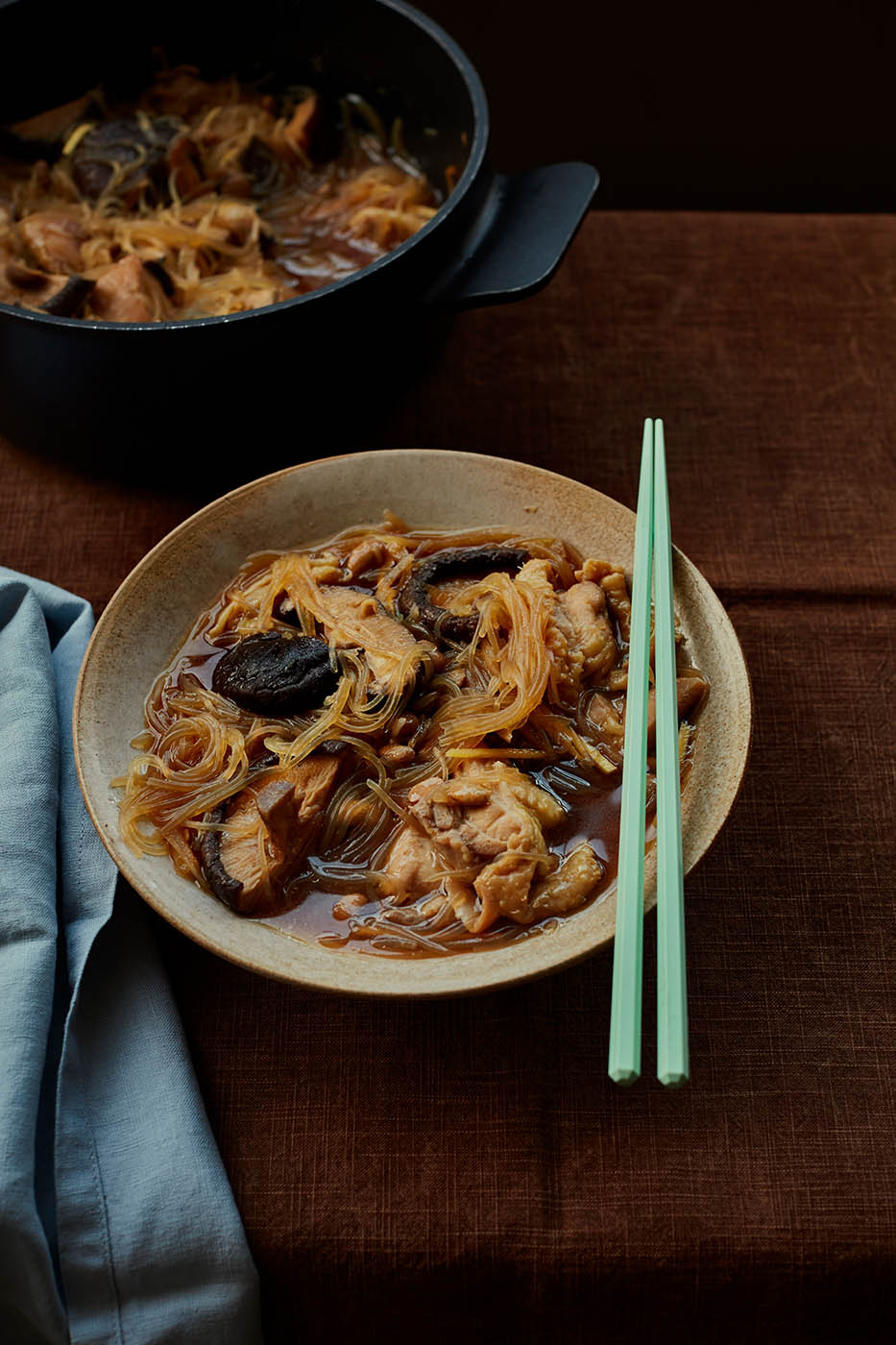
One-pot wonder: braised chicken glass noodles with ginger and salted soy beans
Braised chicken glass noodles with ginger and salted soy beans
Serves 4-5. Ready in 2 hours 40 minutes.
This is one of those one-pot wonder recipes. Perfect for pre-assembly the day before and taking from the fridge to the oven and forgetting about for 40 minutes. As an alternative, try swapping out chicken thighs for thinly sliced pork belly.
chicken thighs 500g, boneless, skin on
garlic 3 cloves, crushed
ginger 50g, peeled and sliced julienne
onion 1, medium, thinly sliced
Golden Mountain seasoning sauce 2 tbsp
light soy sauce 4 tbsp
caster sugar 1 tbsp
chicken powder 1 tsp
ground black pepper 1/2 tsp
mung bean vermicelli 150g
shiitake mushrooms 50g, dried
salted soy beans 2 tbsp
cold water 750ml
Quarter the chicken thighs and place into a bowl along with the garlic cloves and ginger. Next add the onion, Golden Mountain seasoning, light soy sauce, sugar, chicken powder and black pepper. Mix, cover, and leave to marinate in the fridge for 2 hours.
Preheat the oven to 180C/gas mark 6. Place the vermicelli in cold water until the noodles have the flexibility of string and are soft enough for your thumbnail to cut through. Drain and cut with scissors, dividing the length into thirds.
Place the dried shiitake into 750g of cold water for around 30 minutes. Drain the mushrooms and set aside the remaining liquid. If the smaller variety, leave them whole or cut into halves. Larger mushrooms can be quartered.
Add all ingredients into a medium casserole dish, finishing with the salted soy beans and the mushroom water set aside earlier. Mix by hand, cover and place in the preheated oven for 40 minutes.
The finished noodles will be soft and translucent, with a golden hue, taking on colour from the soy sauce.
Enjoy on their own or with steamed jasmine rice.
Lasagne sheets by Georgia Levy
The back of my cupboard torments me. I always know exactly what’s hiding there; those neglected items hang over me like a dark, nagging cloud. So I ignore them – right up until something falls on to my head (how I wish I had drawers instead). Then, for safety reasons alone, I’m forced to do something with them. The main culprit? Lasagne sheets.
I wish I were the sort of person who can effortlessly magic up a lasagne for dinner, but I’m not. It’s a joy to eat, but let’s not pretend it isn’t a time-consuming beast. So that half-used packet always ends up shoved to the back.
But, with life getting more expensive, I can no longer justify being frivolous with food. The forgotten stuff has to earn its keep. Luckily, with a little imagination, even lasagne sheets can be upcycled. There’s a wonderful Ligurian dish called mandilli de sea – “silk handkerchiefs” – delicate pasta sheets with pesto alla genovese. You can easily recreate it at home with lasagne sheets and pesto. I often make it with rocket and hazelnut pesto in the winter.
You can also break the sheets into shards and stir them into minestrone (or any soup, in fact), or simmer them in a beef stew so they cook in the sauce. Another favourite is to soften the sheets in boiling water, wrap them around some spinach and ricotta, like makeshift cannelloni, then cover in tomato sauce and parmesan and bake. Or cook the sheets until al dente, cover them in grated cheese and bake at 180C/gas mark 6 until crisp and golden, about 20 minutes, then break into shards and enjoy with a glass of wine.
Just pay attention to whether yours are “no pre-cook” sheets or regular ones; the cooking times vary.

If short on time, skip braising the veg: avgolemono with lasagne shards
Avgolemono with lasagne shards
Serves 4. Ready in 25 minutes.
Traditional versions of this Greek soup are made with plain chicken stock for a light, clear, bright broth, but I like to add some vegetables to the base for a richer, heartier meal. If you’re short on time, you can skip the veg braising – this would actually be closer to the traditional version. In another break from tradition, I’ve gone light on the eggs, but feel free to add another for a thicker consistency.
Breaking up lasagne sheets is incredibly therapeutic, but if you’re in a rush, wrap them in a tea towel and bash with a rolling pin. Smaller pieces will better fit on your spoon – after all, this soup is usually made with rice or orzo, and that’s what we’re trying to emulate. You can use either no-pre-cook or regular sheets; the latter will take a little longer to cook.
olive oil 2 tbsp, plus extra to drizzle
golden onion 1, chopped
celery stick 1, chopped
carrot 1, peeled and chopped
chicken stock 1.25 litres
dried lasagne sheets 125g, broken into 1-2cm pieces
leftover chicken 180g, shredded
eggs 2
lemon 2, juiced
dill or parsley leaves a big handful, chopped
salt and pepper
Warm the oil in a large pan over a medium heat. Add the onion, celery and carrot and a pinch of salt and fry for 10 minutes until the vegetables are soft.
Add the chicken stock, season generously with salt and pepper and bring to a simmer. Add the broken lasagne sheets and simmer until soft (cooking time will vary depending on brand and type). Stir in the chicken so it’s just warmed through.
In a bowl, whisk the eggs for 1 minute until frothy, then slowly whisk in the lemon juice. Temper the eggs by adding a ladleful of the broth from the pan, whisking constantly until thickened.
Remove the pan from the heat and stir in the egg mixture until creamy. Taste and adjust the seasoning. Spoon into bowls, scatter with the herbs, drizzle with some oil and eat immediately.
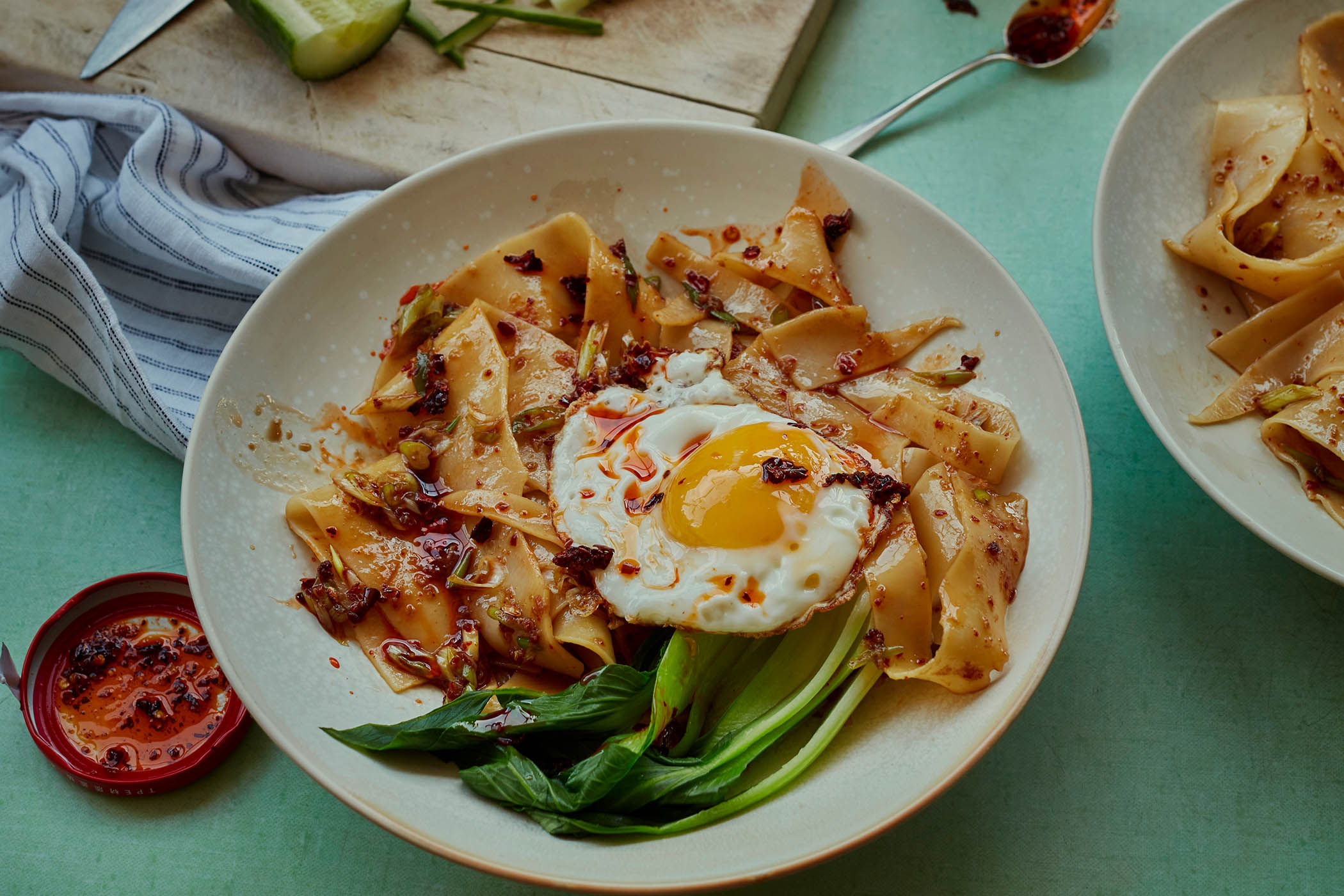
Cheat’s take on a classic: broken lasagne biang biang
Broken lasagne biang biang
Serves 2. Ready in 20 minutes.
This is a cheat’s take on a classic Chinese dish, where noodles are hand-pulled and thwacked on a surface, giving it an onomatopoeic name. There’ll be less bianging and more cracking here, but this is where the inspiration comes from.
Make this more substantial by adding a fried egg on top, or some beef, lamb or pork mince fried until golden and finished with a good splash of soy sauce. (A pinch of ground cumin is especially delicious with the beef or lamb.) Vegans could crumble firm tofu and fry it until crisp as a very worthy mince stand-in.
Avoid using no pre-cook or oven-ready sheets for this; they aren’t robust enough to be tossed around in the sauce. Regular sheets can stick together, though, so use a large pan with plenty of boiling water and give them an attentive stir at the start.
dried lasagne sheets 250g
garlic 2 small cloves, grated
spring onions 2, finely sliced
Chinese chilli flakes, gochugaru or Aleppo chilli 1 tsp
sichuan pepper 1/2 tsp toasted and ground (optional)
flavourless oil 3 tbsp, plus 2 tsp
light soy sauce 2 tbsp
Chinkiang or other rice vinegar 2 tbsp
sugar 1 tsp
To serve:
bok choy cooked
cucumber cut into matchsticks
chilli oil
fried egg (optional)
Snap each lasagne sheet into 3 long pieces – you’ll probably end up with 1 or 2 long pieces and a few smaller ones, but that’s perfectly fine for this dish. Grate a garlic clove into each of 2 noodle bowls, then divide the spring onion, chilli and sichuan pepper (if using) between them.
In a small pan, heat the oil until shimmering and just shy of smoking, then immediately – and carefully – pour it over the garlic-chilli mixture in each bowl so it sizzles and the aromatics bloom. If it doesn’t sizzle, the oil wasn’t hot enough; reheat a little and try again.
Divide the soy sauce, vinegar and sugar between the 2 bowls.
Bring a large pan of salted water to the boil and add the 2 tsp of oil. Cook the pasta until al dente according to the packet, stirring often in the first minute or two to prevent sticking. Scoop out the pasta and toss it straight into the bowls with the chilli-garlic oil. Add a small splash of the hot cooking water to loosen and make it saucy, then toss to combine.
Serve with bok choy, fresh cucumber matchsticks and a drizzle of chilli oil.
Newsletters
Choose the newsletters you want to receive
View more
For information about how The Observer protects your data, read our Privacy Policy